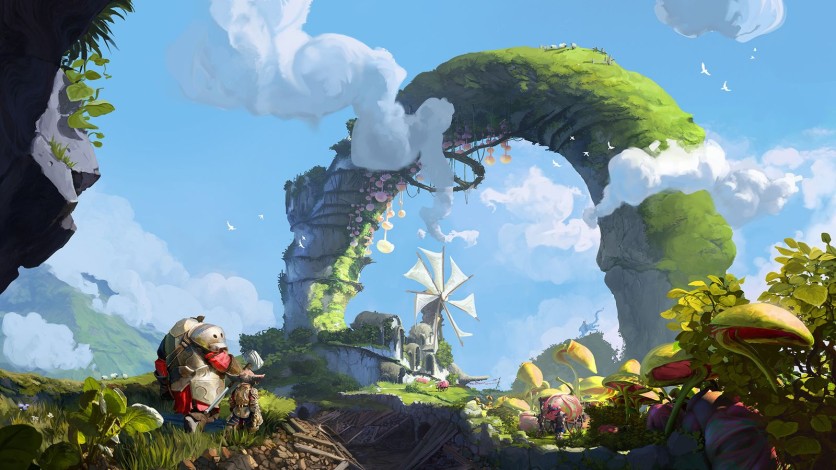
ArenaNet confirmed on June 8 that Guild Wars 3 will launch without a monthly subscription fee or a paid battle pass — studio head Colin Johanson's direct answer to the cost question every MMORPG player asks before committing time to a new game. Fourteen years after Guild Wars 2 launched exclusively on PC, the Bellevue, Washington developer is returning with a full sequel that will come to PlayStation 5 as well as PC and Steam, with a first beta test scheduled for fall 2027.
The no-subscription commitment, made just three days after ArenaNet unveiled Guild Wars 3 at Summer Game Fest on June 5, answers the most pressing cost question for players weighing whether to invest. "We're not gonna hold their time hostage," Johanson said in an IGN interview, explicitly rejecting both recurring fees and the seasonal battle-pass grind systems that now define most live-service games. That philosophy has governed the Guild Wars franchise since 2005 — but in a genre that has drifted sharply toward subscriptions and seasonal passes since then, restating it publicly now carries more weight than it once did.
ArenaNet is scheduled to hold a live franchise stream today at 2:00 p.m. ET covering the future of all three games in its lineup — the first detailed public discussion since the announcement.
Guild Wars 3 Skips Subscriptions: What That Means for Players
ArenaNet's monetization plan is expected to mirror Guild Wars 2's Gem Store approach: players buy the base game and optional expansions, then spend optionally on cosmetic items, character slots, mount skins, and convenience items. Guild Wars 2 also allows players to convert in-game gold into the premium Gem currency, meaning players who invest time can bypass most optional spending.
What Guild Wars 3 will not include is a monthly fee — the $15-per-month subscription that World of Warcraft has required since 2004 — or a seasonal battle pass with time-limited rewards that expire if you don't log in consistently enough to earn them. Johanson described battle passes as a system that "buries" a fee inside the game and forces players to engage on the developer's schedule rather than their own.
This model connects directly to the franchise's design philosophy of horizontal progression: gear in Guild Wars games does not get invalidated by the next content patch, so a player who returns after a year away is competitive again without grinding to catch up. That design decision is what makes a buy-once model financially sustainable — a subscription-gated game depends on keeping players logged in constantly, which requires a gear treadmill to justify the fee. No subscription means no treadmill.
Full pricing for the base game has not yet been announced. ArenaNet says more monetization details will arrive in the second half of 2026.
Unreal Engine 5: Why GW3 Can Launch on PS5 When GW2 Never Could
Guild Wars 3 is being built on Unreal Engine 5, a structural decision that goes well beyond visual fidelity. Guild Wars 2 ran on ArenaNet's in-house proprietary engine — one built exclusively for PC, with a networking stack and memory management system designed around a single platform. Porting that engine to PlayStation 5 would have required a near-complete rebuild of its input, rendering, and synchronization layers.
UE5 solves that problem by design. The engine uses a multi-threaded task scheduling system that is OS-agnostic, meaning the same codebase that handles physics, asset loading, and network synchronization on PC scales automatically to PS5 hardware without requiring a separate development pipeline. Developers at other studios that have made this transition — including CD Projekt Red, which adopted UE5 for the next Witcher game after a decade on its proprietary REDengine, and 2K's Hangar 13 for the Mafia series — cited UE5's ability to target multiple platforms from a single project structure as the core reason for abandoning their in-house tools.
UE5 also brings Nanite (virtualized geometry that renders billions of polygons at full fidelity without manual level-of-detail optimization) and Lumen (real-time global illumination replacing pre-baked lighting), both visible in the debut in-engine footage. The result is that Guild Wars 3's natural-world environments — the lush forests and magical landscapes of Orr — can render at a visual scale that GW2's aging engine could not have achieved regardless of platform.
The console debut is therefore not a business decision bolted onto an existing product. It is the downstream consequence of choosing a cross-platform engine from the start.
Momentum-Based Combat Replaces GW2 Tab-Targeting
Guild Wars 2 used a hybrid combat system — players aimed their abilities in real-time using free camera, but attacks did not require manual aiming, and some skills auto-targeted nearby enemies. Guild Wars 3 abandons that hybrid model for a fully action-oriented system where movement and physical positioning drive outcomes mechanically, not just tactically.
The combat system is built around a momentum transfer mechanic: players can run, sprint, glide, wall-run, leap, and ride the Seeker mount, and speed accumulated during traversal converts directly into increased damage and impact when engaging enemies. The faster a player is moving when they enter combat, the heavier their attacks hit. This is structurally different from GW2's design, where traversal and combat were effectively separate modes — you moved across the map and then stopped to fight.
The system was designed from the ground up to work equally well on a controller and on keyboard-and-mouse, which ArenaNet describes as a foundational requirement rather than an afterthought given the simultaneous PS5 launch. Deeper character customization and skill-building — the build-making that defined earlier Guild Wars games — will carry forward alongside the action-oriented base layer.
Set 1,200 Years Before Guild Wars: Orr as Tyria Untamed Wilderness
Guild Wars 3 does not continue the story of Guild Wars 2. Instead, it is set roughly 1,200 years before the events of the original Guild Wars, during the era the lore calls the first actual guild wars — the political and military conflicts that gave the franchise its name. Veteran players know Orr as the drowned, undead kingdom resurrected as an antagonist in Guild Wars 2. In Guild Wars 3, it exists before that catastrophe, as a living wilderness saturated with magical energy and populated by nature spirits called Vael entities.
Players join the Vaelwardens, a guild sworn to protect Orr's land, its people, and the nature spirits who inhabit it, while other guilds compete to exploit or control the region's resources. The Seeker — a wolf-like spirit mount unique to each player — is central to both traversal and the story's emotional core, functioning as each player's personal bond with Orr itself.
The setting is confirmed as taking place just after the dethronement of one of Tyria's Six Gods, placing the game at a pivotal moment in the world's theological history. Additional lore details about Orr's timeline and the capital city of Arah are scheduled to arrive in coming weeks.
Guild Wars 2 Stays Alive: ArenaNet Commits to Three Games at Once
The immediate concern from the Guild Wars 2 community after the announcement was whether the third game would mean the end of the second. ArenaNet addressed this directly: the studio is committed to simultaneously developing Guild Wars Reforged, Guild Wars 2, and Guild Wars 3 as separate live projects.
"We are not replacing your favorite games," Johanson said. Guild Wars 2 received its sixth major expansion, Visions of Eternity, in October 2025 and continues to receive updates. Guild Wars Reforged — a modernized remaster of the original 2005 game — launched in 2025 and is adding mobile support later in 2026, with PC and mobile players sharing the same servers.
ArenaNet is also introducing a Hall of Monuments 2.0 system that will let players earn rewards in both Guild Wars 2 and Guild Wars 3 by completing achievements in GW2 — a cross-game progression link designed to reward the existing player base rather than forcing players to abandon what they have already built. The franchise has accumulated over 29 million players across its history, according to ArenaNet's press release.
For GW3 to fulfill NCSoft's long-standing ambition to compete in the Western market — Guild Wars 2 was the publisher's only sustained commercial success outside South Korea — it will need to win over players on the strength of actual gameplay. That test begins when the fall 2027 beta opens, not at Summer Game Fest.
Frequently Asked Questions
Will Guild Wars 3 require a subscription fee?
No. ArenaNet studio head Colin Johanson confirmed in a June 8 IGN interview that Guild Wars 3 will not require a monthly subscription fee or a paid battle pass. The studio plans to monetize through paid expansions, cosmetic items, and a Gem Store-style optional currency shop — the same model Guild Wars 2 has used since 2012.
When Does Guild Wars 3 Beta Start?
ArenaNet has confirmed the first Guild Wars 3 beta test is scheduled for fall 2027 — roughly October through November by season. Players can register for a chance to participate by signing up for the newsletter at GuildWars3.com. A full release date has not been announced; based on the beta window, a full launch would likely fall no earlier than 2028.
What platforms will Guild Wars 3 launch on?
Guild Wars 3 is confirmed for PC (via ArenaNet's own launcher and Steam) and PlayStation 5. No Xbox version has been announced. This marks the first time any Guild Wars title has appeared on a home console — both the original Guild Wars and Guild Wars 2 were PC-only for their entire commercial runs.
Is Guild Wars 3 replacing Guild Wars 2?
No. ArenaNet has committed to developing Guild Wars Reforged, Guild Wars 2, and Guild Wars 3 simultaneously as separate live games. Guild Wars 2 will continue receiving updates, and a Hall of Monuments 2.0 system is planned to let GW2 players earn rewards redeemable in Guild Wars 3.
ⓒ 2026 TECHTIMES.com All rights reserved. Do not reproduce without permission.


