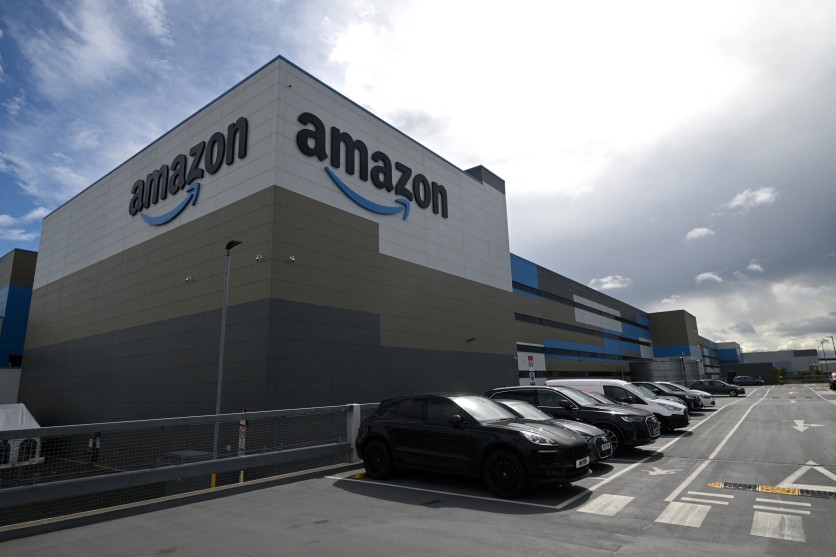
Amazon announced on June 8, 2026, a multiyear, multibillion-dollar agreement with Corning to supply the optical fiber, cable, and connectivity that will power its rapidly expanding data-center infrastructure across the United States. The deal creates 1,000 new advanced-manufacturing jobs at Corning's North Carolina facilities, supports hundreds of construction jobs to expand those plants, and funds a new fiber-optic training program. Neither company disclosed financial terms.
The agreement matters beyond the headline number, because it shows where the AI build-out's next bottleneck has moved: not the chips, but the glass that connects them — and which company has cornered the supply.
What Does the Amazon-Corning Deal Cover?
Under the agreement, Corning will produce optical fiber for Amazon's data centers and help shore up the domestic supply chain for a component that has become a chokepoint in AI infrastructure. Amazon cast the arrangement as part of a broader American-manufacturing commitment. "This multibillion-dollar agreement with Corning continues that commitment, channeling investment into American manufacturing and creating 1,000 new jobs at their facilities near our data centers," said Matt Garman, CEO of Amazon Web Services, who noted the companies are "also partnering to train North Carolinians for highly skilled roles in fiber optics and fusion splicing."
For Corning, a 175-year-old materials-science company, the deal extends a striking run of hyperscale wins. "This agreement with Amazon represents a significant milestone for Corning and for American manufacturing," said Wendell Weeks, Corning's chairman, chief executive, and president, who said the investment would help the company "expand production" and "build a resilient U.S. manufacturing base."
Why Do AI Data Centers Need So Much Optical Fiber?
The reason a fiber order becomes a multibillion-dollar headline lies in how AI infrastructure is built. Training and serving large models requires thousands of accelerator chips to behave as a single machine, which means moving enormous volumes of data between chips, servers, and racks at extreme speed. Copper wiring cannot carry that much bandwidth over the required distances without unacceptable signal loss and power draw, so data centers increasingly rely on optical fiber — glass strands that transmit information as pulses of light — to interconnect their hardware.
As AI clusters scale, the fiber required per facility has exploded, and the industry's simultaneous build-out has overwhelmed supply. Optical-component shortages have pushed fiber-cable lead times out to roughly a year, and analysts expect the crunch to persist well into 2027. That scarcity is precisely what makes locking in a dedicated, domestic supplier strategically valuable to a hyperscaler like Amazon.
👉 Read more:
AI Data Center Optical Component Shortage: Nvidia's $4B Laser Lockup Pushes Rivals Past 2027
How Big Is Corning's Hyperscale Winning Streak?
The Amazon agreement is the latest in a series that has transformed Corning's optical business. In January 2026, Corning signed a supply agreement with Meta worth up to $6 billion, and on its first-quarter earnings call it disclosed two additional large, long-term deals of comparable scale with unnamed hyperscalers. In May, Nvidia and Corning announced a partnership to expand US-based manufacturing of advanced optical connectivity, with Corning committing to increase its domestic optical-connectivity capacity tenfold and its US fiber-production capacity by more than 50%, including three new plants in North Carolina and Texas.
The financial impact is already visible: Corning's Optical Communications sales grew 36% year over year in the first quarter of 2026, driven almost entirely by AI-related demand. Coverage of the AI boom has fixated on chips and memory, but the Amazon deal underscores that the connective tissue between chips — the fiber and photonics that move the data — has become its own supply-constrained, high-growth market.
Why Is This a Reshoring Story, Too?
The agreement is also a domestic-manufacturing play. The 1,000 jobs will sit at Corning's North Carolina facilities, with hundreds more construction roles tied to expanding them, and the deal includes a workforce component: Amazon and Corning will expand Corning's Fiber Optic Technician Training Program with Catawba Valley Community College, which prepares students for careers in fiber-optic manufacturing and fusion splicing — the specialized skill of joining optical fibers so light passes between them with minimal loss.
The deal deepens Amazon's North Carolina footprint. The company says it has invested more than $20 billion in the state since 2010, creating over 26,000 jobs, and the Corning agreement comes on top of a previously announced $10 billion plan to expand cloud infrastructure there. U.S. Senator Ted Budd called the agreement proof that "American manufacturing and cutting-edge technology go hand in hand," citing the 1,000 "family-sustaining jobs" it would create.
What Does the Deal Mean for the AI Build-Out?
For the wider industry, the agreement shows how the AI race is reshaping the supply chain beneath it. Hyperscalers are no longer simply buying chips and renting space; they are committing capital years ahead to secure the raw inputs — fiber, optical components, power, and trained workers — the build-out demands. By contracting directly with Corning and funding capacity expansion, Amazon effectively guarantees its own future fiber supply while insulating itself from the shortages that have stretched lead times across the sector.
The pattern mirrors moves elsewhere in the stack. Just as cloud providers have signed multiyear compute and memory agreements to lock in scarce capacity, this deal locks in scarce connectivity. The disadvantaged are smaller operators without the scale to secure dedicated supply; the beneficiaries are suppliers like Corning, whose specialized manufacturing has become indispensable, and the hyperscalers able to pay for priority. With terms undisclosed, the precise size is unknown — but the direction is unmistakable: the companies building AI now invest as heavily in the cables linking their chips as in the chips themselves.
Frequently Asked Questions
What did Amazon and Corning announce?
On June 8, 2026, Amazon announced a multiyear, multibillion-dollar agreement for Corning to supply optical fiber, cable, and connectivity for Amazon's US data centers. The deal creates 1,000 advanced-manufacturing jobs at Corning's North Carolina facilities plus hundreds of construction jobs, though financial terms were not disclosed.
Why do AI data centers need so much optical fiber?
AI workloads require thousands of chips to operate as one system, moving massive amounts of data between them at high speed. Optical fiber carries far more bandwidth over distance than copper with less signal loss and power use, so it has become the standard interconnect for AI clusters — and demand has outstripped supply.
How does this compare to Corning's other deals?
It follows Corning's up-to-$6 billion supply agreement with Meta in January 2026, two additional comparable hyperscaler deals disclosed in the first quarter, and a May partnership with Nvidia to expand US optical-connectivity capacity tenfold. Corning's Optical Communications sales rose 36% year over year in Q1 2026.
Where will the new jobs be located?
The 1,000 advanced-manufacturing jobs will be at Corning's facilities in North Carolina, supported by hundreds of construction jobs and an expanded fiber-optic training program with Catawba Valley Community College. The deal adds to Amazon's more than $20 billion of investment in the state since 2010.
ⓒ 2026 TECHTIMES.com All rights reserved. Do not reproduce without permission.


