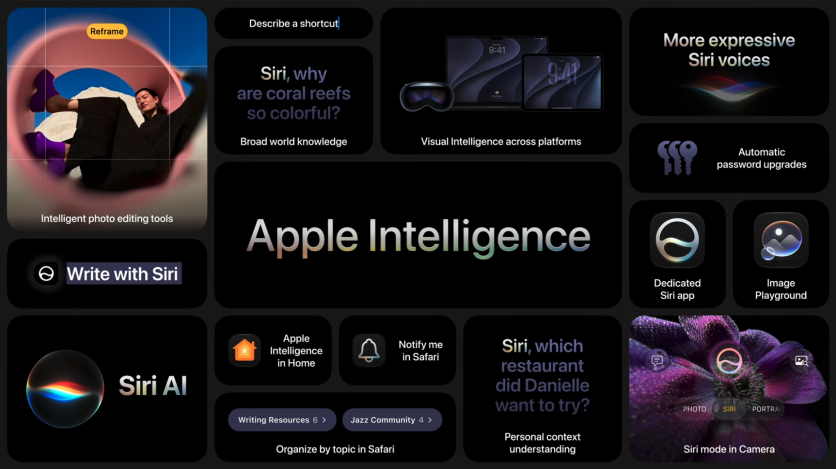
With Monday's keynote behind them, Apple developers at WWDC 2026 shifted into the hands-on phase Tuesday as Craig Federighi, the company's senior vice president of software engineering, fielded pointed technical questions from developers and press in a live Q&A session at Apple Park — the first deep public accounting of the engineering choices behind the most architecturally significant iOS cycle in years. What emerged from Monday's announcements, and what is now being stress-tested in the Group Labs running through Friday, June 12, is a framework architecture with real consequences for every developer who ships on Apple platforms.
How Foundation Models Lets Developers Swap AI Providers in One Step
The biggest developer-side announcement from Monday is the new LanguageModel protocol built into Apple's Foundation Models framework — a public Swift interface that third-party cloud model providers implement to expose a common inference surface for iOS 27, macOS 27 (Golden Gate), iPadOS 27, watchOS 27, and visionOS 27 apps.
What this means in practice: a developer team can prototype an app using Apple's on-device model, then route complex queries to Google's Gemini or Anthropic's Claude — or swap between them — by updating a Swift Package Manager dependency, with no changes required in the session logic or the rest of the application code. Google has confirmed that cloud-hosted Gemini models plug into the protocol through the Firebase Apple SDK, giving on-device and cloud inference a shared API surface. Anthropic has published a Swift package implementing the same protocol.
The framework's on-device model runs on Apple's Neural Engine, producing results locally and privately with no network request. When a query's complexity exceeds what the on-device model handles well, the request escalates to Apple's Private Cloud Compute — stateless Apple Silicon servers that process the query without retaining any data afterward. The heaviest queries, requiring the full expressive power of Siri's custom 1.2-trillion-parameter Gemini model, route to Google Cloud, where Nvidia Blackwell B200 GPUs built for trillion-parameter inference handle the load. Apple's privacy architecture acts as a proxy at each handoff: queries are anonymized, stripped of Apple ID linkage, and tokenized before reaching Google's infrastructure. Independent security researchers have been able to examine Apple's Private Cloud Compute system through a dedicated research program.
Federighi addressed questions about the Google Cloud routing in Tuesday's post-keynote media session, telling journalists that Apple uses "none of the models that Google deploys to its customers" and that user requests "are completely private to you. They're never stored. They're never accessible to anyone." Nakash, chief executive of Ciphero, offered a pointed counterpoint, arguing that Private Cloud Compute is "only as private as the weakest link" and that any path Google retains to usage data for model improvement would "fundamentally break down" the privacy guarantee.
The server model accessed through Private Cloud Compute supports a 32K context window with configurable reasoning levels and requires no account setup, authentication, or API keys from the developer. New built-in tools added to the framework this cycle include a BarcodeReaderTool and OCRTool backed by Apple's Vision framework for reasoning over visual information, and a Spotlight-powered search tool that enables fully local Retrieval-Augmented Generation — a capability that previously required developers to build and maintain their own vector database infrastructure.
What Siri AI Needs From Your App Before Fall
Apps that have not implemented App Intents are invisible to the new Gemini-powered Siri. App Intents is the Swift framework, available since iOS 16, through which apps declare the actions and content Siri can call directly — without the user opening the app. At Monday's Platforms State of the Union, Apple gave SiriKit a formal deprecation notice and made App Intents the only integration surface for Siri under iOS 27 and later.
The migration window is roughly two to three years before SiriKit functionality is removed entirely. Apps using the older INExtension and intent classes still compile under iOS 27, generating deprecation warnings. But they will not surface in the rebuilt Siri experience, which routes exclusively through App Intents. That means any developer who has not migrated will have shipped a version of their app that does not respond to the AI assistant billions of users will receive when iOS 27 releases publicly this fall. Susan Prescott, Apple's vice president of worldwide developer relations, described the combination of Foundation Models and agentic coding in Xcode 27 as giving developers the tools they need "to focus on what they do best: bringing their incredible ideas to life."
The App Intents migration labs are among the busiest at the conference this week, drawing developers with legacy SiriKit integrations who need to scope the refactoring effort before September's submission deadlines arrive.
Xcode 27 Brings AI Agents Into the Build Cycle
Xcode 27 ships with an expanded agentic coding system built around two complementary execution paths. A local, Neural Engine-tuned model runs on the developer's Apple Silicon machine, providing real-time code and documentation suggestions specific to the active Swift project and Apple SDK structure. Heavier analysis — structural bug-finding, multi-file architectural reasoning — routes to third-party models: the IDE ships with out-of-the-box integrations for Anthropic's Claude, Google's Gemini, and OpenAI's coding agents. Developers onboard through Xcode's Intelligence settings panel.
The agent can simulate entire apps, write and run tests, interact with Playgrounds, inspect visual changes through live previews, and operate the iOS Simulator through a new Device Hub. Multi-turn exchanges, streaming responses, and a canvas that renders Markdown alongside code changes and previews all ship in the first developer beta. The Model Context Protocol wires more than 20 tools into the agent in the current release.
WWDC 2026 Developer Tools Still Locked Out in EU and China
One significant constraint: Siri AI does not ship in the European Union or China with iOS 27. Apple cited the EU's Digital Markets Act as the blocker for European users, with Federighi stating in a post-WWDC press release that EU regulators "did not accept any of Apple's proposed solutions to bring Siri AI to the EU while safely supporting other virtual assistants." The Foundation Models developer API is not subject to the same geographic restriction — developers can build and test against it globally — but any end-user experience that depends on the rebuilt Siri AI assistant carries the same limitation as the consumer launch.
Notably, EU developers are also blocked from testing the new Siri AI features in their own apps during development, a constraint that compounds the regulatory standoff's practical impact on European iOS development teams. The China exclusion applies separately, reflecting that market's regulatory environment.
Context: A $250 Million Settlement and a Two-Year Delay
The Gemini-powered Siri announced Monday is, in the most direct sense, the product Apple's class action plaintiffs were waiting for. In May, Apple reached a $250 million settlement with buyers of iPhone 15 Pro, iPhone 15 Pro Max, and all iPhone 16 models purchased between June 10, 2024, and March 29, 2025, who argued that Apple's advertising for the iPhone 16 launch falsely depicted AI-powered Siri capabilities that were not available at the time. Final court approval for the settlement is scheduled for June 17. Apple denied wrongdoing, stating it resolved the matter to stay focused on its products.
The features the plaintiffs described — personal context awareness, on-screen understanding, and cross-app automation — are precisely what the rebuilt Siri, running on the three-tier Foundation Models architecture, is designed to deliver now. Whether it does so reliably at scale, on hundreds of millions of devices, starting in September, is the question the developer betas now open for testing.
What Developers Can Do Before WWDC Sessions End
The WWDC 2026 session catalog, available free through the Apple Developer app and at developer.apple.com/wwdc26, includes more than 100 sessions running through Friday, June 12. Developer betas for iOS 27, macOS 27 (Golden Gate), iPadOS 27, watchOS 27, tvOS 27, and visionOS 27 are available now to Apple Developer Program members. Sessions with the highest developer priority this week include the Foundation Models deep-dive covering the LanguageModel protocol and server model access, the Xcode 27 agent APIs session, and the App Intents migration walkthrough.
The Group Labs — bookable small-group sessions with Apple engineers — have filled fastest for Apple Intelligence, Foundation Models, and App Intents tracks. Engineers working on health, productivity, and creative apps have been especially active in the Foundation Models labs, given the framework's ability to handle sensitive-data inference entirely on-device without a cloud request.
WWDC 2026 runs through Friday, June 12. Tim Cook, whose final WWDC keynote marked his last public appearance as Apple's chief executive before John Ternus assumes the CEO role on September 1, opened the conference Monday with a farewell to the developer community.
Frequently Asked Questions
What is new in Xcode 27 for developers?
Xcode 27 ships a dual-engine agentic coding system: a local Neural Engine model for real-time Swift suggestions and a cloud routing layer for heavier analysis via Anthropic's Claude, Google's Gemini, or OpenAI's agents. The coding agent can simulate entire apps, write and run tests, inspect visual changes through live previews, and operate the iOS Simulator through a new Device Hub, all available in the developer beta released June 8.
How does the Foundation Models LanguageModel protocol work?
Apple's LanguageModel protocol is a public Swift interface that third-party providers — currently Anthropic and Google — implement to expose their cloud-hosted models through the same API surface as Apple's on-device Foundation Models. Developers install a Swift Package Manager dependency for a given provider and the rest of the application code — session logic, tool calls, context management — remains unchanged. The protocol ships with iOS 27, macOS 27, and the other OS 27 releases.
Is Siri AI available in the EU and China with iOS 27?
Siri AI will not be available in the European Union or China at the launch of iOS 27 and iPadOS 27. Apple cited the EU's Digital Markets Act as the reason for the European exclusion after regulators rejected Apple's proposed compliance solutions. EU developers are also unable to test the new Siri AI features in their apps during development. The Foundation Models developer API itself is not geographically restricted.
What is the deadline for the App Intents and SiriKit migration?
Apple gave SiriKit a formal deprecation notice at WWDC 2026 and signaled a two-to-three-year support window before removal — roughly the iOS 29 cycle, expected around fall 2028. Apps using SiriKit will not surface in the new Gemini-powered Siri experience when iOS 27 reaches the public in September, making migration a priority for any app where Siri discoverability matters.
ⓒ 2026 TECHTIMES.com All rights reserved. Do not reproduce without permission.


