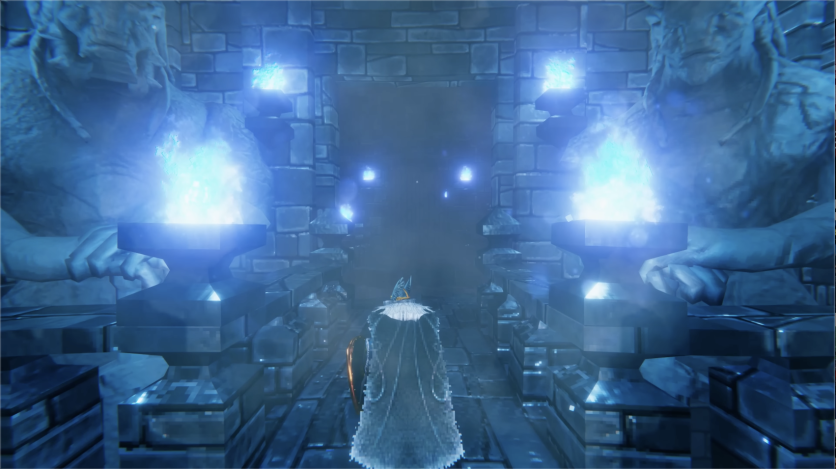
After five years and four months in Steam Early Access — and with 12 million copies already sold worldwide — Valheim is getting a graduation date. Iron Gate Studio and Coffee Stain Publishing announced at the PC Gaming Show 2026 on June 7 that version 1.0 will launch on September 9, 2026, simultaneously on PC (Steam, Microsoft Store, Linux, Mac), Xbox One, Xbox Series X|S, PS5, and Nintendo Switch 2 — with full crossplay across every platform from day one. The announcement ends a wait that, for a vocal slice of the community, had become its own long-running joke about the nature of Early Access development.
The centerpiece of the 1.0 update is the Deep North, confirmed as the game's eighth and final biome. It generates at the procedurally determined far northern fringe of every Valheim world — past the Mistlands and Ashlands in the progression sequence — and deceives on arrival: quiet snowfields and icy mesas give way to one of the game's most hostile environments, packed with new enemy types including the hulking Gammeltrolls and the Elakingar, underground dungeons, abandoned villages, and decrepit castles. PC Gamer's hands-on preview described the biome as a slow-burn reveal — peaceful in appearance and punishing in execution. Iron Gate creative director Robin Eyre put it plainly in a press release: "Approaching 1.0 feels equal parts exciting and anxious as we've worked hard to make Deep North a worthy conclusion to the Valheim journey."
For console players who have been watching from the sidelines, September 9 is also the game's formal debut on PS5 and Nintendo Switch 2 — the last two major platforms to receive it.
Valheim Deep North Biome: What Players Can Expect
The Deep North is not a pocket endgame zone. Iron Gate has confirmed it generates across the world map at a scale closer to early-game regions like the Meadows or Black Forest than the narrower Ashlands — an intentional design choice to make the final biome feel like a territory rather than a corridor. New items confirmed for the update include a grappling hook for vertical traversal alongside an ice skating mechanic unique to the biome's frozen lakes, revised armor sets drawing on Aesir mythology, and a reworked combat system that applies across all biomes, not only the Deep North. Boss kills will now trigger new story cinematics designed to pull the game's five-year arc into a more coherent whole. The update also introduces alternative biome variants — modified versions of existing biomes that appear further from the world's center — extending exploration beyond the linear progression sequence for veteran players who have already cleared the core content.
For players on long-running worlds, there is meaningful backward compatibility: the Deep North was always spatially present in every Valheim world as an unfilled placeholder zone. The 1.0 update fills those zones with real content, meaning existing worlds do not require a reset. Iron Gate recommends starting a fresh world to experience the full progression sequence — but the option is the player's.
Read more: 'Valheim' Xbox Release Date Set on March 14: Here are Other Video Games IGN Fan Fest 2023 Revealed
Does Valheim Crossplay Work Between PC and PS5?
The 1.0 launch is the most platform-significant release in the game's history. PS5 and Nintendo Switch 2 join for the first time, and full crossplay is confirmed across every supported platform: PC Steam, Microsoft Store, Xbox One, Xbox Series X|S, PS5, and Switch 2 can all connect to the same hosted server. Up to 10 players from different platforms can share the same world simultaneously.
The technical mechanism behind this is worth understanding. When crossplay is enabled in Valheim, the game switches its networking layer from Steam's own infrastructure to PlayFab — Microsoft's cross-platform multiplayer backend service, which also powers titles like Halo, Gears of War, and Sea of Thieves. PlayFab is what allows non-Steam platforms to join the same session as Steam PC players. The tradeoff is architectural and cannot be patched around: enabling crossplay disables BepInEx, the mod framework that underpins virtually all of Valheim's player-made content. There is no workaround. If a Steam player wants to run mods, they must disable crossplay — which means console friends cannot join that session. If console players are in the group, crossplay stays on and mods stay off. For a game that has accumulated a substantial modding community over five years, this is the most consequential practical limitation of the 1.0 launch for PC players.
A separate limitation applies to character data: cross-save is not supported. Players cannot carry a character from a PC playthrough to a PS5 session. Character data remains local to each platform. Worlds can be shared via join codes; characters cannot migrate.
Valheim's Unity Engine and Five Years on One Architecture
Valheim runs on a customized build of Unity — the same engine Iron Gate founder Richard Svensson used when he began the project as a solo effort in 2017 under the working name "Fejd." That continuity is unusual for a game that reached the scale Valheim did. The studio did not migrate to a new engine when it hit 10 million copies; it extended and optimized the Unity build it started with. The Xbox version was handled by external studio Fishlabs rather than Iron Gate itself, preserving Iron Gate's focus on the core PC game while enabling platform expansion — a decision that reflects how Unity's broad platform SDK support makes port handoffs between studios more tractable than they would be on a proprietary engine.
One architectural characteristic worth noting for players hosting dedicated servers: Valheim's main simulation loop runs on a single hot thread for player updates and physics, meaning performance scales primarily with single-thread CPU speed rather than core count. For players hosting servers on modern hardware, high single-thread performance matters more than raw core counts — a consideration that becomes relevant when planning for the wave of new PS5 and Switch 2 players expected at the September 9 launch.
Steam Early Access at Its Best: What Made Valheim's Model Work
Steam's Early Access program, launched by Valve in March 2013, was initially inspired by Minecraft's alpha-funding model. A 2014 industry study found that only about a quarter of games that enter Early Access ever graduate to a full release. Valheim's graduation puts it in the company of Baldur's Gate III, Hades, and a small cohort of Early Access graduates that delivered on their full roadmaps.
What distinguished Iron Gate's approach was the absence of any live-service mechanism. No battle passes, no DLC paywalls, no cosmetic storefronts, no base price increase — the game still costs what it cost in February 2021, and the existing player base did not have to pay again for any biome delivered since. The trade was patience: the Ashlands biome, the penultimate content release before the Deep North, arrived in May 2024, leaving more than two years between it and the 1.0 finale.
Research into Early Access graduation patterns shows that games in this category typically receive one major sales boost — at their initial Early Access launch — and do not reliably see a second spike upon leaving Early Access. Valheim's 1.0 is unusual in that it coincides with simultaneous debuts on two entirely new platforms. Whether that console launch generates a second commercial peak will be one of the more closely watched data points of the fall 2026 gaming calendar.
As of mid-2026, approximately 15,000 to 20,000 players log into Valheim on Steam daily — a sustained baseline that most Early Access titles with five-year histories would not achieve. The all-time concurrent peak of 502,000, set in February 2021, reflects a moment the game will not repeat. But for Iron Gate, September 9 is less a question of recapturing that peak than completing what they shipped. As Iron Gate CEO Richard Svensson said at the 10-million milestone: "We never imagined Valheim would become so big, not even in our wildest dreams."
Frequently Asked Questions
When is the Valheim 1.0 release date?
Valheim 1.0 launches on September 9, 2026, across PC (Steam, Microsoft Store, Linux, Mac), Xbox One, Xbox Series X|S, PlayStation 5, and Nintendo Switch 2. The announcement was made at the PC Gaming Show 2026 on June 7, 2026. All platforms launch simultaneously with full crossplay enabled from day one.
What is in the Valheim Deep North biome?
The Deep North is Valheim's eighth and final planned biome, generating at the far northern fringe of every procedurally generated world. It features a frozen landscape that becomes significantly more dangerous as players explore deeper, introducing new enemy types including Gammeltrolls and Elakingar, underground dungeons, abandoned villages, and decrepit castles. A grappling hook for vertical traversal and an ice skating mechanic on frozen lakes are also confirmed for the 1.0 update.
Does Valheim crossplay work between PC and PS5?
Yes — Valheim's full crossplay system connects PC Steam, Microsoft Store, Xbox, PS5, and Nintendo Switch 2 players on the same server. The system relies on Microsoft's PlayFab networking backend when crossplay is active. One important tradeoff: enabling crossplay disables Valheim's BepInEx mod framework entirely on PC. Players who want to run mods must disable crossplay, which prevents console players from joining the same session.
Should I start a new Valheim world for the 1.0 update?
Iron Gate recommends starting a fresh world to experience the full Meadows-to-Deep North progression sequence as designed. However, the Deep North will populate existing worlds automatically by filling the placeholder zones that have always been spatially present at the northern fringes of every seed — no world reset is required. Veterans with long-running worlds can push north at launch without restarting.
ⓒ 2026 TECHTIMES.com All rights reserved. Do not reproduce without permission.


