

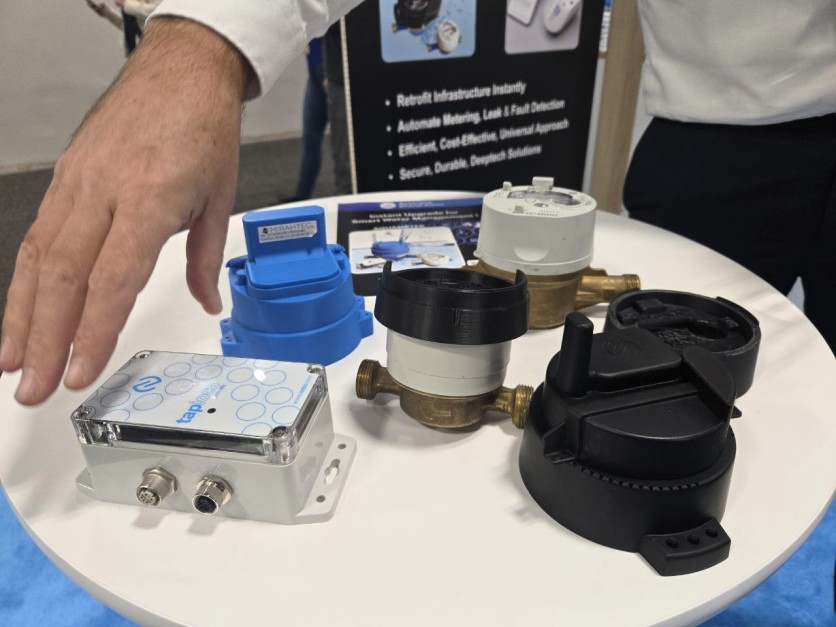
At CES 2026, while many companies are focused on entirely new "smart" hardware, French innovator IoTize is making a splash with a more practical approach: retrofitting. Their presence in the North Hall highlights a specialty in "no-code, low-code" IoT platforms that allow legacy industrial equipment to join the modern cloud without a total hardware overhaul.
"What this device does is it uses our wireless module and it adds to that a camera that's capable of optical character recognition," a staff member explained during an interview at their booth.
The "Add-On" Revolution: Smart Water and Industrial Telemetry
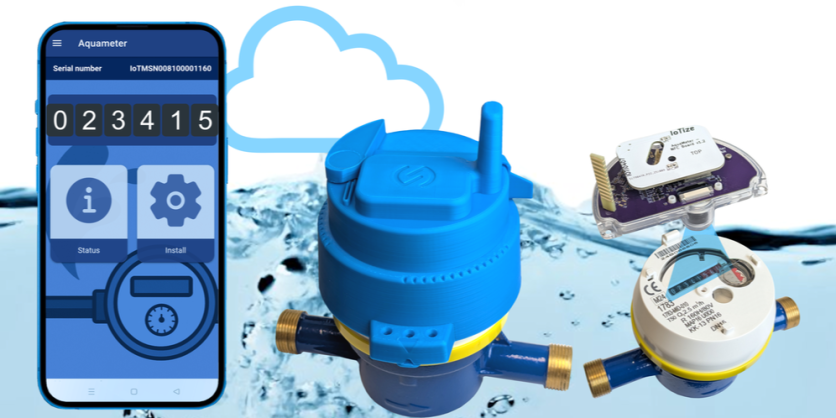
The highlight for IoTize this year is a specialized IoT device designed to bring telemetry to hundreds of millions of existing water meters. Instead of replacing a perfectly functional meter with an expensive smart version, IoTize offers an adapter that sits on top of the old unit.
- Automation of Billing: The primary goal is the automation of billing processes, removing the need for utilities to send personnel for manual readings.
- Leak and Fraud Detection: By sending data periodically to the network, the device can identify potential leaks or fraud where water usage doesn't match billing data.
- Rapid Installation: One of the most attractive features for clients is that installation takes "about 5 minutes, quite literally" and does not require cutting the water supply.
- Cost Efficiency: The retrofit approach costs only 15 to 30% of what it would cost to install a completely new smart meter.
Positively Critical: The Protocol Puzzle
IoTize's strength lies in its versatility. Their platform supports a massive range of communication protocols, from standard Bluetooth and Wi-Fi to industrial and automotive standards like Modbus, CAN, and Ethernet.
However, this "universal" approach brings its own set of challenges:
- Environmental Resilience: While the company reported "very, very good feedback" from field testing in Senegal—a difficult environment with high heat and humidity—scaling mass production for diverse global climates remains a hurdle as they wait for their first large industrial orders.
- The No-Code Learning Curve: Although the "no-code" platform simplifies setup, the sheer variety of supported protocols means that configuration still requires a solid understanding of the legacy machine's data structure.
- Connectivity Gaps: While they are expanding into NB-IoT and LoRaWAN, their current roadmap still has gaps, such as satellite communication, which is a frequent request for remote infrastructure.
Looking Toward 2027: Pay-Per-Use and Satellite
The roadmap for CES 2027 is already taking shape, with a focus on expanding into the African and European markets where "pay-per-use" water models are common.
"The next major feature... opens up for us a lot of markets," the representative shared. This future iteration will include an "interrupter" that can physically stop the water supply once a pre-paid limit is reached, a crucial requirement for many international utilities. Additionally, the company is working to integrate satellite communications to ensure that even the most remote equipment can be monitored.
IoTize is proving that the future of the "smart city" doesn't have to mean throwing away the past. By providing a "discrete" and affordable bridge to the cloud, they are establishing a foundation for financial stability while solving real-world infrastructure problems globally.
ⓒ 2026 TECHTIMES.com All rights reserved. Do not reproduce without permission.


