

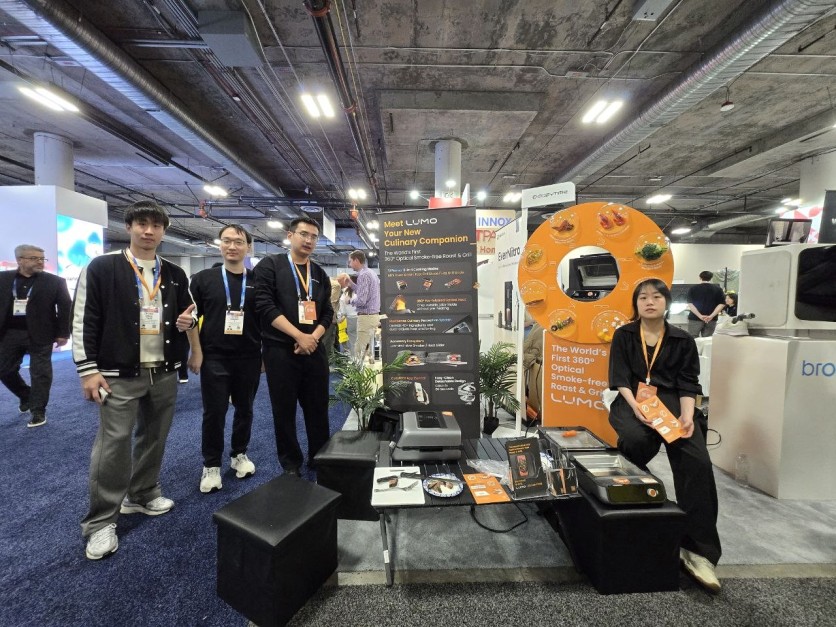
At CES 2026, Lumo (by Cozytime) is redefining the kitchen by replacing traditional heating elements with concentrated beams of invisible far-infrared light. This "optical heating" technology allows for extreme speed and precision, promising to transform home cooking into a Michelin-level experience.
The Hardware: 0.2-Second Heat-Up and 3-in-1 Versatility
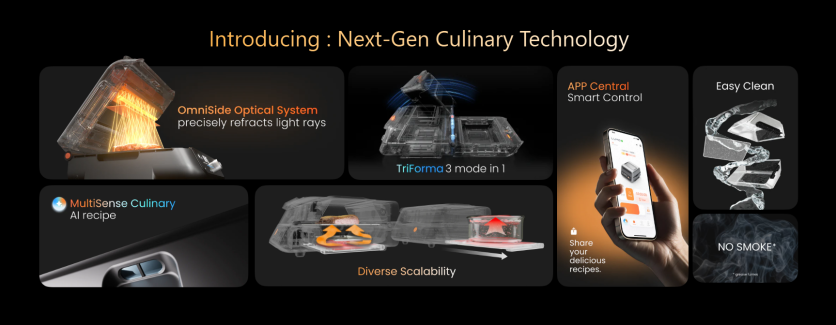
The Lumo device is built around a proprietary TriForma StateShift System, allowing a single unit to function in three distinct modes:
- Mini Oven: A setup designed for traditional baking tasks.
- Fast Grill: Focused beams for rapid, high-heat searing.
- Tabletop BBQ: A wide flat mode that opens 180 degrees for social, Korean BBQ-style dining.
Core Technology: Optical Heating & "MultiSense" AI
- Radiative Energy Transfer: Unlike traditional ovens that use hot air (convection), Lumo uses four precision reflectors to focus far-infrared light directly into the food. This results in a 0.2-second heat-up time and cooking speeds up to four times faster than standard methods.
- AI Visual Recognition: The oven features internal AI cameras that identify over 40 different food categories. This "MultiSense" system automatically adjusts the temperature and timing to ensure perfect doneness without user guesswork.
- Smokeless Design: By positioning heating elements on the sides rather than the bottom, Lumo prevents fat from vaporizing on hot surfaces, enabling high-heat indoor grilling without triggering smoke alarms.
Positively Critical: The Efficiency vs. Pricing Balance
- Superior Moisture Retention: The company claims their optical method reduces moisture loss by up to 12% compared to traditional ovens, as it doesn't rely on drying air currents.
- Conservative Pricing Strategy: While the internal technology is highly advanced, Lumo intends to price the unit conservatively—around $400 to $500 USD—to attract early adopters and gather feedback for future iterations.
- The Learning Curve: While the "0.2-second heat-up" is revolutionary, it may require a significant shift in user behavior for those accustomed to the slower, more deliberate pace of traditional preheating and baking.
Looking Toward 2027: Mass Production and Smarter Ecosystems
The roadmap for Lumo focuses on scaling their success and deepening their technological integration:
- 2026 Launch: The first generation of Lumo is moving into mass production and is expected to be in consumer hands by the end of the year.
- Expanded Accessory Ecosystem: Future plans include modular additions like the Heat Slider and specialized smoking accessories to further expand the device's capabilities.
- Advanced AI Integration: For CES 2027, the company expects to launch new models with even more advanced AI that simplifies the cooking process further, potentially moving toward more autonomous meal preparation.
Lumo is effectively moving AI from a "buzzword" into a functional hardware tool, using physics and light to solve the oldest problems in the kitchen: speed, smoke, and inconsistency. By the time CES 2027 arrives, Lumo aims to have established a new category of "optical appliances" in homes globally.
ⓒ 2026 TECHTIMES.com All rights reserved. Do not reproduce without permission.


