Seven days after Ford Motor Company formally launched Ford Energy, its new battery storage subsidiary, the automaker announced its first commercial contract: a five-year, up-to-20-gigawatt-hour supply agreement with EDF Power Solutions North America, signed May 18, 2026. The deal is built on lithium iron phosphate technology licensed from Contemporary Amperex Technology Co. (CATL), a Chinese battery giant the Pentagon added to its Chinese Military Company list in January 2025 — and which, according to people with direct knowledge of the factory conversion, now has engineers operating inside Ford's Kentucky plant with Chinese government security personnel on site. The winner of this industrial realignment is not Detroit or Seoul. It is Ningde.
Korean Equipment Out, Chinese Equipment In
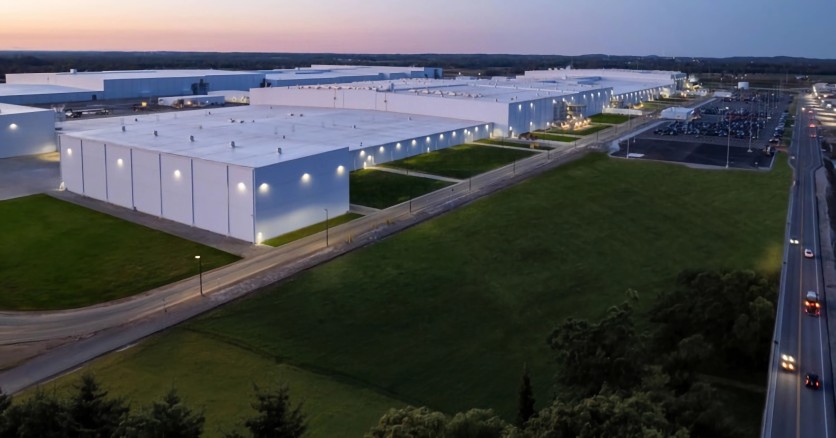
Ford's BlueOval Battery Park in Glendale, Hardin County, Kentucky was built by the BlueOval SK joint venture — a 50-50 partnership between Ford and South Korea's SK On — at a cost of $5.8 billion. The plant opened in August 2025 and began producing nickel-cobalt-manganese (NCM) pouch cells for the Ford F-150 Lightning. Four months later, Ford and SK On announced the dissolution of the joint venture, with Ford taking sole ownership of the Kentucky facilities and SK On assuming control of the still-unbuilt Tennessee plant at BlueOval City.
Ford is now removing the Korean-made equipment that produced those NCM cells — lines accounting for more than 90 percent of the factory's hardware, according to industry sources — and replacing it with Chinese-built machinery to manufacture prismatic lithium iron phosphate (LFP) batteries using technology licensed from CATL. "Half of the existing equipment has already been removed, and the rest is being taken out," one person with knowledge of the factory conversion told industry sources. Responsibility for the displaced hardware, that person said, has passed entirely to Ford.
The two cell formats represent fundamentally different manufacturing approaches. The NCM pouch cells being cleared out are assembled by stacking cathode, anode, and separator layers flat — energy-dense but expensive. The CATL-licensed prismatic LFP cells replacing them use a jelly-roll winding process: the same electrode materials are wound into an oval and inserted into a rectangular metal can. The process is simpler, cheaper, and better-suited to the stationary storage market, where cost per kilowatt-hour outweighs energy density per kilogram. Tesla is pursuing the same approach at its LFP facility near Gigafactory Nevada, which is targeting approximately 10 gigawatt-hours of annual output for Megapack and Powerwall products.
CATL Personnel at Kentucky Site
What distinguishes the Kentucky conversion from an ordinary technology swap is what reportedly arrived with it. According to an executive at one of the battery equipment suppliers involved in the transition, CATL engineers dispatched to the Glendale plant were accompanied by Chinese public security officers — 公安 — assigned on a one-to-one basis to guard against technology leaks. A separate official at a Chinese equipment firm confirmed the arrangement, saying the security presence covered risks including unauthorized departures and that CATL's internal monitoring of its own personnel operating abroad is "strict."
CATL has not responded publicly to questions about personnel arrangements at U.S. facilities. The company has consistently denied having any military ties. After the Pentagon added CATL to its Chinese Military Company list in January 2025, CATL stated it "has never engaged in any military-related business or activities, so this designation by the Department of Defense is a mistake." As of April 2026, CATL remains on the list. The company's co-chairman, Pan Jian, made at least two trips to Washington to lobby for removal; people familiar with those meetings told Bloomberg that the chances of removal were slim given U.S.-China tensions.
China's National Intelligence Law, enacted in 2017, legally requires all Chinese organizations and citizens to "support, assist and cooperate with the state intelligence work" when asked. That statutory obligation applies to CATL regardless of where its employees are physically located, because the law carries extraterritorial effect over Chinese nationals. The National Defense Authorization Act for fiscal year 2024 bars the Pentagon from signing or renewing contracts with companies on the Chinese Military Company list beginning June 30, 2026.
CATL and its founder Robin Zeng are also specifically named in the One Big Beautiful Bill, passed by the House on May 21, 2025, which explicitly designates CATL as a Foreign Entity of Concern under expanded Inflation Reduction Act rules.
IRA Rules on Paper, Chinese Tech in Practice
Ford has maintained that the Kentucky plant is wholly owned by the company and that CATL's role is limited to licensing battery technology and providing technical support — an arrangement Ford argues satisfies IRA Foreign Entity of Concern rules, because Ford manufactures the cells. Ford did not respond to questions about CATL personnel on site.
Congressional scrutiny has not relented. The House Select Committee on the Chinese Communist Party previously found, in an investigation of Ford's Michigan plant, that Ford planned to use software from at least four Chinese companies linked to the Chinese military and the North Korean government. Kentucky state lawmakers have been more blunt: Kentucky Senate President Robert Stivers called the BlueOval SK project "the biggest boondoggle of economic recruitment in the state's history." The state's $250 million forgivable loan to BlueOval SK — which required the partnership to meet job creation targets that now will not be met — is under active renegotiation.
Ford has also formally assumed a $3.8 billion Department of Energy loan originally issued to BlueOval SK through a new SEC filing. The loan carries a fixed rate of 4.814 percent and requires Ford to maintain at least $4 billion in available liquidity at all times, with principal repayments beginning in 2030.
Ford Energy Signs EDF in First Commercial Deal
Ford officially launched Ford Energy on May 11, 2026, as a wholly owned subsidiary focused on utility-scale battery energy storage systems for data centers, grid support, and large industrial customers. Seven days later, Ford Energy signed its first commercial agreement: a five-year framework with EDF Power Solutions North America — an entity of France's EDF Group and one of the largest independent renewable power developers in the United States — for the potential supply of up to 20 gigawatt-hours of DC Block battery energy storage systems. Under the agreement, EDF can draw up to 4 gigawatt-hours annually. Deliveries begin in 2028.
Ford Energy's flagship product, the DC Block, is a standardized 20-foot containerized storage system built around 512-amp-hour LFP prismatic cells, rated at 5.45 megawatt-hours per unit. Lisa Drake, president of Ford Energy, called the agreement validation that "the market's need for a BESS supplier that combines industrial-scale manufacturing discipline with full lifecycle accountability" is real.
The commercial logic is clear: according to SNE Research, CATL held 30.4 percent of the global battery energy storage system market in 2025 — the highest of any company worldwide and the fifth consecutive year it ranked first. Samsung SDI and LG Energy Solution are building their own prismatic LFP lines inside the United States for the same reason.
Nine Korean Equipment Makers Absorb the Damage
Nine South Korean battery equipment manufacturers received orders tied to the Kentucky plant as part of the BlueOval SK buildout: Yoonsung F&C, PNT, TW, Hana Technology, Mplus, SFA, Javis, YHT, and Toptec. Most of that equipment had been ordered for production lines SK On was developing to fulfill a 15-trillion-won ($10.2 billion) supply agreement it signed with Nissan Motor in March 2025, covering 99.4 gigawatt-hours of batteries for Nissan's Canton, Mississippi assembly plant from 2028 to 2033.
Those orders are now unraveling. Hana Technology, Mplus, and Toptec have each publicly disclosed contract cancellations. On November 4, 2025, Mplus notified investors it had "received a notice of termination from BlueOval SK in line with Ford's strategy revision." The Nissan deal itself — SK On's first contract with a Japanese automaker and the largest single order in the company's history — is now at high risk of cancellation. Nissan has scrapped its EV production plans at Canton, triggering renegotiations that industry sources say may nullify the agreement entirely.
Tennessee Plant Stalled, Production Date Slips to 2028
The Tennessee plant at BlueOval City in Stanton that SK On inherited is not absorbing the lost volume. Equipment has been delivered but installation has stalled. "There are effectively no prospects, as there are no production plans," one equipment executive told industry sources. Originally scheduled to begin production in 2025, then delayed to 2026, the Tennessee facility's start date has now slipped to 2028. Discussions about a possible hybrid-vehicle program are underway, but a firm order is not expected before the second half of 2027. Separate reporting indicates the campus will eventually serve as a gas-powered truck plant, not an EV facility.
SK On is publicly optimistic. "We will first absorb the programs already contracted with Ford, and leverage the advantage of 100% sole ownership of the Tennessee plant to also allocate volume from automakers other than Ford, thereby maximizing utilization," a company official said.
CATL Deepens in U.S. Soil as IRA Workaround Takes Shape
The Kentucky conversion illustrates a structural tension in American industrial policy. The Inflation Reduction Act was designed partly to drive Chinese battery technology out of the U.S. supply chain by denying tax credits to Foreign Entities of Concern. Ford's licensing arrangement — in which CATL receives no direct IRA credit but its technology anchors production at a taxpayer-backed facility — satisfies the letter of the rules while generating the kind of Chinese industrial presence in American manufacturing the law was designed to prevent.
At the same time, Korean battery companies that answered Washington's call — spending tens of billions of dollars building American capacity in response to IRA incentives — are now discovering that being early to the U.S. market does not guarantee being chosen. The equipment that was supposed to anchor a Detroit-Seoul partnership in Glendale, Kentucky, is being loaded onto trucks. The technology replacing it carries a Ningde return address.
ⓒ 2026 TECHTIMES.com All rights reserved. Do not reproduce without permission.


