Three weeks before Disclosure Day opens in theaters, screenwriter David Koepp revealed in a new Vanity Fair profile published today, May 22, 2026, that the Steven Spielberg sci-fi thriller required a personal record 42 drafts across three years before Spielberg approved the final script — a number that speaks less to creative friction than to the structural difficulty of making a hard science fiction film that earns its own paranoia.
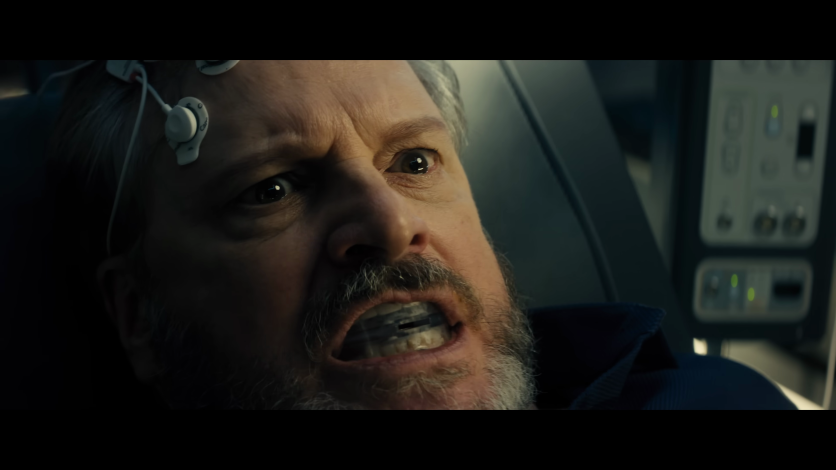
The film, which opens June 12 via Universal Pictures in IMAX, stars Emily Blunt as a Kansas City TV meteorologist whose live broadcast becomes something inexplicable, and Josh O'Connor as a whistleblower who admits to stealing secrets about non-human entities he was paid to conceal from the public. The ensemble also includes Colin Firth, Eve Hewson, Colman Domingo, and Wyatt Russell, with a score by John Williams marking his 30th collaboration with Spielberg.
For Koepp — who previously wrote Jurassic Park, War of the Worlds, and three other Spielberg films, and whose combined box office gross exceeds $2.97 billion — the draft count is a career high. The reason, he told Vanity Fair, is that Spielberg was "more exacting than I've ever seen him because he knows he's worked in this area before. He wants this one to be the best one."
Why Spielberg's Own Alien Canon Made This Script Harder to Write
Spielberg has spent nearly 50 years exploring extraterrestrial contact on screen. Close Encounters of the Third Kind (1977) framed aliens as spiritual revelation; E.T. the Extra-Terrestrial (1982) as childhood wonder; War of the Worlds (2005) as post-9/11 horror.
Each of those prior frameworks became an obstacle for Disclosure Day. Koepp told Vanity Fair the new film is a "further exploration" of Close Encounters' themes — but one structured as a 1970s-style paranoid thriller, and distinct from Spielberg's spiritual-wonder mode. "During Close Encounters of the Third Kind, I would say to myself: 'Wouldn't it be wonderful if all of this turned out to be true?'" Spielberg noted in the film's official production notes. "Almost 50 years later, I'm now thinking: 'Wouldn't it be wonderful for us to actually know that all of this is true?'"
According to No Film School's analysis of the Vanity Fair interview, the drafts required Koepp and Spielberg to constantly balance "intense action-thriller pacing against heavy, philosophical themes like religion, agnosticism, and how global society handles absolute, shattering truth." That is a three-way constraint problem — emotional logic, plot mechanics, and philosophical weight — that most screenplays never have to solve simultaneously.
The film began as a 38-page story treatment that Spielberg sent to Koepp. Koepp initially thought his longtime collaborator wanted only notes. Spielberg had other intentions. "He's a good collaborator," Spielberg said of Koepp, "because he listens as much to me as I do to him" — and Koepp, Spielberg noted, is willing to keep reworking a script "including and often through principal photography."
Real IAA Protocol Assumes Scientists Control Disclosure
Disclosure Day's thriller premise maps onto a real and unsolved institutional problem. The International Academy of Astronautics SETI Post-Detection Protocol — first drafted in 1989 and updated in 2010 — is the closest thing humanity has to a formal plan for handling confirmed contact with extraterrestrial intelligence. Under the framework, confirmed detections must be handled through multilateral channels, with no single researcher, observatory, or private company permitted to send a reply to an extraterrestrial signal unilaterally.
If a verified signal were received today, the sequence — under the current draft revision — would involve immediate internal validation across multiple independent observatories, notification of the scientific community via the International Astronomical Union and the IAA-SETI networks, public announcement with data transparency, and coordination with international bodies, likely under the United Nations Committee on the Peaceful Uses of Outer Space, before any reply is authorized. The goal, in the words of Pavel Zlatník's October 2025 analysis for Medium, is "calm, structured, and transparent — the opposite of a Hollywood panic."
The problem is that the protocol was written for a world where major government observatories or well-resourced institutions control the discovery. In 2022, the IAA SETI Committee established a task group specifically to revise the 2010 declaration, acknowledging that the next detection could come from a university lab, a private satellite array, or an AI-assisted telescope — and that in a social-media environment where false positives spread faster than verification, the assumption of a controlled disclosure chain no longer holds. The task group, whose lead authors include anthropologist Kathryn Denning and space lawyer Leslie Tennen, presented draft revisions at the International Astronautical Congress in Milan in 2024 and was continuing to incorporate community feedback as of late 2025.
Disclosure Day dramatizes exactly the failure mode the task group is trying to address. Koepp's whistleblower character is not a scientist, not an IAA signatory, not part of any verification chain. He has access to information about non-human entities and has decided, unilaterally, that the world should know. "I think people will debate how much of this is science fiction or how much of it is, or could be, science fact," Koepp told Vanity Fair. The protocol's entire architecture assumes the disclosure problem will be solved by the scientific community. The film's entire architecture assumes it won't be.
Drake Equation Commitment Hidden Inside a Paranoid Thriller
Frank Drake formulated his eponymous equation in 1961 at the first SETI conference, held at the National Radio Astronomy Observatory in Green Bank, West Virginia, as a structured way to estimate how many communicating civilizations might exist in the Milky Way. The equation — N = R*·fp·ne·fl·fi·fc·L — multiplies the rate of star formation by a cascade of probability factors, ending with L: the average longevity of a civilization capable of broadcasting into space.
The range of credible estimates for N runs from less than one to millions, depending on the value assigned to L and to the biological parameters. Disclosure Day's paranoid framing makes an implicit commitment on L. A civilization that has existed long enough to reach Earth and is arriving in the present must have survived long enough to develop interstellar capability — a high L value. But Koepp's description of the film as a thriller in which disclosure is treated not as wonder but as geopolitical destabilization suggests the filmmakers are working from an assumption that longevity and benevolence are not the same thing: that what makes a civilization old enough to reach us does not necessarily make it safe to acknowledge.
Spielberg's Longest Run at a Problem He Has Never Solved the Same Way Twice
For Koepp, who grew up watching Spielberg's films in the 1970s and 1980s before writing Jurassic Park in 1993, the 42-draft process was, by his own account, a deliberate push into unfamiliar territory. "You have to force yourself into other areas so you'll find out what you're good at and what you're not," he told Vanity Fair. "Unfortunately, the only way to find that out is to try something and fail at it."
The number also illuminates what "a draft" means at the Spielberg level. No Film School's analysis of the Vanity Fair interview notes that the count was not caused by a lack of vision but by a hyper-focus on calibration — each iteration was an attempt to minimize the gap between Spielberg's original 38-page concept and a film that could simultaneously work as a thriller, hold up to philosophical scrutiny, and exist in the same universe as Close Encounters without repeating it. Koepp describes this sixth collaboration with Spielberg as the one that has pushed him furthest from everything he already knew how to do. Whether 42 drafts was enough is a question June 12 will answer.
Disclosure Day was filmed from February to May 2025 in New York, New Jersey, and Atlanta. It carries a PG-13 rating for action/violence, some bloody images, and strong language, and runs approximately 145 minutes.
ⓒ 2026 TECHTIMES.com All rights reserved. Do not reproduce without permission.


