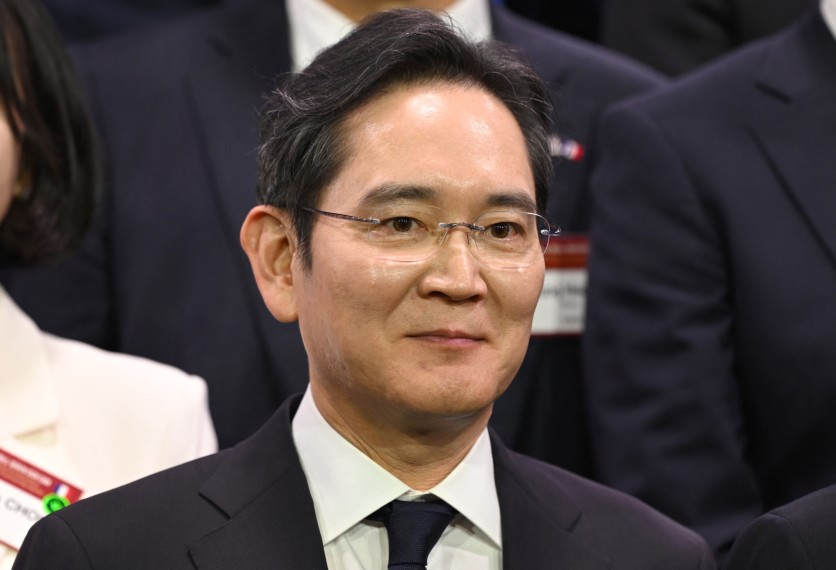
Samsung Electronics Chairman Lee Jae-yong landed in Taiwan on May 21, 2026 — less than 24 hours after his company's labor union suspended an 18-day strike that threatened to remove up to 4 percent of global DRAM supply — and went directly to MediaTek's headquarters in Hsinchu for closed-door talks with Chief Executive Rick Tsai. The visit, confirmed by Yonhap and multiple South Korean and Taiwanese media outlets, marks Samsung's most aggressive executive-level push yet to redirect MediaTek's chip manufacturing away from Taiwan Semiconductor Manufacturing Company, the dominant global foundry.
The core of Samsung's pitch: priority access to its high-bandwidth memory and DRAM at preferential terms, bundled with an offer to manufacture MediaTek's application processors on Samsung's 2-nanometer foundry process. With AI infrastructure investment driving a near-doubling of DRAM contract prices in the first quarter of 2026, Samsung's position as the world's largest memory chipmaker has become a lever it is now using to pry foundry orders loose from TSMC's grip.
Strike Resolution Clears Path for Global Client Outreach
The timing of the Taiwan trip was not coincidental. For six months, Samsung's management and its largest union — representing more than 45,000 workers — were locked in a dispute over performance bonuses tied to the company's AI-driven profit surge. A government-mediated agreement reached late on May 20 averted a walkout that South Korea's government had warned could harm the broader economy. Samsung's stock climbed more than 6 percent in Seoul the following day. Hours later, Lee boarded a flight for Taiwan. Industry analysts in Seoul read the trip as a signal that Lee is treating the labor resolution as a starting pistol for an international client acquisition campaign, with Taiwan at the top of the list.
Memory-Foundry Bundle Replicates Qualcomm Playbook
Samsung's proposed deal structure mirrors the strategy it deployed in 2024 and 2025 to secure foundry orders from Tesla and Qualcomm. By offering chip designers favorable terms on memory — a scarce and expensive input into the AI hardware supply chain — Samsung creates a financial incentive to move at least some foundry volume away from TSMC. The Seoul Economic Daily, citing sources close to the discussions, reported that Samsung and MediaTek also covered adjustments across their smartphone and home-appliance ecosystems, including an expansion of MediaTek's Dimensity application processors in Samsung Galaxy budget phones and tablets. Samsung has been increasing its use of Dimensity chips in its mid-range lineup as a cost-control measure, and broadening that supply relationship deepens the mutual dependency that makes a foundry switch easier to negotiate.
Kyeong-su Kang, a director at Counterpoint Research, has assessed that Samsung Electronics is positioned to grow its foundry volume in 2026 as average selling prices improve and 2-nanometer capacity comes online. The window, however, is finite: Counterpoint estimates 2-nanometer wafer costs run approximately 30 percent above 3-nanometer production, a gap that puts pricing pressure on fabless companies such as Qualcomm and MediaTek. That cost squeeze gives both sides a reason to negotiate: Samsung needs volume to justify running its new fabs at full capacity, and MediaTek needs an alternative to absorb cost increases it cannot fully pass on to smartphone and tablet buyers.
MediaTek Expands Packaging Partnerships as TSMC Capacity Tightens
MediaTek's relationship with TSMC remains its primary manufacturing partnership, but the Taiwanese chip designer is actively diversifying its supply chain. According to TrendForce, citing Commercial Times, MediaTek is adopting a dual advanced packaging strategy — continuing to use TSMC's CoWoS technology for training-focused AI chips, while introducing Intel's EMIB packaging for next-generation inference variants where physical chip-size requirements exceed what CoWoS can currently support. The driver is TSMC's CoWoS capacity crunch, not a break in the relationship. Still, the dynamic illustrates the broader logic Samsung is counting on: as MediaTek scales aggressively into AI accelerator design for customers including Google, it needs manufacturing partners who can offer both volume and flexibility that a single vendor cannot guarantee alone. MediaTek also recruited former TSMC advanced packaging executive Douglas Yu as an advisor in 2026, a move analysts read as positioning for a more independent chip-integration capability.
Samsung Foundry Turnaround Gathers Momentum
Samsung Foundry's candidacy for a MediaTek contract is more credible in 2026 than it was a year earlier. The division secured a confirmed $16.5 billion, multi-year contract with Tesla in July 2025 to manufacture Tesla's next-generation AI6 automotive chip at Samsung's $37 billion fabrication facility in Taylor, Texas, scheduled to begin operations in the second half of 2026. Qualcomm has also placed foundry orders with Samsung for certain chips. Reported 2-nanometer process yields, which stood near 20 percent in late 2025, had climbed to an estimated 55 to 60 percent by early 2026, according to industry sources — still below TSMC's yield performance but substantially improved from the lows that drove customer defections in 2024. Samsung is positioning its 2-nanometer mass production debut through the Exynos 2600 chip in the Galaxy S26 as a proof-of-process for external customers.
TSMC Remains the Formidable Rival on Home Ground
Displacing TSMC as MediaTek's primary foundry would be among the most consequential wins in Samsung Foundry's history, and analysts uniformly describe it as difficult to achieve outright. TSMC manufactures the overwhelming majority of MediaTek's volume and retains unmatched depth in advanced packaging — CoWoS in particular — that defines competitive position in AI-chip supply chains. Counterpoint Research analyst Jake Rhy has noted that the central question about TSMC is no longer raw wafer production capacity but system-level integration, making packaging capability as important as process node leadership heading into 2026.
What Samsung is realistically targeting is a partial shift — enough foundry volume to validate its 2-nanometer process against a major commercial customer and reduce the capital cost of running its Taylor facility below full utilization. That partial-shift logic is the same one that governed the Tesla and Qualcomm wins: Samsung does not need to displace TSMC entirely to justify its foundry investment. It needs enough volume to prove the process works at scale, and a MediaTek win — even a partial one — would send a signal to every fabless chip designer still weighing whether Samsung's recovery is real.
ⓒ 2026 TECHTIMES.com All rights reserved. Do not reproduce without permission.


