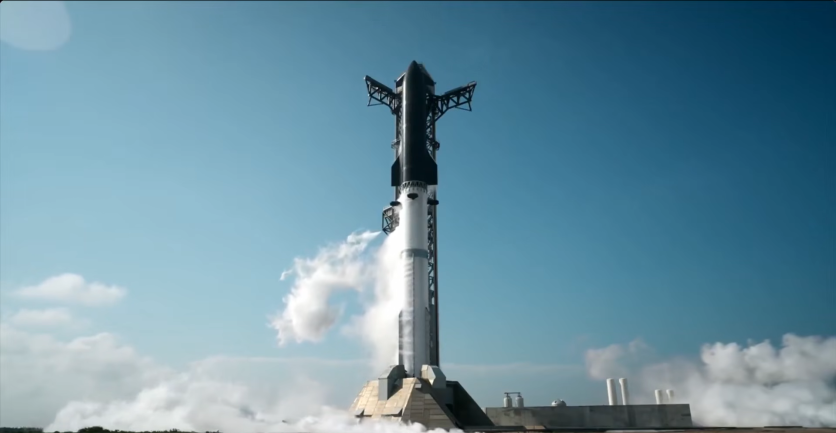
SpaceX achieved another major milestone after the first-ever SpaceX Starship V3 launch successfully lifted off during Starship Flight 12. The updated SpaceX megarocket launched from Starbase in South Texas, marking the debut mission for the redesigned Starship V3 vehicle.
While the flight remained a developmental test, it demonstrated several improvements aimed at pushing Starship closer to future operational missions beyond Earth.
The Starship V3 test also carried added importance because it came after a long gap between launches and introduced major hardware changes rather than minor upgrades. Flight 12 was designed to evaluate launch stability, payload deployment, heat-shield performance, and reentry behavior during a full test profile.
For followers of every SpaceX rocket launch, the mission offered a clearer look at how the company plans to prepare Starship for lunar exploration, deep-space travel, and future Mars missions.
What Happened During The Starship V3 Launch
The SpaceX rocket launch for Starship Flight 12 began at Starbase, using a newly completed second launch pad built for next-generation testing by SpaceX. The 408-foot SpaceX megarocket successfully lifted off as the first flight of the redesigned Starship V3 hardware, marking an important step in the program's development.
During ascent, the mission faced engine issues, including a shutdown of one Super Heavy Raptor engine and the loss of one upper-stage engine, though the flight continued on its planned trajectory.
A successful hot-staging separation occurred around two minutes and twenty seconds into flight, followed by a controlled splashdown of the booster in the Gulf of Mexico instead of a tower catch. The Ship upper stage also deployed 22 payloads, including Starlink simulators and imaging-equipped satellites.
Read more: Robots Built Today Face Quantum Exposure: WISeKey and SEALSQ Harden Silicon Before Deployment
Why Flight 12 Matters For SpaceX
The SpaceX Starship V3 launch marked a major redesign of SpaceX launch system rather than a routine prototype test. Starship V3 is designed to improve reliability, increase payload capacity, and expand mission flexibility as the company moves toward regular orbital flights and long-term deep-space exploration. These upgrades position the vehicle as a key step in the evolution of the SpaceX megarocket program.
Flight 12 also validated several critical systems needed for future missions, including payload deployment, reentry behavior, heat-shield monitoring, and structural performance under atmospheric stress. These tests are essential for eventual crewed missions.
The mission is also tied to NASA Artemis program, where Starship is planned as a lunar lander that must prove orbital refueling, deep-space travel, and safe Moon landings.
What SpaceX Still Needs To Prove
Despite the successful Starship V3 launch, several key goals remain unfinished for SpaceX. The company planned an in-space engine relight test during Starship Flight 12, but the maneuver was canceled after one engine failed during ascent. The issue highlighted reliability challenges that still need improvement before future operational missions can move forward safely.
Orbital refueling also remains a major hurdle for the SpaceX megarocket program. Future Moon and Mars missions will require Starship to transfer fuel in orbit, a capability that has not yet been demonstrated. NASA also requires successful uncrewed lunar landing tests before astronauts can use Starship missions.
A Major Step Forward For Starship
SpaceX Starship V3 reached space for the first time during Starship Flight 12, making the mission one of the company's most important recent test flights. The launch demonstrated that the updated vehicle could complete much of its intended mission profile, including payload deployment and atmospheric reentry, despite experiencing engine-related problems during ascent.
For those following every SpaceX rocket launch, Flight 12 served as a reminder that Starship remains a work in progress while still showing measurable advancement. The SpaceX megarocket program continues moving toward future lunar missions, deep-space operations, and eventual Mars exploration, with Starship V3 now playing a central role in those ambitions.
ⓒ 2026 TECHTIMES.com All rights reserved. Do not reproduce without permission.


