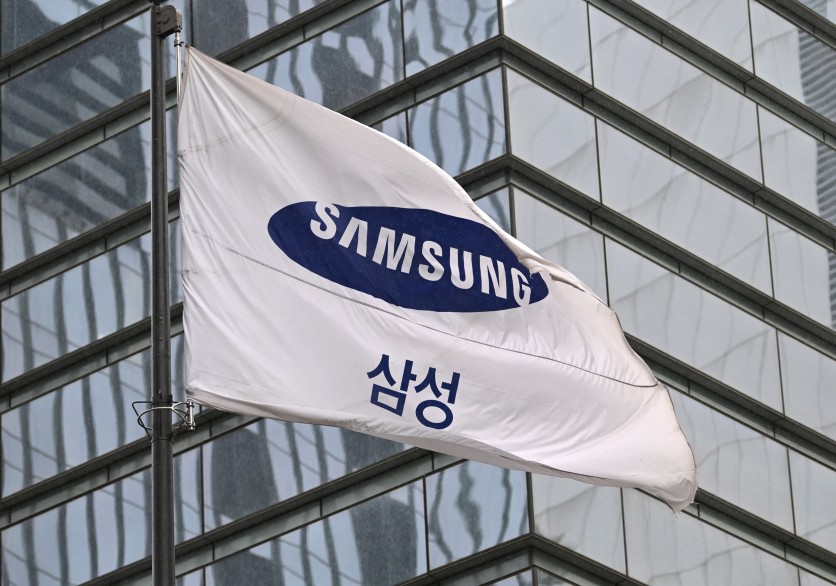
South Korea's two largest electronics conglomerates are turning their own factory floors into the fastest-growing market for the robotics companies they own — and Q1 2026 earnings disclosures confirm the flywheel is spinning faster than outside investors had anticipated. With Nvidia CEO Jensen Huang expected in Seoul this week after wrapping up GTC Taipei 2026 to meet Samsung, LG, and other chaebol leadership on physical AI cooperation, the timing of these earnings underlines just how much capital is now flowing through South Korea's chaebol automation cycle — and how much of it is circling back to affiliated firms the parent companies also happen to control.
According to South Korea's electronic disclosure system, Rainbow Robotics and Robostar posted first-quarter 2026 revenue of approximately 9.1 billion won ($6.1 million) and 25.1 billion won ($16.9 million), respectively — gains of 117% and 78% year-on-year. Samsung Electronics, which completed its acquisition of a 35% controlling stake in Rainbow Robotics in March 2025, is that company's largest shareholder. LG Electronics holds the same position in Robostar, which it acquired as a subsidiary in 2018.
Korean Factory Automation Orders Fund Nearly Half of Affiliate Revenue
The numbers underlying those headline growth rates reveal the degree to which each affiliate's fortunes are now structurally tied to the parent's capital expenditure decisions. Robostar booked 11.1 billion won ($7.5 million) in revenue from LG Electronics in the first quarter alone — roughly 44% of its total, and nearly five times the 2.3 billion won it recorded from the same source a year earlier. Rainbow Robotics received 2.4 billion won ($1.6 million) from Samsung in the quarter, more than triple the year-prior figure and representing about 27% of total revenue. Both affiliates' most recent growth is primarily a story about their parent companies upgrading their own production lines — and routing the spending to firms in which they hold controlling interests.
LG Electronics is deploying Robostar to automate production lines at facilities including its Gumi Future Park smart factory. Robostar's smart-factory segment generated 8.9 billion won ($6.0 million) in Q1 2026 alone, approaching nearly half of the segment's entire full-year 2025 output of 19.7 billion won — a compression that reflects the intensity of LG's current line-upgrade cycle. The company supplies vertical articulated robots and SCARA robots used in LG Group display, semiconductor, and battery manufacturing.
Samsung's approach mirrors this. After the March 2025 acquisition, the company began integrating collaborative robots, autonomous mobile robots, and dual-arm systems from Rainbow Robotics into its production and logistics operations. Rainbow Robotics' core robot segment generated 8.0 billion won ($5.4 million) in the first quarter — 87% of the company's total revenue, up from a 73% share a year earlier — as Samsung's internal deployment accelerated.
Samsung Labor Costs Drive Automation Urgency
The acceleration of robotics spending is not purely a long-term strategic bet. It is also a direct response to a labor cost crisis that reached its highest-profile moment in May 2026, when Samsung's largest union announced a strike involving more than 47,000 workers after wage negotiations broke down. The two sides reached a last-minute agreement under government mediation on May 20, 2026, with Samsung committing to allocate 10.5% of its semiconductor division's operating profit to worker bonuses — a binding 10-year formula that union members ratified on May 27 by a 73.7% margin. It was the first time a major South Korean company enshrined a fixed profit-sharing formula for manufacturing workers in a formal contract.
That settlement, analysts noted, will compound the incentive to automate. As reported by the Seoul Economic Daily, South Korea's four major conglomerates — Samsung, SK, Hyundai Motor, and LG — are actively accelerating factory robotics deployment in part to reduce the labor-cost exposure that the expanding bonus culture creates. "Companies will increasingly turn negative on hiring people and instead invest in AI to reduce headcount," said Yoo Byung-joon, a professor of business administration at Seoul National University. "The recent bonus disputes among labor unions could become a trigger for greater labor flexibility."
Samsung CFO Park Soon-cheol underscored the direction in the company's Q1 2026 earnings call. "We are securing capabilities to directly develop customized components through the internalization of key robotics parts," Park said, adding that the company planned to first develop manufacturing robots and later expand into home and retail sectors — language that confirms Rainbow Robotics' captive-revenue position is not incidental but strategic.
Robostar LG Electronics Relationship Extends Beyond Captive Orders
Robostar CEO Bae Byeong-ju told reporters in February 2026 that while LG Electronics is the anchor customer, the company is pursuing a broader maintenance and services business that would extend beyond LG Group boundaries. "All companies are starting to use robots but cannot hire specialists for maintenance," Bae said. "This market will grow, and Robostar will maintain not only our products but competitors' robots too." The CEO also stated plans to enter the glass substrate equipment market, targeting deliveries aligned with semiconductor production processes that major global chipmakers are expected to adopt around 2028.
Rainbow Robotics similarly maintains an external business in collaborative robots and autonomous mobile robots, including sales operations in the United States from a subsidiary in Schaumburg, Illinois. Both affiliates have meaningful external market ambitions — but their current growth trajectories are driven by internal orders, not those external wins.
Insider Trading Probe Targets Samsung and Rainbow Robotics Executives
The revenue story is complicated by an active legal proceeding. In March 2026, prosecutors from the Joint Investigation Unit for Financial and Securities Crimes at the Seoul Southern District Prosecutors' Office raided Samsung Electronics' headquarters in Suwon and Rainbow Robotics' headquarters in Daejeon. Prosecutors allege that executives and employees of both companies used undisclosed information about the pending acquisition to purchase large quantities of Rainbow Robotics shares before the deal was publicly announced, generating illicit gains estimated at 3 billion to 4 billion won ($2.1 million to $2.8 million). The Securities and Futures Commission under the Financial Services Commission had already referred the former Rainbow Robotics CFO and a Samsung Electronics executive to prosecutors on charges of violating the Capital Markets Act, with investigations extended to 14 additional individuals. The investigation was ongoing as of this writing and no formal charges had been confirmed.
The probe adds a layer of governance risk to what is otherwise a straightforward industrial narrative. South Korea's Korea Fair Trade Commission cleared the Samsung acquisition on March 5, 2025, finding minimal competition concerns given Rainbow Robotics' small global market share at the time. But the insider trading investigation is separate from that clearance — targeting the conduct of individuals during the deal process rather than the deal's market effects. Capital Group equity analyst Andrew Chang has identified longstanding chaebol minority-shareholder misalignment as a "key valuation overhang" for Korean conglomerate stocks, noting that the 15 largest chaebols make up two-thirds of the Korean equity market.
Smart Factory Korea 2026: What the Captive Revenue Model Means for Investors
The structural pattern Q1 2026 earnings reveal — conglomerate capital expenditure recycled as affiliate revenue — is neither new nor inherently problematic. South Korea's chaebol system has operated on cross-affiliate supply relationships for decades, and the Korea Fair Trade Commission has a regulatory framework specifically designed to monitor intra-group transactions for anti-competitive behavior. Samsung was fined a record 235 billion won ($206.8 million) in 2021 for an earlier affiliate transaction involving its catering subsidiary Welstory — the highest fine at that time for unfair cross-affiliate dealings — demonstrating the regulator's willingness to act.
For investors evaluating Rainbow Robotics and Robostar, the Q1 2026 numbers raise a question that the growth rates alone do not answer: how much of this revenue is durable, and how much is a function of a capital expenditure cycle at two parent companies? Both Samsung and LG have committed to AI-driven factory automation as a multiyear program — Samsung has announced its intention to build AI autonomous factories by 2030, and LG has similarly committed robotics as a core growth axis for the decade. That corporate commitment suggests the captive orders will persist. But investors in the affiliates are also, effectively, making a bet on Samsung and LG's willingness to keep routing factory spending to related parties rather than diversifying suppliers — a bet that the insider trading probe serves as an uncomfortable reminder can attract scrutiny.
As Jensen Huang prepares to meet South Korean chaebol leaders in Seoul this week, the broader context is clear: the automation investment the Korean conglomerates are channeling into their own factories is simultaneously building the case for their robotics affiliates, reducing their labor-cost exposure, and drawing the attention of prosecutors to how that investment was structured in the first place.
Frequently Asked Questions
What is Rainbow Robotics, and how is it connected to Samsung?
Rainbow Robotics is a South Korean robotics company founded in 2011 by researchers at KAIST, the Korea Advanced Institute of Science & Technology, and known for developing collaborative robots, autonomous mobile robots, and humanoid platforms. Samsung Electronics completed its acquisition of a 35% controlling stake in March 2025, paying approximately 267 billion won ($181 million), and subsequently established its Future Robotics Task Force to integrate Rainbow Robotics technology into Samsung's manufacturing and humanoid robot development programs.
How does Samsung LG robotics investment affect Rainbow Robotics and Robostar earnings?
In Q1 2026, captive orders from Samsung and LG accounted for approximately 27% of Rainbow Robotics' total revenue and 44% of Robostar's. Robostar's revenue from LG Electronics in Q1 2026 reached 11.1 billion won ($7.5 million), nearly five times the year-earlier figure, and was the primary driver of the company's 78% year-on-year revenue growth. Rainbow Robotics' 117% growth in the same period was similarly anchored by Samsung's internal factory deployment program rather than by new external customers.
What is the insider trading probe into Samsung and Rainbow Robotics?
In March 2026, prosecutors from the Seoul Southern District Prosecutors' Office raided both Samsung Electronics headquarters in Suwon and Rainbow Robotics headquarters in Daejeon as part of an investigation into alleged front-running. Prosecutors believe that executives and employees at both companies purchased Rainbow Robotics shares using non-public information about Samsung's planned acquisition, generating estimated illicit gains of 3 billion to 4 billion won ($2.1 million to $2.8 million). The investigation was ongoing as of May 2026 and no formal charges had been publicly confirmed.
How does Korean factory automation connect to Samsung's labor disputes?
Samsung's 47,000-worker strike threat in May 2026 — resolved by a last-minute deal that committed 10.5% of semiconductor operating profit to worker bonuses in a binding 10-year contract — directly illustrates why Korean conglomerates are accelerating factory automation investment. As labor costs rise and bonus obligations expand under South Korea's revised labor law, deploying robotics to automate production steps reduces the number of workers whose compensation is linked to operating profit. Samsung CFO Park Soon-cheol stated on the Q1 2026 earnings call that the company was "internalizing key robotics parts" — a signal that the factory automation program is also a cost-structure program.
ⓒ 2026 TECHTIMES.com All rights reserved. Do not reproduce without permission.


