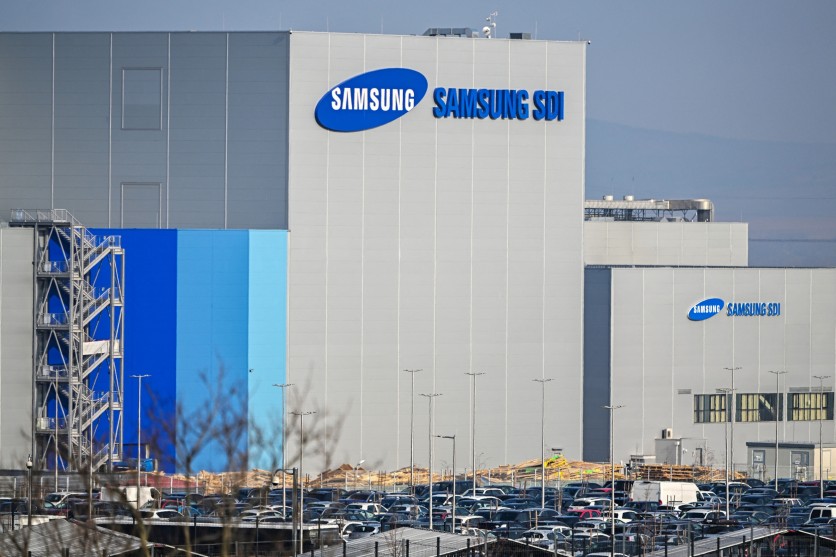
Samsung SDI has secured a supply agreement to manufacture Volkswagen Group's standardized "Unified Cell" at its Göd complex in Hungary, according to industry sources cited by The Elec, making the South Korean battery maker the third supplier of the cell after Volkswagen's own PowerCo subsidiary and China's Gotion High-Tech. The deal — which Volkswagen has not officially confirmed — arrives days after CUPRA Raval and Volkswagen ID.Polo production began June 3 at the Martorell plant in Spain, marking the first mass-market vehicles to roll off the line carrying the Unified Cell.
The development extends Samsung SDI's European footprint well beyond the premium-brand customers it has historically served. Where prior contracts from the same Göd plant covered Audi, Porsche, BMW, Hyundai, and most recently Mercedes-Benz, the Volkswagen Unified Cell deal opens access to the group's volume brands — Volkswagen, Škoda, and SEAT — which account for the bulk of the group's EV unit volume.
A battery-industry source told The Elec that Volkswagen has been in discussions with Korean cell makers about Unified Cell supply since early last year, and that Europe's policy shift toward regional sourcing is working in Korean manufacturers' favor. Korean companies currently account for more than 80 percent of battery-cell production capacity inside the European Union. That structural advantage is growing more valuable as the European Commission's Industrial Accelerator Act, proposed in March 2026, moves through the legislative process. The law would tie public procurement support and subsidy eligibility to EU-origin requirements for battery cells, cathode materials, and battery management systems, applied in phases starting three years after enactment.
Unified Cell Architecture: Side Terminals Change the Pack
The Unified Cell's defining technical feature is its side-terminal design, which departs from the conventional top-terminal layout used across virtually all previous VDA-standard prismatic cells, including the top-terminal cells Samsung SDI has historically supplied to Audi and Porsche.
In a conventional top-terminal prismatic cell, both the positive and negative terminals protrude from the top face of the cell. Busbar conductors that link cells in series and parallel must therefore run along the top of the pack, competing with thermal management hardware for that same surface. The Unified Cell relocates the terminals to the two opposing side faces of its 256 × 106 × 24.8mm prismatic housing. This frees the top and bottom faces of the cell stack for dedicated cooling plates, enabling more uniform thermal distribution across the entire height of the pack and supporting the cell's 660 Wh/l volumetric energy density — roughly 10 percent above the volume-segment cells the Unified Cell replaces, according to PowerCo.
The side-terminal layout also enables cell-to-pack integration, in which the cells function as structural load-bearing elements inside the battery pack rather than being first assembled into intermediate modules. Eliminating the module layer reduces the total component count by more than 35 percent and cuts pack weight by roughly 20 percent compared to a conventional module-based architecture, according to Samsung SDI's own technical presentations. The same side-terminal format is designed to accommodate multiple cell chemistries — lithium iron phosphate for entry-level short-range models, high-manganese no-cobalt for mid-range vehicles, and nickel-manganese-cobalt for the group's premium and performance EVs — without changing the external cell geometry or the pack-level infrastructure.
Industry sources told The Elec that Samsung SDI is currently converting two existing top-terminal production lines at Göd Plant 1 to the side-terminal specification. One line is already being installed on site; the second is being prepared in Korea before shipment. Mass production is expected to begin in 2027, with estimated capacity in the double-digit gigawatt-hour range, though exact figures have not been disclosed.
How Samsung SDI's Hungary Complex Became Europe's Korean Battery Hub
The Göd plant's emergence as a multi-customer hub reflects both deliberate investment and the particular dynamics of European EV supply. Samsung SDI has invested over €1.5 billion in the facility since 2016. The plant now manufactures 46mm cylindrical cells for BMW, prismatic cells for Mercedes-Benz under the April 2026 contract — valued by some industry estimates at approximately $6.8 billion — and prismatic cells for Hyundai Motor under a seven-year deal running through 2032 for European-market EVs including the Kia EV2 and Hyundai Ioniq 3. Samsung SDI's first-quarter 2026 earnings call set a target of lifting Hungary plant utilization above 70 percent in the second half of 2026, citing improving European EV demand led by the volume segment.
The Volkswagen deal does not replace Samsung SDI's existing business — it expands it. The company previously supplied top-terminal prismatic cells to Audi and Porsche, including the Audi Q8 e-tron, A7, and Q6 e-tron, as well as the Porsche Macan EV and Cayenne and Panamera hybrids. The Unified Cell contract moves Samsung SDI from the group's premium-tier sourcing list to its platform-level supply chain — the architecture intended to underpin 80 percent of all Volkswagen Group EVs by 2030.
Volkswagen's Unified Cell Supply Chain: Korean, German, and Chinese
Samsung SDI enters a three-supplier structure for the Unified Cell. Gotion High-Tech, the Chinese battery maker in which Volkswagen took an equity stake in 2020, started mass production at its Hefei plant in November 2025 after years of joint development. PowerCo, Volkswagen's in-house battery subsidiary, followed at its Salzgitter, Germany facility in late 2025, building toward approximately 20 GWh of annual capacity — enough for roughly 250,000 EVs. Reports indicate that Gotion personnel were dispatched in significant numbers to support the Salzgitter ramp-up. CATL is also understood to be in discussions with Volkswagen about Unified Cell supply, though no production has been announced.
Gotion's role in the supply chain carries a structural caveat. As a Chinese company, Gotion is legally subject to China's National Intelligence Law of 2017, which requires Chinese organizations to cooperate with state intelligence requests — an obligation that applies regardless of where Gotion's products are shipped or used. This legal condition drew sustained congressional opposition to Gotion's proposed battery plants in Michigan and Illinois. In Europe, Gotion's Hefei production primarily supplies Volkswagen's Chinese-market vehicles; the EU's Industrial Accelerator Act is, in part, a policy response to the supply-chain concentration risk that Chinese-origin cell production represents. Samsung SDI's contract, produced in Hungary under EU jurisdiction, operates under a different legal framework.
EV Battery Supply Chain in Europe: What the Strategy Shift Means
The Samsung SDI deal crystallizes a regional rebalancing in how European automakers are managing battery supply security. Volkswagen's Unified Cell strategy, announced at the company's "Power Day" in March 2021, was explicitly designed to replicate the economies of scale that Tesla demonstrated through component standardization — targeting a 50 percent reduction in battery manufacturing cost by 2030, with cell-format standardization contributing roughly 15 percent of that reduction for entry-level vehicles. By fixing the external cell geometry and varying only the chemistry inside, Volkswagen and its suppliers can switch chemistry fills on the same production lines without retooling, maximizing capacity utilization across demand cycles and model ranges. A factory that can produce both an LFP cell for an ID.Polo and an NMC cell for an Audi e-tron on the same tooling runs at a fundamentally different cost structure than one built for a single chemistry.
Samsung SDI's U.S. strategy has moved in a different direction. Its StarPlus Energy joint-venture plant in Kokomo, Indiana, built alongside Stellantis, has been converting its lines toward stationary energy storage system production. Three of four lines now serve ESS applications, with a nickel-cobalt-aluminum-based line activated in October 2025 and two LFP lines expected to come online in October 2026. The divergence between the European and American pivots is not incidental — tightening U.S. tariff policy and a softer domestic EV demand environment have made European contracts more strategically valuable, while the EU's growing policy preference for regional sourcing amplifies that advantage.
Volkswagen Group sold 200,000 EVs in the first quarter of 2026, down 7.7 percent from a year earlier — U.S. sales fell 80 percent on tariff impact and China dropped 64 percent amid a transition to new local models. Europe, however, rose 12 percent to 176,400 units, providing the demand signal that justifies the additional cell supply Samsung SDI is preparing to deliver from Göd.
Frequently Asked Questions
What is the Volkswagen Unified Cell and how does it work?
The Unified Cell is a standardized prismatic battery format measuring 256 × 106 × 24.8mm that Volkswagen developed to power up to 80 percent of its group's EVs by 2030. Its key engineering feature is a side-terminal design that relocates electrical contacts from the top face to the sides of the cell housing, freeing top and bottom surfaces for dedicated cooling plates and enabling direct cell-to-pack integration — removing the module layer to cut component count by more than 35 percent and pack weight by about 20 percent. The same external geometry accommodates multiple chemistries, from lithium iron phosphate for entry-level models to nickel-manganese-cobalt for performance vehicles.
Which Volkswagen Group models will use Samsung SDI's Unified Cells?
Samsung SDI's cells from Hungary are intended for volume brands — Volkswagen, Škoda, and SEAT/CUPRA — that Volkswagen is deploying the Unified Cell across starting in 2026. Production of the CUPRA Raval and Volkswagen ID.Polo, the first Unified Cell vehicles, began June 3, 2026 at the Martorell plant in Spain. Samsung SDI's Unified Cell production at Göd is expected to begin in 2027, meaning early vehicles will draw from PowerCo's Salzgitter plant and Gotion's Hefei plant while Samsung SDI's lines complete conversion and ramp up.
What is the EU Industrial Accelerator Act and why does it matter for EV batteries?
The European Commission proposed the Industrial Accelerator Act in March 2026 to require EU-origin compliance for battery cells, cathode materials, and battery management systems in products receiving public procurement support or public subsidies. Requirements are expected to phase in approximately three years after enactment. Korean battery manufacturers — including Samsung SDI, LG Energy Solution, and SK On — collectively produce more than 80 percent of EU battery-cell capacity, positioning them as the primary beneficiaries of origin rules that would disadvantage Chinese-origin cells in European public markets.
What is Samsung SDI's global battery strategy in 2026?
Samsung SDI is running parallel strategies across continents: in Europe, it is building Hungary into a multi-customer EV battery hub serving BMW, Mercedes-Benz, Hyundai, and now Volkswagen; in the United States, its Kokomo, Indiana StarPlus Energy plant is pivoting from EV battery production toward stationary energy storage as U.S. tariff conditions and a softer domestic EV market shift the demand picture. The company posted an operating loss of approximately 1.72 trillion won in full-year 2025 during an industry-wide EV slowdown and has targeted a return to profitability in the second half of 2026.
ⓒ 2026 TECHTIMES.com All rights reserved. Do not reproduce without permission.


