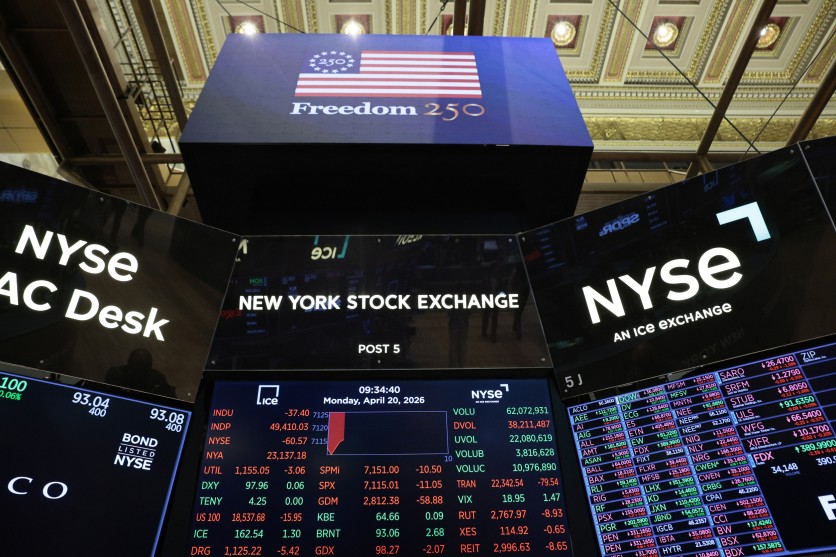
AI-chip designer Marvell Technology (Nasdaq: MRVL) and contract electronics manufacturer Flex (Nasdaq: FLEX) are about to become two of America's best-known index stocks. On June 5, 2026, S&P Dow Jones Indices announced that both companies will join the S&P 500 effective before the market opens on June 22, 2026, replacing Pool Corp and The Campbell's Company. The swap is part of the index provider's regular quarterly rebalance, a reshuffle spanning more than 20 companies across the large-, mid-, and small-cap tiers.
If you hold a standard S&P 500 index fund through a brokerage account or a workplace 401(k), this is not an abstract Wall Street event. After June 22, your fund will automatically own a slice of Marvell and Flex, whether or not you ever heard of either company. Here is the mechanism behind that, and the catch that history suggests comes with it.
Marvell is the new face of the AI-infrastructure trade
Marvell designs high-performance chips for data infrastructure:cloud and AI data centers, enterprise networking, 5G, and automotive systems. Its rise has been steep. The stock is up roughly 210% year-to-date in 2026 (some feeds have quoted the gain as high as 230%), carrying a market capitalization in the neighborhood of $230 billion. CNBC reported Marvell rose about 5% and Flex about 4% in extended trading right after the announcement, and by the next full session Marvell had jumped roughly 10%.
The inclusion is partly a profitability milestone. Joining the S&P 500 requires, among other criteria, four consecutive quarters of positive earnings, and Marvell's AI-driven results helped it clear that bar. The company has become a core supplier of custom silicon and networking chips to the hyperscalers building out data-center capacity. In March 2026, Nvidia invested $2 billion in Marvell as part of a partnership built around NVLink Fusion, with Marvell supplying custom XPUs and scale-up networking. At Computex 2026 in Taipei, Nvidia CEO Jensen Huang, appearing alongside Marvell CEO Matthew Murphy, went further and called Marvell a potential "next trillion-dollar company." That is Huang's framing, not a guarantee, but it captures why this addition is drawing so much attention.
Flex, the other newcomer, is a quieter story:a global contract manufacturer that assembles electronics for other brands. It does not have Marvell's AI halo, but it benefits from the same data-center buildout that drives demand for servers, power systems, and networking hardware.
What happens when a stock joins the S&P 500?
This is the part that matters for ordinary investors, and it is more mechanical than most people realize.
The S&P 500 is a list of about 500 large U.S. companies, weighted by float-adjusted market capitalization. "Float-adjusted" means the index counts only the shares actually available for public trading, not blocks locked up by insiders or strategic owners. A company's weight is its publicly tradable market value divided by the combined float-adjusted value of all 500 members, a methodology the index has used since 2005. Bigger companies get bigger weights, so Marvell will enter with a far larger footprint than a typical small addition.
Index funds and ETFs that track the S&P 500 are required by their own rules to hold every constituent in proportion to that weight. The three giants are Vanguard's VOO, BlackRock's iShares IVV, and State Street's SPY. As of early June 2026, VOO held about $1 trillion in assets, IVV just under $861 billion, and SPY almost $786 billion:nearly $2.7 trillion combined across only those three. And they are far from the only S&P-linked vehicles. Trillions more sit in mutual funds, target-date retirement funds, and institutional portfolios benchmarked to the same list.
When Marvell and Flex are added, every one of those funds must buy MRVL and FLEX shares to match the new index, and sell the departing names, Pool Corp and Campbell's, that no longer belong. That forced, price-insensitive buying is known as the "index effect." As one rebalance explainer described it, passive funds "must purchase shares of the incoming company before the effective date, creating mechanical buying pressure." The demand exists regardless of whether the stock looks cheap or expensive:a passive fund manager is not placing a bet, only tracking the list.
The bottom line for you:indexing means you own the index, and the index is about to include these two companies. That is why holders of an S&P 500 fund will own Marvell and Flex starting June 22 without lifting a finger.
The early bump comes with a historical catch
It is easy to read all of this as a green light. History suggests caution. Yahoo Finance's Chart of the Day found that for regular quarterly additions, the median stock beat the S&P 500 by about 3.3% in the 25 trading days before joining the index, and Marvell has already captured a large piece of that move with the early surge. After inclusion, the pattern tends to flip:the median addition trailed the index by roughly 1% after one quarter, about 2% after two quarters, and nearly 8% after a full year.
In other words, the announcement pop is often the best part, and much of the index-driven edge arrives before entry day rather than after it. There are exceptions in both directions, the analysis notes:Palantir is a standout post-inclusion winner, while names like Super Micro Computer and Netflix show that a company's own fundamentals can swamp the index effect once it is in.
For Marvell specifically, there is an added wrinkle. After a roughly 210% run on AI optimism, its entry is also a test of an AI-premium valuation. Marvell becomes a mandatory holding for tens of millions of passive investors at a moment when expectations are already high. None of this is a prediction, and none of it is a recommendation to buy or sell. It simply explains how the gears turn so you can understand what you already own.
Frequently Asked Questions
When does Marvell join the S&P 500?
Effective before the market opens on June 22, 2026, the date of the index's quarterly rebalance. The change was announced by S&P Dow Jones Indices on June 5, 2026.
Do I automatically own Marvell if I have an S&P 500 fund?
Yes. After June 22, any fund or ETF that tracks the S&P 500 (such as VOO, IVV, or SPY) will hold Marvell and Flex in proportion to their index weight, so you own a slice without doing anything. The amount is small at first, since each stock starts as a fraction of a 500-company index.
Why are Pool Corp and Campbell's leaving?
The S&P 500 is capped at about 500 members, so adding companies means removing others. As the index tilts further toward technology, lower-momentum consumer names were displaced to make room for Marvell and Flex in this cycle.
Is this a signal to buy Marvell?
No, and TechTimes is not offering financial advice (Claude is not a financial advisor). This article explains the mechanics of index inclusion, not whether the stock is a good investment. History shows much of the "index effect" gain often arrives before the addition date, and Marvell's AI-premium valuation carries its own risk. Decisions about buying or selling are yours, ideally with a licensed professional.
ⓒ 2026 TECHTIMES.com All rights reserved. Do not reproduce without permission.


