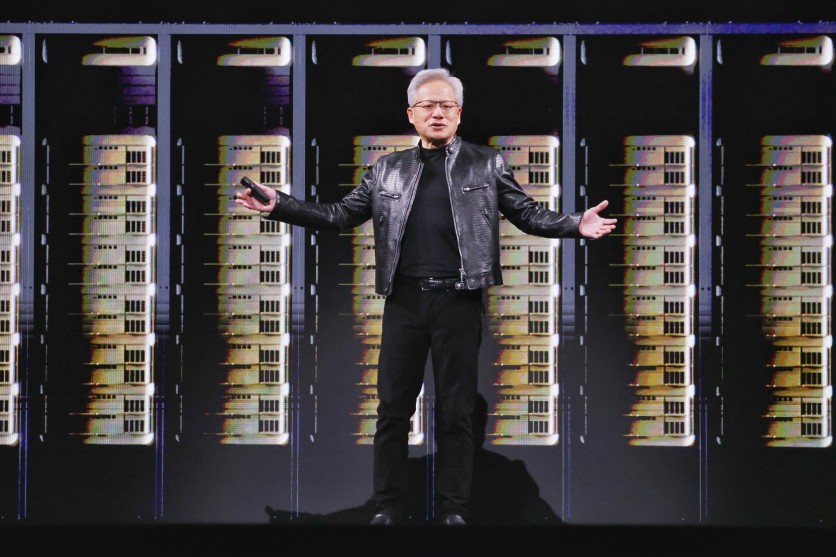
Nvidia CEO Jensen Huang returns to Paris next week to deliver the GTC Paris keynote at VivaTech 2026, running June 17 to 20 at Paris Expo Porte de Versailles, and this time the speech doubles as a progress report. One year ago on the same stage, Huang promised Europe more than 20 AI factories and anointed France's Mistral AI as the continent's sovereign-compute champion. The VivaTech conference programframes the 2026 keynote around what is next in AI factories, agentic AI, and physical AI powering "the new industrial revolution," the same trinity Huang has pressed at every GTC stop this year.
For anyone tracking Europe's AI buildout, the keynote is the week's main event: it will signal whether the sovereign-AI commitments of June 2025 are turning into running data centers, and what Nvidia plans to layer on top of them. The supporting cast sharpens the stakes. Mistral co-founder and CEO Arthur Mensch and Turing Award winner Yann LeCun, now executive chairman of world-model startup AMI Labs after leaving Meta, are both on the VivaTech 2026 speaker roster.
When Is Jensen Huang's GTC Paris Keynote at VivaTech 2026?
VivaTech lists the Nvidia GTC Paris keynote in its 2026 conference program but has not yet published the exact day and time within the June 17-20 window. Precedent points to an opening-morning slot at the event's biggest hall: Nvidia's GTC Paris 2025 schedule placed Huang's keynote at the Dôme de Paris on the first day of the show, June 11, 2025, from 11:00 a.m. to 12:30 p.m. local time, which is 5:00 a.m. ET. Nvidia streamed that keynote live on its channels and posted a replay afterward, and it ran GTC Paris as a conference-within-a-conference, filling Pavilion 7 with technical sessions, workshops, and partner demos alongside the main VivaTech floor.
The themes are already on the record. The session description points to AI factories, the giant data centers Huang describes as manufacturing intelligence the way power plants produce electricity; agentic AI, systems that plan and execute multi-step work rather than answer single prompts; and physical AI, the models that drive robots, vehicles, and industrial machines. Previews of the VivaTech 2026 program describe an edition shaped by AI, sovereignty, defense, cybersecurity, and energy, a markedly more geopolitical agenda than past consumer-flavored editions.
What Did Nvidia Promise Europe at GTC Paris 2025?
Last year's GTC Paris was one of the most consequential European tech keynotes in years, and it set the bar this year's speech must clear. Per Nvidia's own recap, Huang announced that Europe would build more than 20 AI factories, including several gigawatt-class gigafactories, declaring: "We now have a new industry, an AI industry, and it's now part of the new infrastructure, called intelligence infrastructure, that will be used by every country, every society."
The concrete pledges stacked up fast. Nvidia's newsroom announcement detailed plans for Germany to host the world's first industrial AI cloud, powered by 10,000 Blackwell GPUs and operated with Deutsche Telekom, while France, Italy, Germany, and the UK lined up thousands of exaflops of Blackwell compute for sovereign AI. Nvidia also committed to working with European model builders and cloud providers to optimize sovereign large language models for the region's languages and industries, and introduced its Nemotron open-model line as raw material for them.
The 2025 keynote stretched beyond model training, too. Nvidia highlighted its CUDA-Q quantum platform running on Denmark's Gefion supercomputer and arriving on Grace Blackwell systems, plus a roll call of European enterprises adopting agentic AI: Novo Nordisk, Siemens, Shell, BT Group, SAP, Nestle, L'Oreal, and BNP Paribas. Expect an updated version of that list in this year's speech; corporate logos are how Nvidia argues the AI factory boom is demand-driven rather than speculative.
Where Does the Nvidia-Mistral Alliance Stand Before the Keynote?
The headline partnership from 2025 was French. Mistral AI announced Mistral Compute, a sovereign AI cloud built on 18,000 Nvidia Grace Blackwell systems to host Mistral's models and European enterprise workloads without leaning on American or Chinese hyperscalers. Twelve months later, that bet has compounded into one of the deepest alliances in European tech.
In September 2025, Mistral closed a 1.7 billion euro Series C led by Dutch chip-equipment giant ASML, which took an 11 percent stake. CNBC reported the round valued Mistral at 11.7 billion euros, with Nvidia among the participating investors. In March 2026, the relationship deepened from silicon into models: Mistral joined Nvidia's Nemotron coalition as a founding member, and the two companies said they would co-develop frontier open-source models, pairing Mistral's architecture work with Nvidia's compute, tooling, and synthetic-data pipelines. Nvidia's companion announcement tied the effort to Mistral 3, a family of open multilingual, multimodal models optimized for Nvidia platforms from supercomputers down to edge devices.
The physical buildout is moving as well. Mistral has secured 830 million dollars in debt financing for its Nvidia-powered data center project near Paris, with the Bruyères-le-Châtel site expected to come online in 2026. With Mensch speaking at VivaTech the same week, Paris becomes the one stage where Nvidia's largest European customer, investor relationship, and open-model ally converge.
Read More
- Why VivaTech 2026 Is the Must-Attend Event for Startups Looking to Scale Globally
- AI Chip Stock Selloff Erased $1 Trillion as Oracle Earnings Offer Next Recovery Test
- Nvidia Not the Only AI Chip Winner as Broadcom Forecasts $56 Billion Custom Silicon Demand
Why Is Yann LeCun at VivaTech as AMI Labs Chairman, Not Meta's Chief Scientist?
The speaker list carries the most telling personnel change in AI research. LeCun, who appeared at previous VivaTech editions as Meta's chief AI scientist, returns with a new title: VivaTech's own promotion bills him as executive chairman of AMI Labs, the startup he co-founded after leaving Meta in November 2025, ending a 12-year run at the company.
AMI Labs is not a retirement project. In March 2026, it raised 1.03 billion dollars at a 3.5 billion dollar pre-money valuation, which TechCrunch called the largest seed round in European history, with backers including Bezos Expeditions, Cathay Innovation, Greycroft, and, notably, Nvidia itself. MIT Technology Review describes the venture as a contrarian bet against large language models: AMI builds world models that learn from physical reality rather than text, aimed at robots, drones, and autonomous machines.
That thesis collides productively with Huang's physical AI theme. If LeCun is right that the next leap comes from machines that understand the physical world, the compute to train those world models will most likely run on Nvidia silicon, and the robots they steer are exactly the market Nvidia's robotics platforms court. A keynote about physical AI, delivered in the city where a billion-dollar world-model lab just set up shop with Nvidia's money, is not a coincidence of scheduling.
What Would Count as Progress for Europe's AI Buildout?
The questions Huang faces in Paris are concrete. How many of the 20-plus promised AI factories have broken ground? How are the gigafactory projects progressing? Are the thousands of exaflops pledged by France, Italy, Germany, and the UK materializing on schedule? And what new European capacity, models, or robotics partnerships will Nvidia stack on top of last year's commitments?
There is a market subtext as well. AI infrastructure spending remains the engine of Nvidia's business, and investors have grown more sensitive to any wobble in the buildout narrative. A Paris keynote stuffed with new European orders, expanded Mistral capacity, and physical-AI deployments would land as evidence that the AI factory boom has a durable second continent. A speech that merely re-announces 2025's promises would be read very differently, in Brussels and on Wall Street alike.
The week's real spectacle is the convergence: Huang supplying the compute, Mensch building the region's flagship models, and LeCun betting a billion dollars that the next AI paradigm starts with world models built in Paris. For four days in June, Europe's AI future argues with itself in one building.
Frequently Asked Questions
When is Jensen Huang's keynote at VivaTech 2026?
VivaTech 2026 runs June 17 to 20 at Paris Expo Porte de Versailles, and the Nvidia GTC Paris keynote appears in the official conference program, but the exact day and time have not been published yet. In 2025, Huang's keynote opened the event's first morning at the Dôme de Paris at 11:00 a.m. local time, 5:00 a.m. ET.
What is an AI factory?
AI factory is Nvidia's term for a data center designed to mass-produce intelligence, running AI training and inference at industrial scale the way a power plant produces electricity. At GTC Paris 2025, Huang said Europe would build more than 20 of them, including several gigawatt-class gigafactories.
Is Yann LeCun still at Meta?
No. LeCun left Meta in November 2025 after 12 years as its chief AI scientist and co-founded AMI Labs, where he is executive chairman. The startup raised 1.03 billion dollars in March 2026, the largest seed round in European history, to build world models that learn from physical reality instead of text.
How is Mistral AI connected to Nvidia?
Mistral runs Mistral Compute, a sovereign AI cloud announced at GTC Paris 2025 and built on 18,000 Nvidia Grace Blackwell systems. Nvidia invested in Mistral's 1.7 billion euro Series C in September 2025, and in March 2026 the two companies agreed to co-develop frontier open-source models under the Nemotron coalition.
ⓒ 2026 TECHTIMES.com All rights reserved. Do not reproduce without permission.


