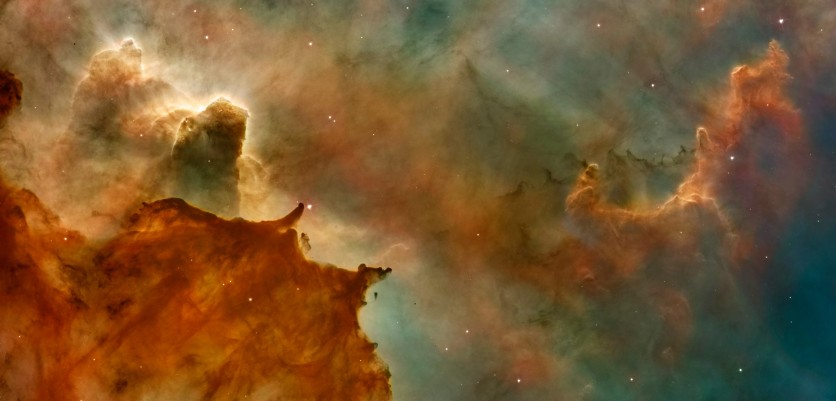
The best JWST images capture a universe far older, brighter, and more dynamic than anything seen before. Through powerful infrared eyes, the James Webb Space Telescope reveals structures from 13.5-billion-year-old galaxies to the hidden cores of stellar nurseries that Hubble could never penetrate. These snapshots expose a universe filled with gas pillars, gravitational lenses, and newborn stars tearing through their dusty cocoons. Each image carries scientific weight but also emotional impact, reminding viewers how vast and mysterious the cosmos truly is.
At the same time, James Webb photos deliver unprecedented detail thanks to Webb's massive 6.5-meter mirror and advanced infrared sensors. And when these visuals are compared to traditional NASA space imagery, the difference becomes immediately clear: Webb brings the universe into focus with clarity that feels almost unreal. Below is a ranked breakdown of the most breathtaking JWST visuals ever released—along with the science behind why each one matters.
Cosmic Revealers — Best JWST Images Behind the Hype
The best JWST images start strong with three iconic cosmic scenes that redefine how humans understand deep-space structures. Each one offers a different combination of scientific insight and emotional awe, showing why Webb is considered the most powerful telescope ever launched.
1. SMACS 0723
SMACS 0723 stands as Webb's most iconic release, offering an ultra-deep field where gravitational lensing magnifies galaxies more than 13 billion years old. The galaxy cluster acts as a natural telescope, bending and stretching light from objects behind it. This single image contains thousands of galaxies in an area of sky no bigger than a grain of sand held at arm's length. It is the deepest infrared view ever captured and remains the crown jewel of NASA's early Webb showcase.
2. Pillars of Creation
This James Webb view transforms a classic target into something entirely new. The Pillars of Creation glow in radiant blues and reds as infrared light exposes more than 5,000 infant stars forming inside towering dust pillars. Where Hubble showed only silhouettes, Webb reveals gas filaments, shockwaves, and fresh stars bursting through the columns. The image documents a never-ending cycle of destruction and creation within a star nursery 6,500 light-years away.
3. Carina Nebula – Cosmic Cliffs
In the Carina Nebula, Webb reveals "cosmic cliffs" where boiling gas and radiation carve intricate shapes across hundreds of lightyears. The sharp contrast outlines protostars ejecting high-speed jets, creating gaps and cavities as they grow. The nebula's chaotic landscape resembles a cosmic shoreline breaking into space. This frame demonstrates why Webb dominates in environments polluted with dust and radiation.
Highlights from this section:
- Gravitational lensing exposes galaxies billions of years old
- Infrared reveals hidden stars inside nebulae
- Protostars captured blasting jets across vast distances
- Deep-field imaging showcases thousands of galaxies at once
Galactic Collisions & Planetary Close-Ups — NASA Space Imagery in Action
This section highlights how NASA space imagery from Webb unveils both colossal intergalactic collisions and the fine details of planets in our own solar system. These views deliver dynamic, high-energy cosmic stories frozen in time.
1. Stephan's Quintet
Stephan's Quintet shows five galaxies locked in an intergalactic dance roughly 40 million light years away. Webb captures shockwaves heating gas to millions of degrees as galaxies crash and merge. Long tidal tails—some extending 500,000 lightyears—stretch across the frame. The image is a perfect example of the violent processes that eventually reshape galaxies, including our own.
2. Jupiter & the Great Red Spot
James Webb's photos of Jupiter stunned astronomers by revealing intricate atmospheric layers beneath the planet's thick clouds. The Great Red Spot glows with ammonia ice crystals, and the giant storm appears brighter in infrared. Jupiter's rings, small moons, and surrounding auroras are captured with unprecedented clarity. Even Europa makes a cameo, offering a glimpse at a moon believed to harbor a subsurface ocean.
Gravitational Arcs & Stellar Factories — James Webb Photos Beyond the Milky Way
These James Webb photos highlight complex gravitational structures and explosive star factories far beyond the Milky Way. Webb's infrared power transforms distant clusters and nebulae into detailed masterpieces.
1. Pandora's Cluster (Abell 2744)
Pandora's Cluster is a massive megacluster where the combined gravity of multiple clusters bends spacetime dramatically. This gravitational lens brightens and magnifies background galaxies up to 10 times, revealing structures never seen before. Curved arcs of light stretch across the frame, representing galaxies more than 12 billion lightyears away. This image demonstrates how JWST turns the universe's gravity into a powerful scientific tool.
2. Tarantula Nebula (30 Doradus)
Often called the largest and most active star-forming region near the Milky Way, the Tarantula Nebula bursts with stars up to 100 times the Sun's mass. Webb's view reveals hollowed-out stellar nurseries where young stars blow massive cavities in surrounding gas. Intricate filaments weave across the nebula, showing where future stars are forming. It is one of the clearest looks ever captured of a cosmic factory producing monster stars.
Highlights from this section:
- Gravitational arcs magnify ancient galaxies
- Megaclusters warp spacetime dramatically
- Nebulae reveal massive star-forming regions
- Filaments and cavities traced in unprecedented detail
Conclusion
The best JWST images continue to reshape humanity's understanding of space by capturing galaxies, nebulae, and cosmic structures with unmatched clarity. With every release, the telescope offers a deeper look into the earliest eras of the universe, revealing objects formed only a few hundred million years after the Big Bang. These visuals prove that James Webb is not just an upgrade—it's a transformational leap in what astronomers can study and what the public can experience.
Through groundbreaking James Webb photos and high-detail NASA space imagery, the telescope exposes the hidden architecture of the cosmos. From star nurseries bursting with newborn suns to gravitational lenses bending the oldest light in existence, Webb proves that the universe still has endless mysteries waiting to unfold. Its infrared legacy is only beginning.
Frequently Asked Questions
1. Why is SMACS 0723 considered the best JWST image?
SMACS 0723 is often ranked highest because it provides the deepest infrared view ever captured in such a small patch of sky. The gravitational lensing effect magnifies galaxies more than 13 billion years old, revealing objects never seen before. Its density of distant galaxies makes it a scientific goldmine. The image also demonstrates Webb's full imaging power right from its first release.
2. How do James Webb photos differ from Hubble's images?
James Webb photos use infrared wavelengths, allowing them to pierce through thick cosmic dust that blocks visible light. This gives astronomers access to early galaxies, star-forming regions, and hidden stellar structures. Webb also has a mirror six times larger than Hubble's, making its images significantly sharper. T
3. Why do NASA space imagery colors look different from real space?
The colors in NASA space imagery are often mapped from infrared wavelengths into visible colors so humans can interpret what the telescope sees. These "false colors" highlight important scientific features like gas composition, heat, and dust structure. Without color mapping, JWST photos would appear mostly featureless to the human eye. The color choices help emphasize temperature, elements, and physical processes.
4. What is the earliest galaxy seen in the best JWST images?
The earliest confirmed galaxy is JADES-GS-z14-0, which formed about 290 million years after the Big Bang. Webb's infrared sensitivity makes detecting such ancient objects possible. These early galaxies help scientists understand how the first stars ignited and shaped the early universe.
ⓒ 2026 TECHTIMES.com All rights reserved. Do not reproduce without permission.


