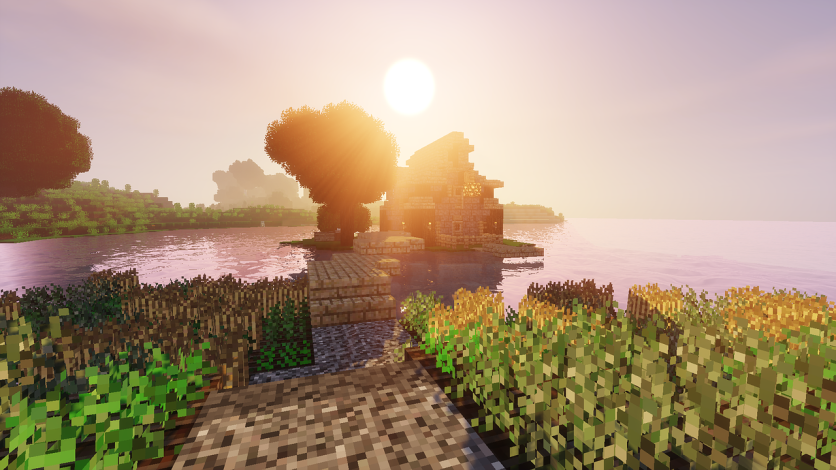
"Minecraft" resource farming has become a core part of long-term survival gameplay, especially for players who want constant access to building blocks, food, and gear without repetitive grinding for nearly unlimited resources.
Efficient use of a "Minecraft" resource farm allows players to spend more time exploring, building, and fighting bosses instead of manually gathering every basic material. When designed well, auto farms "Minecraft" players build can feel like they generate nearly unlimited resources over time while the player focuses on other tasks.
What is a 'Minecraft' Resource Farm?
A "Minecraft" resource farm is any setup designed to generate specific items repeatedly and reliably, often with built-in collection systems. These farms can range from simple hand-harvested crop fields to complex redstone contraptions that run automatically and funnel items into storage. Good farms focus on renewable materials and use game mechanics such as villager behavior, mob spawning, and crop growth to keep resources flowing.
In practice, most players progress through manual farms first, then upgrade to semi-automatic or fully automatic versions as materials and redstone knowledge increase. This progression ensures that the game remains balanced while still rewarding players who invest time in learning farm designs and optimization techniques.
Why Auto Farms Matter Early
Auto farms "Minecraft" players build early in a world quickly solve basic survival needs such as food and fuel. Even a simple automatic wheat or potato farm can provide enough food to eliminate constant hunting and manual harvesting. The earlier these farms are established, the faster a survival world shifts from scarcity to reliable surplus.
Automated farms also improve safety because players do not need to mine or explore dangerous areas as often for basic supplies. Over time, these setups can feel like they are producing unlimited resources, especially for materials like food, wood, and mob drops that continuously regenerate.
Core Food Farms
Food farms are usually the first type of "Minecraft" resource farm players build, since hunger directly affects survival. Basic crop farms for wheat, carrots, potatoes, and beetroot can be laid out in simple rows or grids with water in the center to keep the soil hydrated. Players often start with manual harvesting and later add water-flush systems or observer-based redstone to automate growth detection and harvesting.
Animal farms provide additional food types such as steak, mutton, pork, and chicken, along with secondary resources like leather, wool, and feathers. Simple pens can be upgraded into semi-automatic or fully automatic farms that use lava blades or fall damage to cook and collect drops. These farms support stable food supplies while also feeding trading and crafting needs.
Wood and Fuel Production
Wood is essential for tools, building, and crafting, so wood farms are a key component of efficient auto farms in "Minecraft" players' designs. Early game setups usually consist of saplings planted in rows, with manual harvesting as trees grow. As players progress, piston-based or TNT-based tree farms can significantly increase output and reduce the time spent chopping.
Fuel farms, such as bamboo and kelp farms, are important for smelting and cooking. Both bamboo and kelp grow quickly and can be harvested automatically with observers and pistons, then dried or used directly as fuel. When combined with composters, these farms also generate bone meal, further supporting crop production and reinforcing the feeling of unlimited resources.
Stone and Block Generation
Stone and cobblestone generators are among the simplest "Minecraft" resource farm setups and help supply large quantities of building blocks. These designs typically use flowing water and lava to generate cobblestone or stone that can be mined repeatedly without relocating. Advanced versions can integrate pistons to push blocks into a line, enabling continuous mining with minimal repositioning.
Abundant building blocks from these generators support large-scale projects such as castles, farms, and infrastructure like tunnels and bridges. When paired with beacon effects and enchanted tools, players can mine so quickly that these generators effectively provide unlimited resources for stone-based builds.
Mob Farms for Drops and XP
Mob farms are crucial auto farms "Minecraft" players use to obtain items like gunpowder, bones, string, and arrows. Basic mob grinders rely on dark spawning platforms, water channels, and fall damage to funnel hostile mobs into a kill chamber. The resulting drops are collected by hoppers and sent into chests, allowing players to gather large quantities of materials with little direct combat.
Specialized mob farms, such as iron farms, raid farms, guardian farms, and blaze farms, focus on high-value drops and experience points. Iron farms use villagers and iron golems to generate iron ingots continuously, while raid farms exploit raid mechanics for emeralds and totems of undying. These advanced farms tend to require more technical knowledge but repay that investment with near-unlimited resources for late-game gear and trading.
Crop and Villager Trading Loops
Combining crop farms with villager trading halls creates one of the most powerful "Minecraft" resource farm systems. Automated or semi-automated crop farms feed into storage, and players use the surplus to trade with farmer villagers for emeralds and other goods. Over time, this loop can generate vast amounts of currency without manual resource gathering.
Villager trading expands the concept of unlimited resources by turning farm outputs into enchanted books, armor, tools, and building materials. Professions such as librarian, fletcher, toolsmith, and armorer provide high-value trades that convert simple items like sticks, crops, and paper into powerful equipment. Smart balancing between crop production and villager demand prevents storage overflow and keeps trades refreshed.
Storage and Inventory Management
Efficient storage is essential because powerful farms will quickly drown players in items if systems are not in place to organize them. Hopper-based sorting systems filter items into labeled chests, ensuring that each farm output goes to a designated location automatically. Large storage rooms with rows of double chests help handle the high output of advanced "Minecraft" resource farm designs.
Portable storage further improves inventory management. Shulker boxes allow players to pack large amounts of materials into a single inventory slot, and ender chests give access to important items anywhere in the world. Color-coding shulker boxes by resource type helps keep bulk materials organized during building projects and long mining sessions.
Redstone Basics for Reliable Farms
Most advanced auto farms "Minecraft" communities share rely heavily on redstone components. Observers detect changes in blocks such as crop growth or bamboo height, pistons move or break blocks, dispensers apply water or bonemeal, and hoppers transport items to storage. Comparators and redstone clocks control timing and flow to keep farms running smoothly without constant intervention.
Learning these basic components allows players to understand, build, and troubleshoot many popular farm designs. It also helps them adapt existing concepts to their specific world layout or resource needs instead of following blueprints exactly. Redstone literacy is a major step toward designing custom systems that deliver near-unlimited resources in any survival world.
Performance and Chunk Loading
Performance considerations matter because large farms can strain both single-player and server worlds if designed poorly. Keeping farms within frequently loaded chunks ensures that they operate consistently while the player is nearby, rather than stopping when the player travels too far away. Concentrating important farms near the main base or spawn chunks maximizes uptime and resource output.
Efficient redstone also reduces lag by avoiding overly fast or unnecessary clock circuits. Limiting the number of constantly active entities, such as mobs and minecarts, prevents performance drops in heavily farmed areas. Players often experiment with different scales and layouts to balance resource production with smooth gameplay.
Late-game Mega Farms and Optimization
Late-game players often expand small successful designs into mega farms that supply entire servers or large building projects. Modular layouts make it easy to tile farm designs vertically or horizontally, greatly increasing output once beacons, enchanted tools, and ample building materials are available. Balancing farm scale with storage capacity remains important so that systems do not back up and waste potential drops.
Many players choose to hide industrial-looking farms behind decorative builds to maintain aesthetics without sacrificing efficiency. Underground or cave-based farm complexes are common for this purpose, allowing the surface to remain visually appealing while the technical infrastructure runs below. This approach maintains immersion while still granting the functional benefits of unlimited resources.
Frequently Asked Questions
1. Can Players Automate Item Sorting Without Complex Redstone Skills?
Yes. A simple sorter can use hoppers, comparators, and a small filter item setup to route each farm output into its own chest, without advanced timing circuits.
2. How Can Players Safely AFK at Their Farms?
Players can AFK safely by spawn-proofing the area, enclosing an AFK box, or placing an AFK platform high above the farm so mobs cannot reach them while chunks stay loaded.
3. What Is the Best Way to Power Farms Before Getting Beacons?
Before beacons, efficiency comes from using enchanted tools like Unbreaking and Mending and pairing farms with a steady XP source to handle repairs.
4. How Do Players Decide Which Resources Are Worth Automating?
Resources used constantly in bulk, such as food, wood, stone, and common mob drops, are the best candidates, while rare items are usually left to manual collection.
ⓒ 2026 TECHTIMES.com All rights reserved. Do not reproduce without permission.


