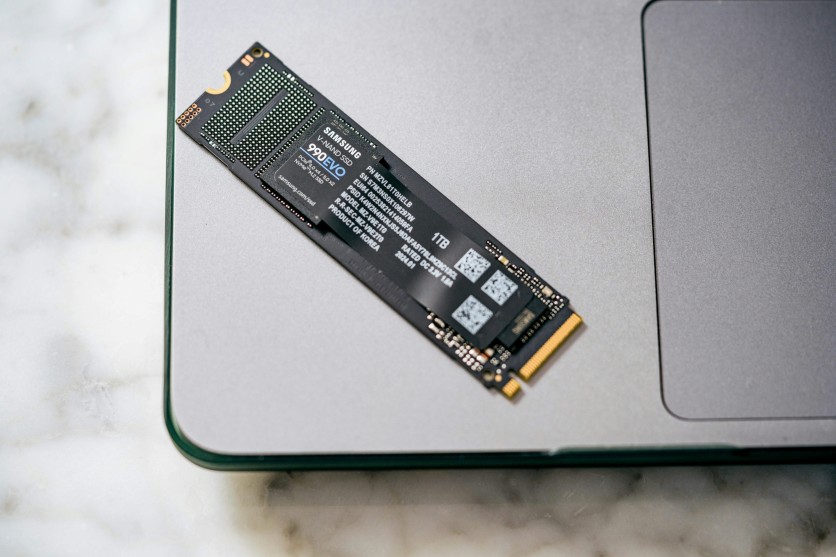
The SSDs vs HDDs 2026 debate is heating up as NAND flash prices drop around 30% annually, while new HAMR HDDs reach capacities exceeding 40TB for large-scale data centers. Storage future forecasts suggest a hybrid landscape where SSDs dominate consumer boot and OS drives, but HDDs continue to hold roughly 80% of enterprise archival workloads due to cost-per-terabyte advantages. QLC NAND has reached near parity at $0.03 per gigabyte compared to HDDs, yet endurance limits prevent complete replacement of mechanical drives by the end of the decade.
Consumer laptops, desktops, and gaming rigs increasingly ship SSD-first, but enterprise deployments still rely on tiered storage strategies. Hybrid arrays combining SSD speed with HDD capacity optimize cost, energy efficiency, and performance, reflecting a storage future where coexistence, rather than conquest, defines the market. Emerging technologies like DNA storage and 3D NAND stacking hint at a further shift but are unlikely to erase HDDs entirely before 2030.
SSDs vs HDDs 2026 Performance
SSDs outperform HDDs dramatically in raw speed and responsiveness. PCIe 5.0 NVMe SSDs now achieve 14GB/s sequential reads, compared to SATA HDDs at roughly 200MB/s, while random IOPS can exceed one million, crushing mechanical seek times. DRAM-less SSDs reduce costs by up to 40%, bringing consumer 2TB drives to $100—matching traditional HDD pricing for everyday workloads.
Power efficiency also favors SSDs, consuming up to 90% less energy than spinning disks, enabling ultrathin laptops with battery life surpassing 20 hours. High-end gaming systems and professional workstations benefit from near-instant load times and minimal latency, confirming SSDs as the primary choice for performance-oriented devices in the storage future.
Key Advantages of SSDs vs HDDs 2026:
- Sequential read/write speeds: PCIe 5.0 NVMe SSDs reach up to 14GB/s, compared to 200MB/s for SATA HDDs, making large file transfers nearly instantaneous.
- Random IOPS: SSDs exceed 1,000,000 IOPS, eliminating mechanical seek delays, crucial for databases, virtual machines, and gaming.
- Cost efficiency: DRAM-less 2TB SSDs are now around $100, matching HDDs for everyday use, while high-capacity enterprise SSDs are becoming more affordable.
- Power consumption: Up to 90% less energy than HDDs, reducing heat output and extending ultrathin laptop battery life beyond 20 hours.
- Latency: Near-instant application launches, game loading, and file access improve productivity and user experience.
- Durability: SSDs have no moving parts, making them more resistant to drops, shocks, and vibration compared to spinning HDDs.
- Noise and heat: Completely silent operation with minimal thermal output, unlike HDDs that spin constantly.
- Form factor versatility: NVMe and M.2 SSDs allow ultrathin laptops, compact desktops, and high-performance servers to benefit from space-efficient storage.
- Reliability for critical workloads: Reduced mechanical failure rates make SSDs preferred for enterprise environments and high-IOPS applications.
Storage Future Economics
Enterprise datacenter economics continue to favor HDDs for bulk storage. High-capacity 30TB SMR HDDs cost roughly $5 per terabyte, compared to $15 per terabyte for SSDs when used for cold storage. While SSD endurance has improved via TLC and QLC wear-leveling—600TBW per 1TB drives suffice for home NAS systems—the cost advantage of HDDs preserves their relevance.
Hyperscale deployments adopt a tiered storage model: 20% SSDs handle hot data requiring high IOPS, while 80% HDDs archive cold data at minimal cost. This strategy maximizes storage efficiency, balances power usage, and extends hardware lifecycles, ensuring HDDs remain integral in the storage future despite SSD speed advantages.
Storage Future Innovations
SSDs vs HDDs 2026 will also be shaped by new technologies. Intel's Optane revival using CXL memory pooling bypasses traditional NAND/HDD bottlenecks entirely, offering ultra-low latency storage for AI and real-time applications. HDDs advance through HAMR and MAMR technologies, scaling to 100TB per platter, while SSDs counter with 3D NAND stacking over 300 layers for massive capacity in small form factors.
Zoned Namespace (ZNS) SSDs eliminate fragmentation problems common to HDDs, maintaining over 95% sustained write performance indefinitely. These innovations suggest a future where both SSDs and HDDs coexist, each optimized for distinct workloads: ultra-fast access versus massive archival density.
Consumer & Enterprise Transition
By 2026, consumer transitions to SSDs will be largely complete, with 95% of laptops shipping SSD-only and desktops often including optional HDD secondary bays. Enterprises forecast a 60/40 SSD/HDD mix through 2030, with tape archives like LTO-10 persisting for compliance and long-term retention.
SSD adoption delivers immediate speed, lower energy consumption, and lighter devices, while HDDs continue to dominate scenarios demanding vast capacity and low cost per terabyte. Hybrid arrays and tiered storage strategies remain essential for balancing performance, reliability, and total cost of ownership, confirming that a full SSD takeover is unlikely in the near term.
Conclusion
The SSDs vs HDDs 2026 landscape reveals a hybrid storage future rather than a complete replacement. Performance niches dictate device choices, with SSDs dominating consumer devices and HDDs preserving enterprise archival workloads due to cost, energy efficiency, and scale.
Hybrid storage arrays combining SSD speed with HDD capacity optimize cost and performance for datacenters and prosumers alike. Emerging storage technologies such as DNA storage and high-layer 3D NAND will further expand options, but HDDs will remain relevant for decades. The coexistence of SSDs and HDDs underscores that the storage future relies on complementary strengths rather than outright replacement.
Frequently Asked Questions
1. SSDs vs HDDs 2026 price parity?
Consumer 2TB SSDs now cost around $100, matching typical HDD pricing. Enterprise HDDs remain cheaper per terabyte at roughly $5. SSDs dominate speed-sensitive applications, but cost advantages keep HDDs relevant in datacenters. Total replacement is unlikely by 2026.
2. Storage future endurance SSDs?
QLC SSDs offer 300TBW per terabyte, sufficient for home NAS and regular workloads. TLC SSDs provide higher endurance for enterprise use. Wear-leveling technology further extends lifespan. HDDs still outperform SSDs for extreme archival write volumes.
3. HDD innovations 2026?
HAMR drives reach capacities over 40TB, and SMR technology saves up to 50% energy. HDDs continue evolving with multi-platter designs and hybrid caching. These innovations maintain relevance for bulk and cold storage applications.
4. Full SSD replacement realistic?
No; datacenter economics preserve HDDs for archival and cold storage. SSDs dominate consumer and performance-oriented devices. Hybrid systems balance cost and performance effectively. HDDs will coexist alongside SSDs through 2035.
ⓒ 2026 TECHTIMES.com All rights reserved. Do not reproduce without permission.


