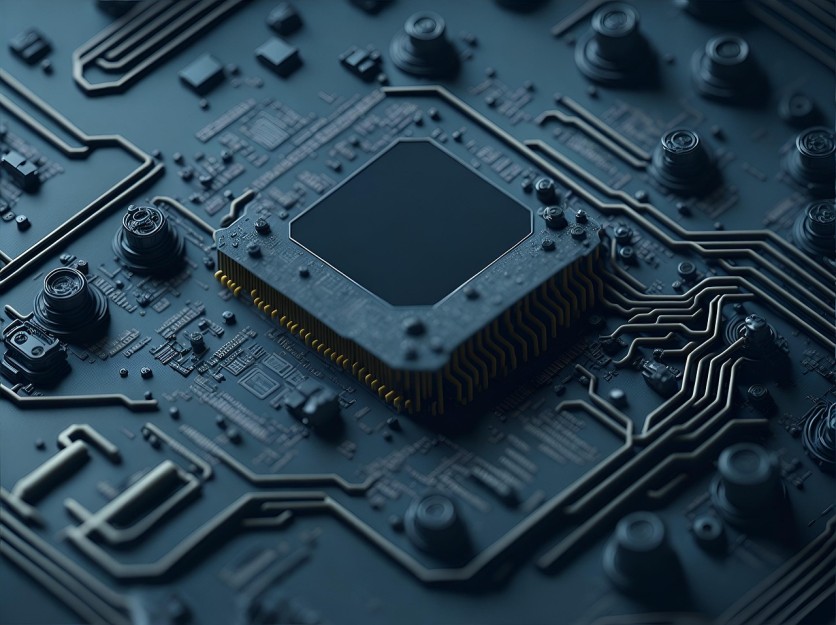
The next major leap in artificial intelligence may not come from larger datasets or more powerful cloud systems, but from microchips modeled after the human brain itself. Neuromorphic computing represents a new frontier where hardware is designed to mimic neurons and synapses, potentially redefining how machines learn, sense, and respond to their environments.
As edge AI and IoT technologies expand, these brain-inspired chips could bring unprecedented intelligence to devices once considered too small or low-powered for advanced computation.
What Is Neuromorphic Computing?
Neuromorphic computing refers to the design of computer architectures inspired by the human brain's biological networks. Unlike traditional processors that follow the Von Neumann model, where memory and processing are separated, neuromorphic processors integrate both functions, allowing them to compute and store information simultaneously.
This approach mirrors how neurons and synapses operate in the brain, with billions of tiny nodes processing signals in parallel rather than sequentially. The result is a system capable of adapting, learning, and responding in real time, making it a major breakthrough for edge AI use cases in robotics, mobile devices, and IoT systems.
These brain-inspired chips, designed for low-power computing, aim to bring efficient, on-device intelligence to everyday electronics.
How Do Neuromorphic Chips Work Like the Human Brain?
The foundation of neuromorphic computing lies in spiking neural networks (SNNs). Instead of transmitting continuous streams of data like conventional machine learning algorithms, SNNs communicate using discrete electrical pulses called "spikes." Each spike represents an event, such as a change in sensor input, allowing the chip to process only relevant information.
This event-driven model drastically reduces energy consumption because computation occurs only when needed. In environments where devices must make fast, autonomous decisions, such as self-driving vehicles, robotics, or industrial IoT systems, spiking neural networks improve efficiency and responsiveness.
By mimicking this sparse, asynchronous communication pattern, neuromorphic chips avoid the heavy power demands of traditional AI accelerators like GPUs. They also enable continuous learning in dynamic environments without extensive retraining, offering a potential path toward truly adaptive, energy-efficient machines.
What Makes Neuromorphic Processors More Efficient Than GPUs or CPUs?
Traditional AI hardware, including CPUs and GPUs, excels in performing repetitive matrix operations. However, they are constrained by constant data movement between memory and processing units, a major energy and speed bottleneck. Neuromorphic processors, in contrast, eliminate this inefficiency by bringing computation closer to memory.
Since SNNs activate only when new data arrives, neuromorphic cores can remain idle most of the time, drastically reducing power usage. This is why brain-inspired chips with low power consumption are seen as key enablers for edge AI and IoT applications, where sustained cloud connectivity or large battery capacity is impractical.
Furthermore, neuromorphic systems can scale efficiently. Instead of increasing clock speeds or processing cores, designers can expand the network by adding more interconnected neurons, much like biological brains evolve with experience.
This architectural flexibility allows neuromorphic hardware to multitask, adapt to sensory data, and learn in ways that traditional architectures cannot match.
Neuromorphic Chips in Practice: Examples and Innovations
Several technology companies and research centers are pushing the boundaries of neuromorphic hardware. Among them, Intel Loihi stands out as a leading experimental platform. The Intel Loihi neuromorphic applications project explores how event-based computation can accelerate tasks such as gesture recognition, robotic navigation, and sensory processing.
Loihi chips use a mesh of artificial neurons capable of asynchronous communication. Each neuron's state evolves over time, responding to spikes from connected neurons and updating its internal parameters in real-time. This structure allows Loihi to perform learning without requiring extensive cloud training, a crucial advantage for autonomous edge systems.
Other notable projects include IBM's TrueNorth, designed for large-scale neural simulations, and BrainChip's Akida, which targets real-time edge processing in embedded IoT devices.
These chips demonstrate how neuromorphic processors in robotics and autonomous systems can operate independently from centralized computing networks while delivering high-speed perception and decision-making.
Applications in Robotics, IoT, and Edge AI
The most immediate beneficiaries of neuromorphic computing are likely to be robots, autonomous systems, and IoT devices operating at the network edge. These platforms demand real-time perception with minimal power consumption, an ideal match for neuromorphic architectures.
In robotics, neuromorphic chips enable adaptive control systems that can adjust movement or coordination on the fly. For instance, a drone equipped with neuromorphic vision could identify obstacles or track moving objects using only milliseconds of processing time.
In the IoT landscape, millions of connected sensors must capture data continuously while running on limited battery power. Embedding brain-inspired chips with low-power operation allows these devices to process information locally, transmit only essential insights, and function efficiently without cloud reliance.
Additionally, autonomous vehicles and industrial automation systems benefit from the chips' ability to perform complex motion detection, speech recognition, and environmental mapping, all while consuming a fraction of the energy required by traditional AI processors. Such capabilities align perfectly with edge AI IoT strategies focused on distributed, sustainable intelligence.
Real-World Examples of Neuromorphic Computing
The progress in neuromorphic computing is already visible in early prototypes and pilot programs across industries:
- Healthcare: Sensor-embedded wearable devices using neuromorphic processing can monitor vital signs, detect anomalies, and adapt alerts in real time.
- Smart cities: Edge nodes equipped with neuromorphic processors help manage energy use, traffic congestion, and environmental monitoring with minimal latency.
- Manufacturing: Neuromorphic vision systems allow robotic arms to identify defects, align components precisely, and optimize workflow through on-site learning.
- Mobile technology: Research suggests that smartphones with integrated neuromorphic co-processors could deliver on-device AI capabilities like image understanding and voice recognition without constant cloud access.
These neuromorphic applications showcase how spiking-based computation can transform diverse fields that require intelligence at the edge with strict energy budgets.
Advantages and Challenges of Neuromorphic Chips
Benefits
- Energy efficiency: Event-driven computation consumes significantly less power.
- Real-time adaptability: Systems can learn from experience and respond immediately.
- Scalability: Networks can grow organically, similar to biological systems.
- Privacy: On-device learning reduces data transfer, improving data security for IoT.
Challenges
- Programming complexity: SNNs require specialized software frameworks distinct from standard AI libraries.
- Hardware cost and maturity: Neuromorphic chips remain mostly in research or prototype phases.
- Standardization: A lack of unified benchmarks and interoperability limits broader industry adoption.
These factors suggest that while neuromorphic computing promises breakthroughs in efficiency and autonomy, it will likely coexist with traditional AI accelerators for years to come.
Will Neuromorphic Chips Revolutionize Artificial Intelligence?
Many researchers view neuromorphic computing as a natural evolution of AI hardware rather than a replacement. It complements deep learning models by offering adaptive, low-power computing suitable for real-world environments.
When combined with traditional cloud AI, neuromorphic edge devices could create hybrid systems capable of both high-level reasoning and real-time, local decision-making.
In the longer term, the integration of neuromorphic principles into consumer electronics could redefine what "smart" means in smartphones, wearables, and household devices. Rather than responding to pre-trained commands, these gadgets could continuously learn and adapt to user behavior, mirroring aspects of human cognition.
Toward Smarter, More Human Machines
The field of neuromorphic computing is still in its early stages, but its potential is unmistakable. By building machines that process information like the human brain, efficiently, parallelly, and adaptively, engineers can unlock a new generation of intelligent, self-learning systems.
As innovation continues around Intel Loihi neuromorphic applications, spiking neural networks, and brain-inspired low-power chips, the next decade may witness a transition from cloud-dependent AI to distributed, energy-efficient cognitive computing. Phones, robots, and IoT devices might soon think and respond more like humans, quietly, efficiently, and always learning.
Frequently Asked Questions
1. How are neuromorphic chips different from quantum computers?
Neuromorphic chips mimic the human brain to perform adaptive, low-power tasks, while quantum computers use qubits to handle massive, complex calculations. Neuromorphic computing suits edge AI and IoT; quantum computing targets scientific and optimization problems.
2. Can neuromorphic chips work with AI frameworks like TensorFlow or PyTorch?
Not directly. Neuromorphic systems use spiking neural networks, which differ from conventional models, but emerging tools like Intel's Lava are improving compatibility and integration.
3. What materials make neuromorphic chips possible?
They often use memristors and non-volatile memory materials, which act like synapses by retaining past electrical states, key for energy-efficient learning and processing.
4. When will neuromorphic technology reach consumer devices?
Experts predict early consumer use by the late 2020s or early 2030s, starting with smart sensors, wearables, and autonomous devices that need on-device intelligence.
ⓒ 2026 TECHTIMES.com All rights reserved. Do not reproduce without permission.


