
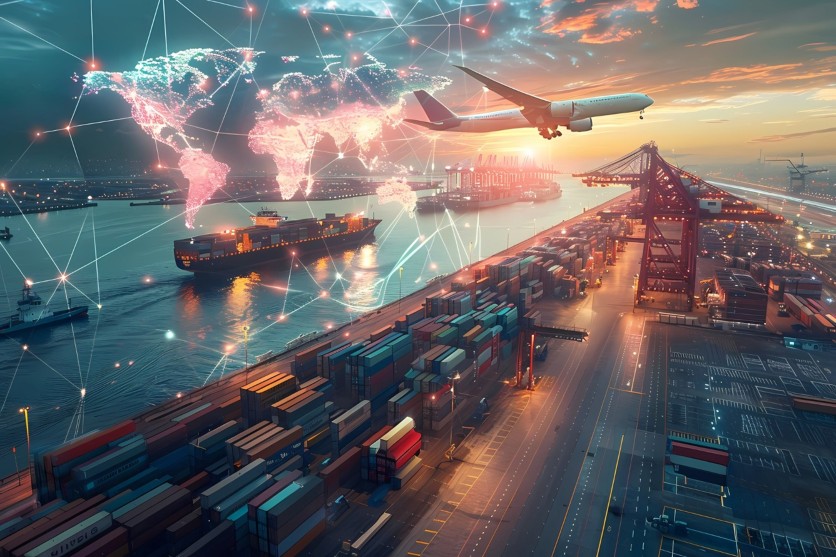
For many organizations, the issue is not a lack of effort, but a lack of visibility. Traditional GPS tracking can show where an asset was last reported, but it rarely explains what happened along the way. This growing gap aligns with insights from Gartner's 2025 Supply Chain Technology Outlook, which points to rising investment in automated visibility and AI-driven orchestration as companies work to reduce blind spots. Without deeper context, trailers, containers, and high-value equipment move through the supply chain without meaningful oversight, allowing mishandling, environmental exposure, or theft to go undetected until it is too late.
That reality is driving companies to rethink how they monitor and protect their assets. Recent analysis from Forbes highlights how logistics inefficiencies and persistent transparency gaps continue to drain billions from corporate bottom lines each year. Modern visibility platforms go beyond location data, capturing signals such as motion, light, tilt, and humidity to surface risk in real time. For industries like construction, healthcare, and manufacturing, this shift toward true situational awareness is becoming essential for reducing losses, protecting margins, and building more resilient supply chains.
This blog walks through the technologies that help close visibility gaps by capturing environmental signals such as light, tilt, and humidity.
1. Real-Time Environmental Visibility
Nearly 30 percent of global food and pharmaceutical waste happens because there is little to no environmental visibility during the middle mile of transit. Real-time tracking addresses this gap by capturing frequent data on shock, light exposure, and humidity. This allows teams to ensure high-value, sensitive cargo arrives in proper condition, not just on schedule. With this level of insight, executives can spot issues like temperature excursions or unauthorized access early, well before a shipment reaches its destination.
Leading visibility platforms rely on a combination of environmental sensors to deliver true situational awareness across the supply chain. This type of IoT-driven transparency is no longer optional for businesses moving high-risk or temperature-sensitive goods. In 2026, the real return on investment comes from shifting the focus from simply knowing where an asset is to understanding what is happening to it throughout its journey.
2. Autonomous Predictive AI Analysts
Port congestion and unpredictable weather patterns cost the global economy billions in lost time, yet most companies still rely on reactive logistics updates. Autonomous predictive AI analysts solve this by processing millions of data points to provide analytics that are far more accurate than traditional human estimates. This allows fleet managers to set realistic delivery expectations and communicate early with customers when a potential bottleneck is detected in the supply chain.
By using these predictive logistics tools, teams can identify risks early and re-route shipments in real-time to avoid downtime. This level of operational foresight is the primary way that modern companies deal with unforeseen labor disruptions or infrastructure failures at major transit hubs. Reclaiming this control ensures that the Logistics Black Hole never impacts the bottom line or damages customer trust.
3. Vendor Managed Inventory Systems
Administrative friction and inventory stockouts for tracking hardware and labels can create hidden operational drains that balloon logistics budgets by 40 percent annually. Vendor Managed Inventory (VMI) systems solve this by offloading the management of critical supply chain supplies to specialized partners. By ensuring that every tag, label, and hardware component is engineered for durability and replenished automatically, businesses can avoid the frequent replacement cycles that plague lower-quality systems.
Focus on precision supplies that ensure assets remain identifiable and trackable in demanding industrial environments. When hardware is maintained through a VMI model, the total cost of ownership drops significantly because device failure rates are minimized and initial capital investments are protected. This strategic approach to supply management is a primary requirement for scaling an asset tracking network without increasing maintenance overhead.
4. Ruggedized Industrial IoT Endpoints
The average construction site loses approximately $1 billion in equipment annually due to theft and damage in environments where standard tracking hardware fails. Ruggedized industrial IoT endpoints provide the physical resilience needed for heavy construction equipment and assets left in harsh outdoor environments where vibration and debris are constant. This hardware is built to maintain a secure link to the platform even in remote areas where cellular signals are traditionally weak.
For managers of mixed fleets, having hardware that can transition from a climate-controlled warehouse to a muddy construction site is a major operational advantage. These ruggedized endpoints ensure that recovery intelligence remains functional in any environment, allowing for immediate response to theft or unauthorized movement. Investing in durability means protecting the asset lifecycle and ensuring that your situational awareness is never compromised by hardware failure.
5. Algorithmic Last-Mile Precision
Last-mile delivery accounts for up to 53 percent of total shipping costs, largely due to inefficient routing and low stop-time accuracy. Algorithmic last-mile precision solves this by using advanced machine learning to reduce fuel consumption and improve delivery windows for the end consumer. This technology ensures that customers receive precise arrival notifications, which is a requirement for maintaining brand loyalty in a hyper-competitive market.
By integrating real-time traffic data and driver behavior analytics, these platforms reduce the cost per delivery while increasing the overall efficiency of the fleet. This level of optimization is particularly critical for businesses dealing with high-volume residential deliveries or complex installation services. Reclaiming control over the final phase of the journey allows companies to protect their margins while meeting rising consumer expectations.
6. Sustainable "Peel-and-Trace" Sensors
The global demand for electronics has created a massive reverse-logistics challenge, with millions of trackers ending up in landfills every year. Sustainable "Peel-and-Trace" sensors solve this by offering disposable, eco-friendly trackers that provide high-accuracy data without the environmental impact or cost of returning hardware. These devices are perfect for one-way shipments of luxury goods or critical medical supplies that require a reliable safety net.
For the enterprise, these sensors deliver the transparency required to prove compliance with environmental standards to investors and regulators. These gains in green ROI translate into measurable cost savings by reducing the loss of assets and improving the efficiency of the shipment environment. Meeting aggressive ESG reporting requirements is now a primary requirement for winning high-value contracts in the global economy.
7. 5G Connectivity and Edge Processing
Data latency remains a major hurdle in recovery intelligence, as waiting seconds for cloud processing can allow a theft attempt to go undetected. 5G connectivity and edge processing eliminate these issues by allowing the visibility hardware to process data locally and trigger immediate actions. This connectivity backbone ensures that security protocols remain functional even when a vehicle passes through high-traffic metropolitan areas or passing through remote hubs.
By using 5G to handle massive amounts of sensor data simultaneously, companies can manage larger fleets with zero degradation in reporting speed. This high-speed infrastructure is the requirement for running advanced AI analysts and real-time environmental monitoring at scale across global networks. Reclaiming this speed ensures that security teams can coordinate with law enforcement during a theft attempt with absolute precision.
8. Multi-Modal Supply Chain Orchestration
Most logistics managers lose all visibility when cargo transitions between trucks, trains, and ocean vessels, creating dangerous data silos. Multi-modal supply chain orchestration solves this by providing end-to-end visibility throughout the entire journey, regardless of the transport method. This technology is a requirement for businesses that prioritize predictable delivery schedules and need to reduce detention costs at major ports.
By providing a unified view of the global shipment environment, orchestration platforms help eliminate the data gaps that occur during long-haul transit. This allows logistics managers to re-route shipments proactively and manage customer expectations with high precision. This connectivity is the primary way that modern companies deal with unforeseen global disruptions and maintain a resilient supply chain.
9. Hardened Cybersecurity for Telematics
As IoT devices become more central to the supply chain, they also become high-priority targets for cyber-attacks and signal jamming that can blind a fleet manager. Hardened cybersecurity for telematics focuses on treating every tracker as a secure endpoint, using end-to-end encryption for data both at rest and in transit. This ensures that sensitive movement patterns and location data remain protected from professional thieves and malicious actors.
The implementation of Zero Trust architecture and granular Role-Based Access Control is a mandate for any enterprise moving high-risk assets. This security layer ensures that the integrity of the data stream is never compromised, providing a definitive return on investment for data-driven enterprises. Hardening the endpoint is the only way to maintain a reliable safety net in a high-pressure security environment.
10. Blockchain-Verified Custody
Administrative overhead and payment disputes account for nearly 20 percent of logistics costs in complex international trade. Blockchain-verified custody solves this by pairing GPS data with smart contracts that trigger automatically when specific delivery conditions are met. This ensures that every handling point in the journey is recorded in a way that cannot be tampered with, providing an unalterable record of custody.
When a tracker confirms a delivery at a specific coordinate and in a specific condition, payment can be released instantly to the carrier. This automation reduces administrative overhead and builds radical trust between business partners across the globe. This shift toward automated integrity is a key part of the digital transformation journey for any business moving regulated goods or high-value electronics in 2026.
How to Select the Best Logistics and Supply Chain Technology
Selecting the ideal technology stack requires a move away from legacy procurement habits and toward a strategic alignment with your specific risk profile. The best logistics technology is the one that bridges the gap between physical reality and digital data. You should prioritize platforms that offer sensor-driven situational awareness, as knowing the condition of an asset is often more valuable than knowing its location alone.
Ensure that any potential investment offers a clear path to lowering the total cost of ownership through durability and predictive maintenance. Scalability is another primary requirement; your system must be able to handle massive data streams via 5G without increasing latency. By focusing on hardened endpoints and recovery intelligence, you can transform your supply chain from a vulnerable cost center into a resilient profit-protection engine.
Frequently Asked Questions (FAQs)
How does situational awareness improve overall business efficiency?
Situational awareness improves efficiency by removing the guesswork from logistics operations. By providing instant data on asset condition and environment, companies can identify handling errors or delays as they happen. This proactive approach allows teams to prevent total inventory loss and maintain a more resilient supply chain.
Can predictive AI really reduce the cost of global shipping?
Yes, predictive AI reduces costs by identifying potential delays before they occur. By using historical transit data to predict port congestion or weather disruptions, companies can re-route assets to avoid downtime and reduce detention fees at shipping hubs. This Foresight allows for proactive management of complex logistics networks.
What distinguishes a secure network endpoint from a standard tracker?
A standard GPS tracker only reports coordinates, but a secure endpoint is hardened with end-to-end encryption and Zero Trust architecture. In the 2026 threat environment, treating your trackers as secure endpoints ensures that your movement data cannot be intercepted by professional thieves or cyberattackers.
Why is recovery intelligence the top requirement for high-value cargo?
Recovery intelligence is the use of real-time sensor data to coordinate a precise response to cargo theft. By providing an immediate alert when a container is breached or exposed to light, the system allows law enforcement to track and recover assets while they are still in motion, significantly improving recovery rates.
ⓒ 2026 TECHTIMES.com All rights reserved. Do not reproduce without permission.


