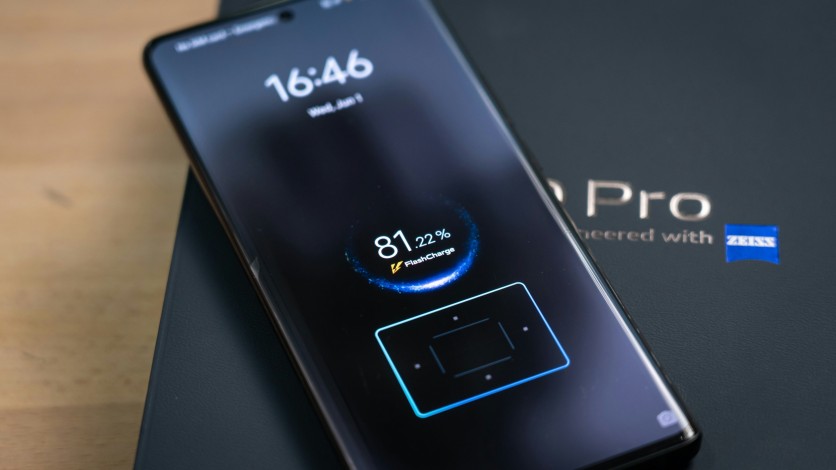
Fast charging standards have quietly reshaped how people use phones, laptops, and tablets every day. Waiting hours for a full battery now feels outdated, especially as USB-C power delivery becomes common across Android, iPhone, and laptops. USB PD 3.1 extended power range, PPS precision control, and gallium nitride chargers work together to push more power through smaller, safer adapters. These systems don't just chase speed—they manage heat, protect batteries, and adapt to different devices in real time.
Charging tech has also become more flexible. One charger can now power a phone, tablet, and 16-inch laptop without juggling cables or bricks. Fast charging standards negotiate voltage, current, and safety limits automatically, making charging faster while staying within thermal boundaries. Understanding how these standards work helps explain why some chargers feel dramatically quicker than others.
Fast Charging Standards USB PD Evolution
Fast charging standards took a major leap forward with USB Power Delivery, moving beyond fixed outputs to intelligent power negotiation. This shift made charging safer, more efficient, and adaptable across phones, tablets, and laptops. USB PD continues to evolve to meet the rising power demands of modern devices without sacrificing safety.
- Shift from fixed charging outputs to smart, device-to-charger power negotiation
- USB PD 2.0 capped power at 100W using a 20V/5A profile, suitable for early laptops
- PD 3.0 introduced Programmable Power Supply (PPS) for precise voltage and current requests
- Reduced battery stress and improved long-term battery health through dynamic adjustment
- PD 3.1 added Extended Power Range with 28V, 36V, and 48V profiles
- Enabled up to 240W through a single USB-C cable for high-performance laptops
- Mandatory E-marker chips verify cable wattage ratings to prevent unsafe connections
- Built-in overcurrent and overvoltage protection reacts within milliseconds
- Power profile negotiation typically completes in under 100 milliseconds
- Balances charging speed, device safety, and cross-device flexibility
USB-C Power Delivery PPS Precision Charging
USB-C power delivery with PPS represents the most refined approach to fast charging standards today. Instead of relying on preset voltage levels, PPS continuously adjusts output to match battery conditions in real time. This precision reduces heat and improves charging efficiency across a wide range of devices.
- PPS adjusts voltage in increments as small as 20mV and current in 50mA steps
- Matches charging output to battery needs from low to high capacity levels
- Minimizes wasted energy and reduces heat during peak charging phases
- Allows smartphones to sustain higher wattage longer without throttling
- Keeps voltage aligned with battery chemistry, lowering thermal stress
- Extends battery cycle life over hundreds of charge sessions
- Smoothly tapers power near full charge for safer completion
- Enables cross-brand fast charging without proprietary lock-in
- Apple devices use conservative PPS profiles for safety
- Android devices often push higher wattage within thermal limits
- Continuous temperature and current monitoring prevents sudden throttling
Charging Tech Proprietary Protocols QC and Beyond
Charging tech extends beyond universal standards with proprietary systems designed to maximize speed under controlled conditions. Brands use custom charging architectures to achieve dramatic early charge gains. While fast, these systems depend heavily on matching accessories and device support.
- Proprietary protocols like Qualcomm Quick Charge push higher peak charging speeds
- QC 5 uses dual-cell battery designs to split power and reduce heat buildup
- Enables rapid early charging percentages within minutes
- Oppo and Realme use direct battery charging to bypass voltage conversion
- High current flows directly into low-voltage cells for extreme speed
- Requires matched chargers, cables, and phones for full performance
- Falls back to USB-C power delivery when proprietary components are missing
- Hybrid GaN chargers support PD, PPS, and QC simultaneously
- Automatically selects the fastest safe charging protocol per device
- Combines speed, compatibility, and flexibility in a single charger ecosystem
GaN Charger Efficiency Gains
Gallium nitride has become a quiet enabler of modern charging tech. By replacing traditional silicon components, GaN allows chargers to operate at higher frequencies with less heat. This means smaller adapters that still deliver high wattage across phones and laptops. A compact GaN charger can now replace bulky bricks from just a few years ago.
Fast charging standards benefit directly from these efficiency gains. Lower heat improves sustained performance, letting chargers maintain peak output longer without throttling. USB-C power delivery across wide voltage ranges becomes more practical when conversion losses stay low. Thermal imaging consistently shows GaN chargers running cooler under heavy loads. For users, this translates into faster charging without uncomfortable heat or oversized hardware.
Cross-Platform Compatibility Matrices
Fast charging standards matter most when devices work well together. USB-C power delivery with PPS ranks highest for cross-platform compatibility, supporting phones, tablets, and laptops from nearly every major brand. Proprietary systems may win speed tests but lose flexibility when chargers or cables change. Charging tech that adapts automatically avoids guesswork and mismatched accessories.
Modern hybrid chargers often display negotiated power levels through companion apps or device indicators. Seeing 9V/3A or 15V/3A confirms optimal charging is active. Fast charging standards now favor transparency and consistency, making it easier to choose chargers that work across multiple devices without compromise.
Where Fast Charging Standards Are Headed Next
Fast charging standards continue evolving toward higher efficiency rather than unchecked speed. USB PD 3.1 at 240W already covers most consumer needs, from phones to high-end laptops. Charging tech improvements now focus on thermal management, smarter negotiation, and battery longevity. Wireless charging also borrows ideas from wired PPS control, narrowing the performance gap.
The future points toward fewer chargers, not more. One compact GaN adapter handling every device feels increasingly realistic. Fast charging standards are shaping a simpler, faster charging experience without locking users into fragile ecosystems.
Frequently Asked Questions
1. What is the safest fast charging standard today?
USB PD 3.1 with PPS is considered the safest option for modern devices. It includes rapid fault detection, overcurrent protection, and precise voltage control. These features reduce heat and battery stress during charging. Certified cables further minimize risk at high wattage.
2. Does fast charging damage phone batteries over time?
Fast charging standards are designed to limit long-term battery wear. Charging tech reduces power as the battery fills and temperature rises. Heat control matters more than raw speed for battery health. Proper chargers and cables make a noticeable difference.
3. Why do some phones charge slower with third-party chargers?
Some phones rely on proprietary charging tech for maximum speed. When paired with universal chargers, they fall back to USB-C power delivery profiles. This is normal behavior and prioritizes safety. PPS-compatible chargers usually provide the best third-party results.
4. Are GaN chargers worth upgrading to?
GaN chargers offer better efficiency and smaller size compared to older silicon designs. They stay cooler under heavy loads and sustain higher wattage longer. Fast charging standards benefit directly from these gains. For multi-device users, the upgrade is often worthwhile.
ⓒ 2026 TECHTIMES.com All rights reserved. Do not reproduce without permission.


