
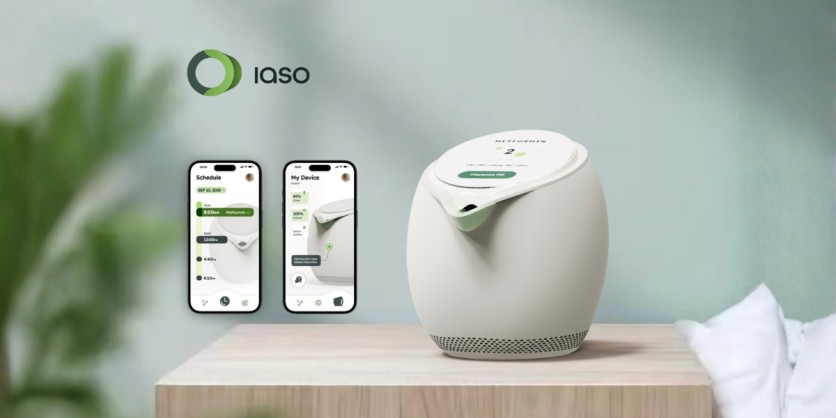
The traditional medicine cabinet is undergoing a digital revolution. As the United States faces a burgeoning "silver tsunami," the complexities of managing chronic illnesses at home have reached a breaking point. Leading this transformation is Iaso, a comprehensive medication management ecosystem designed to dismantle the barriers between clinical prescription and home-based adherence.
Led by Ziwei Song, Iaso was driven by a multidisciplinary collaboration that brought together expertise in design, medical research, and engineering. Song led the product design team in developing the system's core user experience and strategic vision, and later worked closely with Dr. Chen from Politecnico di Milano and a China-based development team to advance the platform's technical architecture and bring the concept to a fully realized healthcare solution.
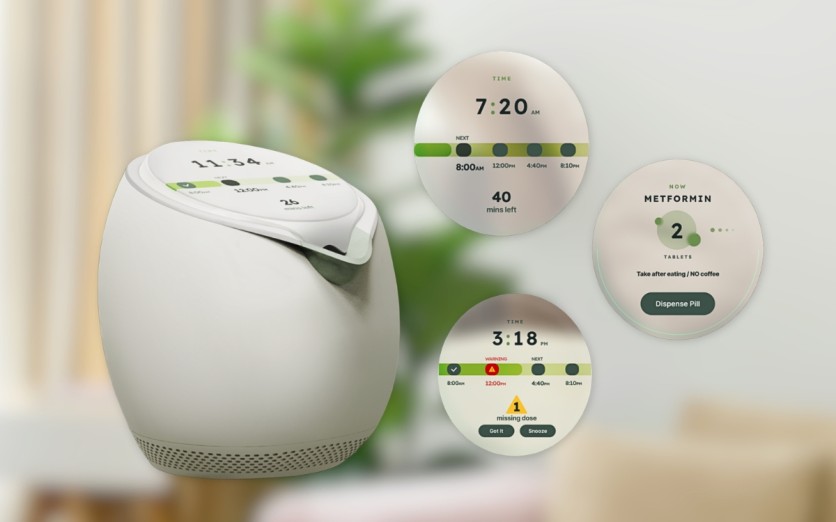
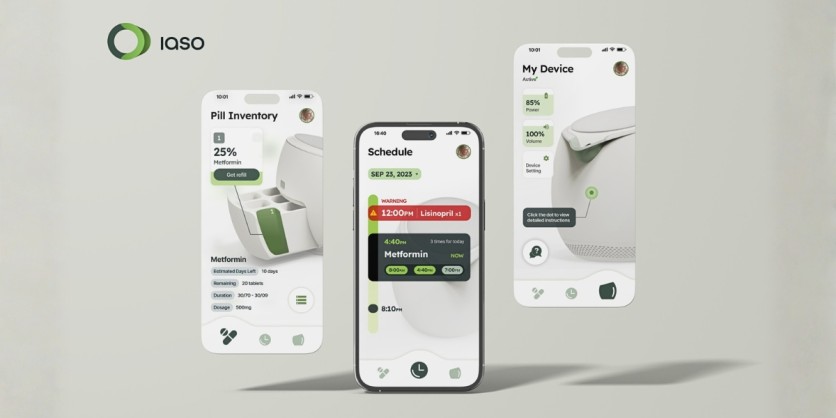
Rather than functioning as a single device, Iaso was designed as a holistic intervention ecosystem. The system seamlessly integrates smart hardware with an AI-driven mobile interface, simplifying medication management for older adults, particularly those living with memory impairment or multiple chronic conditions.
This design-driven approach has already earned the project significant international recognition, including the Red Dot Design Concept Award, the Red Dot Brand & Communication Design Award, and the A' Design Award, among other international design honors, reflecting global recognition of the team's ability to address complex healthcare challenges through thoughtful design and advanced technology.
The Personal Catalyst: From Grandfather to Global Solution
The genesis of Iaso was deeply personal, inspired by the challenges faced by Song's grandfather. Managing a grueling regimen of 16 different daily medications for early-stage Alzheimer's and multiple chronic diseases, he faced a dangerous and overwhelming burden. Witnessing this confusion firsthand, the team recognized that this was not just a family struggle, but a systemic crisis. According to a landmark study from the University of California San Diego, the cost of "non-optimized" medication use in the U.S. has reached a staggering $528.4 billion annually.
"The goal was to find a solution not only for one individual, but for the millions of seniors facing the same predicament," the design lead explains. This mission is particularly urgent in 2026; current healthcare outlooks show that approximately 40–42% of U.S. seniors are now managing "polypharmacy," the concurrent use of five or more prescription drugs. This fragmented home healthcare environment results in approximately 125,000 preventable deaths and millions of avoidable hospital admissions each year. Iaso is determined to close this "last mile" gap where nearly 50% of patients with chronic conditions fail to take medications as prescribed.
Proven Impact: From Global Pilot Testing to U.S. Market Entry
While many health-tech startups remain in the conceptual phase, Iaso enters the global conversation backed by significant clinical insights derived from rigorous pilot testing. Under Song's leadership, the system was first deployed in collaboration with several leading hospitals in China to evaluate its real-world efficacy in high-density geriatric environments. These international trials provided definitive proof of concept for the project's social and medical impact, proving that the design could move beyond simple reminders to achieve true clinical improvement.
The results of these initial deployments were transformative. Participants showed a statistically significant stabilization of vital signs, such as blood sugar levels, directly linked to the increased medication regularity facilitated by the Iaso interface. Most importantly, the trial data recorded a marked decrease in secondary hospitalizations and emergency department visits among the pilot groups. By ensuring patients took the right dose at the right time, the system proved its ability to keep seniors safe in their homes while reducing the critical strain on hospital resources, a success currently being iterated for the specific regulatory and infrastructural needs of the American healthcare system.
The Future of the American Home
As Iaso prepares for its U.S. debut, the project is attracting significant attention from American investors and healthcare providers eager for validated solutions. The system's ability to turn the home into a data-driven extension of the doctor's office represents a paradigm shift in how we view aging. By simplifying the complex process of managing medications at home, Iaso represents a new step toward smarter, more connected home healthcare. For the millions of families navigating the challenges of geriatric care, innovations like Iaso offer more than technological convenience; they represent a meaningful step toward safer, more independent living at home.
Disclaimer: The figures and health outcomes cited in this article are based on available research and may vary over time and across populations. Claims regarding medication management are based on preliminary findings and are not medical advice. For medical concerns, please consult a healthcare professional.
ⓒ 2026 TECHTIMES.com All rights reserved. Do not reproduce without permission.


