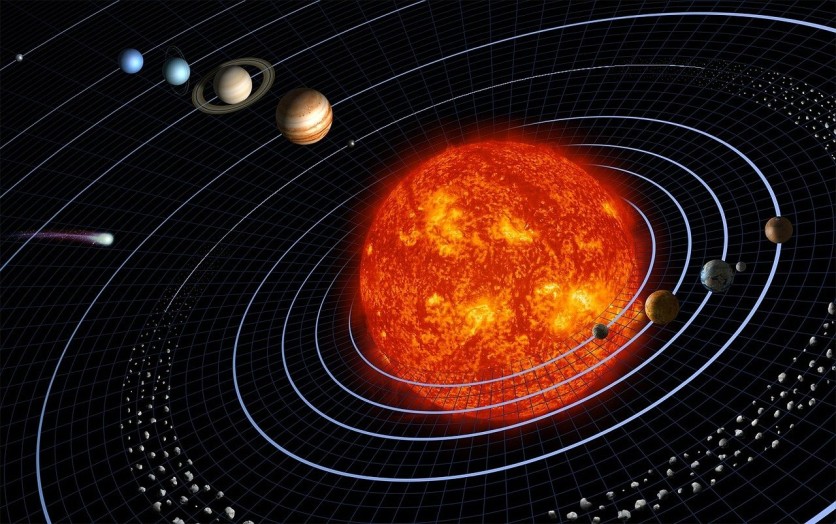
The modern extraterrestrial life search is being reshaped by advanced telescopes, planetary missions, and artificial intelligence that make alien detection a testable scientific task rather than a matter of speculation.
A New Era in the Extraterrestrial Life Search
Over recent decades, the discovery of thousands of exoplanets has shown that planets are common in the galaxy, not rare exceptions. This shift, powered by space missions and improved ground‑based observatories, turned the extraterrestrial life search into a coordinated, data‑driven effort.
Researchers now combine astronomy, biology, and computing to study everything from possible microbial traces to signs of advanced civilizations. As instruments become more sensitive, even faint or subtle signatures can be flagged for further alien detection analysis.
How Scientists Look for Alien Life
Scientists distinguish between biosignatures, which hint at basic life, and technosignatures, which could signal technology‑using societies. Classic SETI work has focused on listening for narrowband radio emissions that stand out from natural astrophysical background noise.
Optical searches now complement radio studies by looking for bright, focused laser flashes or unusual light patterns that might come from engineered sources. In some cases, researchers also consider possible large‑scale structures or excess waste heat as potential technosignatures, though no clear example has yet been confirmed.
Exoplanets: Choosing the Most Promising Targets
Exoplanet surveys transformed the extraterrestrial life search by providing concrete targets instead of generic directions on the sky. Missions such as Kepler and TESS identify planets by tracking tiny dips in a star's brightness or small wobbles in its motion, revealing a world's size, orbit, and rough type.
From these measurements, astronomers estimate whether a planet might be rocky, temperate, and located in the habitable zone where liquid water could exist. This information allows teams to prioritize stars for detailed follow‑up, making alien detection efforts more efficient than randomly scanning space.
Reading Alien Atmospheres for Biosignatures
A major frontier involves studying exoplanet atmospheres for chemical clues that life might be present. With spectroscopy, scientists split incoming light into a spectrum and identify specific patterns linked to molecules such as water vapor, methane, carbon dioxide, and oxygen.
On Earth, certain combinations of these gases remain out of balance because living organisms continually produce and consume them, so similar imbalances elsewhere could count as biosignatures.
At the same time, non‑biological processes can mimic life‑like patterns, so researchers carefully test whether geology or stellar activity could explain any potential signal before treating it as evidence of alien detection.
Technosignatures: Technology as a Signal
Beyond simple life, some projects search for technosignatures that might reveal advanced civilizations reshaping their surroundings. These possible indicators include focused radio or optical beacons, broad spectral emissions, or persistent pollution signatures in a planet's atmosphere that are difficult to produce without industry.
New broadband SETI strategies propose scanning wide ranges of frequencies in ways that align with large astronomical surveys, improving sensitivity to nearby technological societies. Studies of how long such signals might last, and how easily they might be missed, help set realistic expectations for the extraterrestrial life search.
AI and Big Data in Alien Detection
Modern observatories produce more information than teams can inspect manually, so artificial intelligence has become central to alien detection. Machine‑learning systems now sift through massive radio and optical datasets, separating promising anomalies from interference and noise.
At SETI‑related projects, neural networks running on accelerated computing platforms process streaming data in real time, flagging patterns that match potential extraterrestrial signals while discarding most false alarms.
Similar approaches are applied to atmospheric spectra and planetary imagery, highlighting features that may deserve closer study. In practice, AI acts as a guide that scales the extraterrestrial life search from a limited set of stars to vast catalogs of targets.
Read more: NASA, Pentagon Launch Investigation into UFOs: Are Aliens Already Here in Our Solar System?
New Instruments Driving the Search
Progress in alien detection also depends on upgraded hardware. Next‑generation radio arrays in locations such as South Africa and Australia provide wide fields of view and high sensitivity across multiple frequency bands.
Large optical and infrared observatories, both on the ground and in space, are being designed to directly image exoplanets and measure their atmospheres with far greater precision than earlier instruments.
These facilities support continuous or repeated surveys, allowing scientists to track changes over time and share large, uniform datasets across the global community.
Nearby Worlds as Testbeds for Life Detection
The solar system still serves as a crucial laboratory within the broader extraterrestrial life search. Robotic missions to Mars examine rocks, soils, and gases for signs of ancient water and possible microbial activity.
Future landers and orbiters are expected to carry more sensitive detectors and onboard analysis tools, some of them guided by AI, to identify the most interesting samples.
Icy moons with subsurface oceans, such as Europa and Enceladus, are high‑priority targets because liquid water and chemical energy could support simple ecosystems beneath their frozen surfaces. Insights from these nearby worlds help refine theories and techniques used when interpreting much more distant alien detection candidates.
Why the Extraterrestrial Life Search Keeps Expanding
As telescopes, algorithms, and survey methods improve, the extraterrestrial life search continues to cover more of the sky, more wavelengths, and more possible types of signal. Each non‑detection refines estimates of how common life and technology might be, guiding future observing strategies and instrument designs.
The combined use of exoplanet catalogs, atmospheric spectroscopy, technosignature surveys, AI‑driven pattern recognition, and solar‑system missions ensures that alien detection is pursued on many fronts at once.
With the next generation of observatories and data tools, the chances increase that, if another inhabited world or technological civilization lies within reach, its presence will eventually stand out from the cosmic background.
Frequently Asked Questions
1. How long would it take to detect a clear alien signal?
There is no fixed timeframe; detection depends on where the signal originates, how strong it is, how often it repeats, and whether current instruments happen to be pointed in the right direction when it arrives.
2. Could alien detection accidentally pick up human technology instead?
Yes. Many candidate signals turn out to be satellites, aircraft, ground-based transmitters, or instrument glitches, which is why teams spend significant time ruling out human-made interference.
3. Does the extraterrestrial life search only focus on Earth-like planets?
No. While Earth-like planets in habitable zones are priorities, researchers also consider worlds with very different conditions, including ocean worlds and planets with exotic chemistries that might still support life.
4. Can AI ever misclassify a real alien signal as noise?
It is possible. AI systems are trained on known patterns, so an unexpected or unfamiliar signal might be dismissed, which is why humans still review the most unusual events and refine the algorithms over time.
ⓒ 2026 TECHTIMES.com All rights reserved. Do not reproduce without permission.


