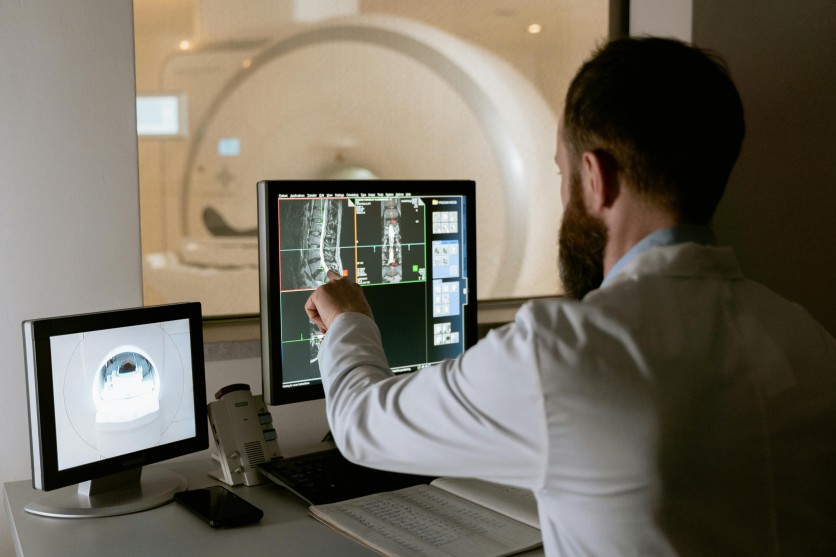
Digital twin in healthcare is emerging as one of the most promising healthcare innovations because it creates a virtual version of a patient, organ, or medical process using real-time and historical data.
This form of digital twin technology is gaining attention in precision medicine, where understanding individual differences in health conditions can significantly improve diagnosis and treatment outcomes. By combining clinical records, imaging, and wearable data, digital twins offer a more dynamic view of patient health.
The importance of digital twins lies in their ability to simulate how a condition might develop over time. Instead of relying only on snapshots like lab results or scans, healthcare providers can observe evolving patient-specific models.
This makes it easier to support predictive diagnostics, plan treatments more accurately, and monitor long-term changes in health. As healthcare systems become more data-driven, digital twins in healthcare are expected to play a growing role in shaping future care strategies.
What Digital Twin Technology Does In Healthcare
Digital twin technology in healthcare works by creating a virtual patient model that updates continuously as new medical data becomes available. This allows doctors to study a living simulation of a patient's condition, which can support predictive diagnostics by identifying disease risks earlier through pattern analysis over time. It also helps improve treatment planning, since different medical approaches can be tested in a virtual environment before being applied in real life.
In addition, digital twins in healthcare support more personalized care by using patient-specific data instead of general averages, making precision medicine more effective. It can also be used in virtual clinical trials to reduce costs and speed up early research stages.
Beyond treatment, it assists hospital operations by improving scheduling and workflow efficiency, while also supporting long-term monitoring of how diseases and treatments progress over time.
Why Digital Twins Could Improve Diagnosis
Digital twins in healthcare are changing how doctors understand and detect diseases by creating a more complete view of patient data. Instead of looking at medical information in separate pieces, digital twin technology brings everything together into one evolving model. This helps support more accurate predictive diagnostics and earlier intervention.
- Unified patient modeling – Digital twins combine scans, lab results, and symptoms into one continuously updating health model for better diagnosis.
- Early detection of complex diseases – They help identify subtle warning signs in long-developing conditions like heart or neurological diseases.
- Better understanding of disease progression – Clinicians can observe how health conditions evolve over time instead of relying on static test results.
- Improved personalization in diagnosis – Each patient's unique health patterns are analyzed to avoid one-size-fits-all conclusions.
- Clearer risk profiling – Differences between patients with the same condition become easier to identify and interpret.
- Stronger support for early intervention – Earlier and more accurate insights allow treatment to begin before conditions become severe.
How Digital Twins May Change Treatment
Digital twin technology could transform treatment by allowing doctors to simulate different medical decisions before applying them to a patient. Treatments such as medication plans, surgery options, or therapy strategies can be tested virtually to predict outcomes and reduce uncertainty. This approach supports more confident decision-making in complex cases.
Organ-specific digital twins are also being explored in healthcare innovations. Virtual models of organs like the heart or liver can help doctors plan procedures with greater accuracy and monitor recovery more effectively after treatment. This is particularly valuable in precision medicine, where small differences in anatomy or function can influence outcomes.
In the long term, digital twins in healthcare may influence not only individual care but also the broader medical system. Hospitals, research institutions, and medical device developers could use these models to improve testing, training, and innovation. As a result, healthcare innovations built on digital twin technology may lead to more efficient and data-driven treatment systems.
Digital Twins Are Shaping the Future of Precision Healthcare
Digital twins in healthcare represent a shift toward more personalized and predictive medical systems. By building patient-specific models that continuously update, digital twin technology helps improve diagnosis accuracy, treatment planning, and long-term monitoring. These healthcare innovations also support predictive diagnostics and more advanced precision medicine approaches.
As adoption grows, digital twins may become an important part of everyday clinical practice, virtual clinical trials, and hospital planning systems. While challenges such as data privacy and system integration still exist, the potential benefits are significant. For healthcare, the future is moving toward more adaptive, data-driven care where decisions are guided by continuously evolving digital models of human health.
Frequently Asked Questions
1. What is a digital twin in healthcare?
A digital twin in healthcare is a virtual model of a patient or organ created using real medical data. It updates continuously as new information becomes available. This allows doctors to study and simulate health conditions in a virtual environment. It is used to support diagnosis, treatment planning, and monitoring.
2. How does digital twin technology help diagnosis?
Digital twin technology helps diagnosis by combining multiple health data sources into one dynamic model. This makes it easier to identify patterns and predict disease progression. It is especially useful for early detection of chronic conditions. This supports more accurate predictive diagnostics.
3. What role do digital twins play in precision medicine?
Digital twins support precision medicine by creating patient-specific models based on individual health data. This allows treatments to be tailored to each person rather than using a general approach. It improves treatment accuracy and reduces unnecessary risks. It also helps doctors choose better care strategies.
4. Are virtual clinical trials part of digital twin technology?
Yes, virtual clinical trials use digital twins to simulate how treatments may work before testing them on real patients. This can reduce costs and speed up research. It also improves safety by identifying potential issues early. These trials are becoming an important part of healthcare innovation.
ⓒ 2026 TECHTIMES.com All rights reserved. Do not reproduce without permission.


