

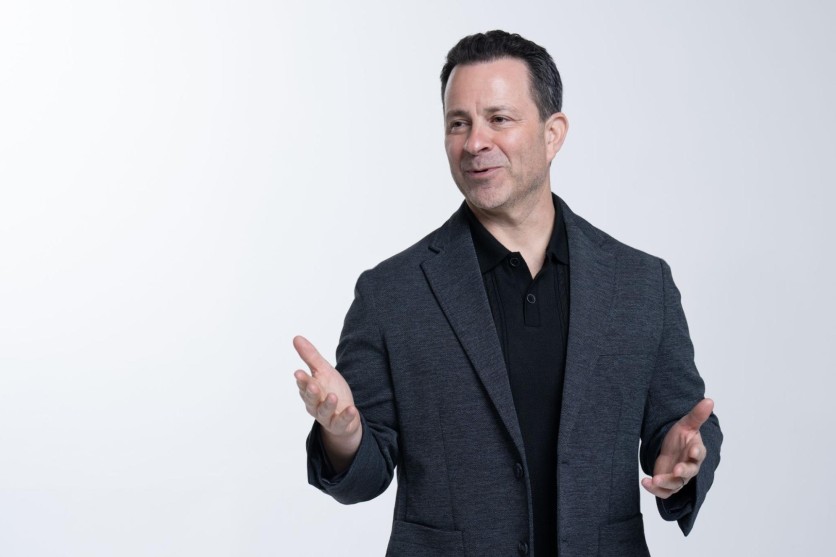
Tech, particularly AI, is moving faster than most organizations can absorb, and the gap between what leaders announce and what employees actually do is getting increasingly evident. A quick look at how many employees are struggling to adopt AI shows the gap widening in real time. Michael J. Lopez has spent two decades inside that gap, first as a Big Four insider and now as the founder of his own firm, and he has landed on a conclusion most of his peers will not say out loud: the way companies manage change is fundamentally broken, and the data finally proves it.
Lopez runs Michael J. Lopez Consulting, advising Fortune 500 executives, publishing research that lands in Reuters, and authoring a book that treats behavior change as what it actually is, a neuroscience problem, not a communications exercise.
The Intelligence Officer Turned Corporate Executive Coach Rewriting the Transformation Playbook
Lopez started his career somewhere you would not expect for a corporate executive coach, as an Intelligence Officer in the U.S. Intelligence Community, and that background shows up in how he reads an organization, pattern first, evidence second, opinions last.
From there, he moved through the upper ranks of Booz Allen Hamilton, EY, KPMG, Prophet Brand Strategy, and Smiths Interconnect, where he worked with clients like Meta, Vanguard, Lyft, DoorDash, Salesforce, Clorox, Edward Jones, Southwest Gas, and the U.S. Air Force, before founding his own practice. The Michael J Lopez consulting firm he runs today works with clients that span the modern economy, from energy to healthcare to government.
What makes his work land is that he is not pitching a framework he read about; he is pitching a system he built after watching the traditional model fail in the rooms where it was supposed to be working. And, like most big consultancies that sell the work and then outsource it to 20-something MBAs, Lopez does the work. He's hands-on, taking only a few clients each year. Because for him, client results matter more than sales numbers.
Why the Michael J Lopez Coach Method Starts Where Every Other Framework Quits
Traditional change management assumes that if you tell people what is happening, train them on the new process, and hand them a deadline, they will adapt, which Lopez argues is roughly the equivalent of handing someone a gym membership and expecting abs by Friday.
His approach sits at the intersection of habits and performance coaching and the neuroscience of leadership performance, treating behavior change as a biological process rather than a project plan. Adult brains do not rewire because a leader sent a thoughtful memo; they rewire through repetition, feedback, and environmental design, which is exactly what most transformations fail to build in.
This is why his consulting philosophy leans on the things most playbooks skip: permission to fail, time to practice, and leadership modeling, the unsexy mechanics that actually produce new habits.

The 59% Stat Every CEO Should See from Michael J Lopez Behavior Change Expert Research
In early 2026, Lopez published a national study of 1,000 American workers, weighted to the 2020 U.S. Census for age, gender, geography, and ethnicity, with a margin of error of plus or minus 3.1% at 95% confidence, and Reuters covered the findings.
The centerpiece stat is the one nobody wants on the boardroom screen, 59% of workers have lost trust in their company's leadership because of how a change initiative was handled, not because of the change itself, but because of the way it was delivered. That trust deficit compounds across every future initiative, and it helps explain why roughly 70% of organizational transformations still fail despite decades of investment in the discipline.
The second finding is arguably more damning. When workers were asked what resources their organizations provide during change and what they actually need, researchers expected a gap, but what they found was zero overlap. Organizations deliver emails, documents, meetings, training, and structured plans, while workers say they need time to practice, regular feedback, leadership modeling, permission to fail, and a coach. Not one item in common, which is less a communication failure and more a category error that the Michael J Lopez behavior change expert lens was built to diagnose.
Inside the Culture Change Consulting Work That Actually Holds Up a Year Later
Lopez structures his firm around three engagement types: full-lifecycle organizational consulting, executive advisory work, and a limited slate of one-on-one coaching relationships each year. Across all of them, he targets what he calls the minimization cycle, the leadership pattern of pitching change as simpler than it is, under-resourcing it, watching it stall, and then starting the cycle over with the next initiative.
His culture change consulting engagements are not built on repackaged frameworks; they are built on behavioral interventions, feedback loops, and accountability structures tied to how teams actually function. It is productivity coaching for executives with a behavioral science backbone, designed to produce results that hold up long after the consultant has left the building.
Clorox VP Hilda West said Lopez rolled up his sleeves and customized solutions instead of hauling out cookie-cutter processes, and Entergy Site VP Brad Kapellas, who oversees the Grand Gulf Nuclear Station, reported that his team's engagement and ownership improved dramatically after working with Lopez, with business performance following right behind. This included over $60 million in savings and a worst-to-first nuclear industry rating.
The Book Behind the Enterprise Change Management Coaching System
Lopez is also the author of CHANGE: Six Science-Backed Strategies to Transform Your Brain, Body, and Behavior, a book that does for personal transformation what his consulting does for enterprise change management coaching, condensing thousands of hours of scientific research into a system that treats change as a skill rather than a personality trait.
The thesis is simple and a little uncomfortable; the desire to change is almost never what is missing, what is missing is a workable system. Most people, and most companies, already want the outcome; they just keep trying to get there with tools that neuroscience has quietly retired.
What Every Tech Leader Should Steal from Michael J. Lopez Before the Next AI Rollout
The bigger implication of his research is that most leadership teams are not actually bad at change; they are just optimizing for the wrong thing. Emails scale, feedback does not, training completion rates are easy to report, behavior change is not, and the tools that drive real transformation are harder to build, harder to measure, and harder to sell to an approval committee, which is exactly why they keep getting cut from the plan.
For any CEO staring down an AI rollout, a restructuring, or a cultural reset, the honest read from Lopez is this: if the playbook is built around what is easy to deliver rather than what actually produces behavior change, the next transformation will fail the same way the last one did, and the trust deficit with employees will get a little deeper.
The workers in his 2026 study are not cynical about change itself; they are cynical about how their employers keep doing it, and that distinction is where Michael J. Lopez has built his entire practice, treating change like the behavioral science problem it always was, and handing leaders a roadmap that works when the old one quietly stops.
ⓒ 2026 TECHTIMES.com All rights reserved. Do not reproduce without permission.


