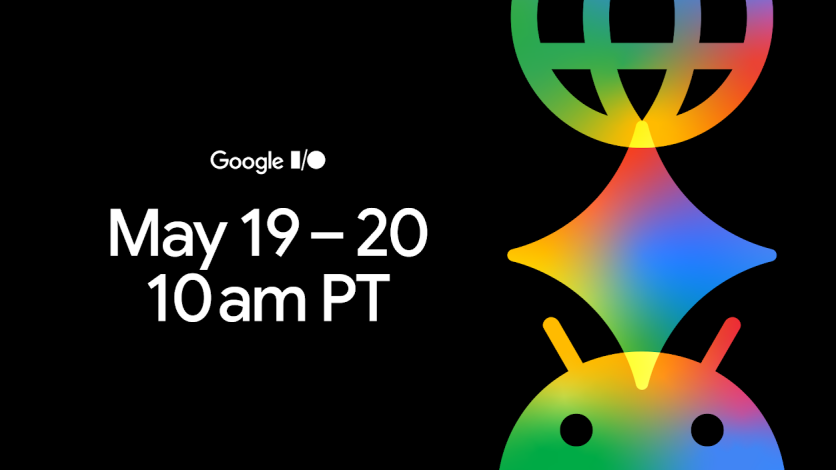
Google's annual developer conference opens today, May 19, 2026, at the Shoreline Amphitheatre in Mountain View, California — and every Android developer, Firebase engineer, Flutter practitioner, and web builder with a roadmap decision to make in the next 12 months has a reason to follow today's keynote. The two-day event runs May 19 and 20, with on-demand sessions and codelabs available on May 21. This year's schedule is structured almost entirely around a single strategic argument: that Gemini is no longer a product layered onto Google's platforms, but the operating layer beneath them. Whether the announcements over the next 48 hours justify that framing is the one question the published session list cannot answer.
All sessions are free to watch on Google's YouTube channel and via the official Google I/O 2026 site, which hosts the complete schedule, livestream, and session catalog. No ticket or registration is required to watch the keynote, though registering at io.google unlocks the full session catalog and personalized content recommendations. An American Sign Language livestream is available for the main keynote.
How to Watch
The conference is entirely online. All keynotes and sessions stream live at io.google/2026 and on the Google for Developers YouTube channel. On-demand recordings are uploaded after each session ends. For developers who cannot follow the live broadcast, May 21's on-demand drop is the most structured catch-up option. The I/O website also allows developers to build a personal schedule by saving sessions in advance.
Day One: May 19 — The Keynotes
Google Keynote — 10:00 AM–11:45 AM PT
The opening Google Keynote runs for one hour and 45 minutes and is where Google delivers its biggest product announcements of the year. Alphabet CEO Sundar Pichai hosts alongside a lineup of senior Google executives. This is the session most watched by consumers, press, and enterprise IT managers — and the one that sets the competitive context for every developer session that follows.
Heading into the event, several major topics had been heavily telegraphed by Google's own pre-show activity and by reporting from multiple outlets.
The expected centerpiece is a new Gemini model announcement — sources describe either a Gemini 4 release or a major Gemini 3.x update. Either way, the model arrives in a competitive environment where Anthropic's Claude Mythos and OpenAI's GPT-5.5 have already moved the benchmark frontier. Gemini reached 750 million monthly active users by the fourth quarter of 2025, according to developer analysis published ahead of I/O — a figure that confirms scale but does not address benchmark standing. Google has confirmed neither the version name nor the capability tier. For developers building on Gemini APIs, the practical questions the keynote must answer are: context window, latency at scale, pricing tiers, and what changes to the agentic framework. Anything short of that is a demo, not a roadmap.
Gemini Intelligence is the branding Google unveiled at The Android Show on May 12 for the agentic AI layer now embedded at the Android operating system level — not inside a single assistant app, but running proactively across the system. Demonstrated capabilities include booking a spin class from a calendar notification without user input, generating custom widgets from a natural-language prompt using the Create My Widget feature, and completing multi-step tasks across third-party apps without manual switching. One technical constraint that has not been officially confirmed but appeared in reporting ahead of the keynote: Gemini Intelligence may require a device with at least 12 GB of RAM and a qualified flagship system-on-chip, a hardware floor that would exclude a significant share of the existing Android installed base. Google's official rollout timing targets summer 2026 for the latest Samsung Galaxy and Google Pixel devices.
A highlight feature exclusive to Googlebook is the Magic Pointer, built by the Google DeepMind team. Wiggling the cursor over anything on screen surfaces context-sensitive Gemini suggestions — hover over a date in an email and the cursor may suggest booking a meeting. Google also announced widgets for Googlebook and Wear OS; the Create My Widget tool lets users generate fully functional custom widgets from a natural-language prompt, with examples including pulling trip details from Gmail and Calendar into a single glanceable widget.
Googlebook is a new laptop category announced at The Android Show on May 12, running a merged platform that combines the Android application ecosystem with ChromeOS browser and productivity architecture. Android Ecosystem President Sameer Samat confirmed earlier in 2026 that Android forms the platform's core, ending years of compatibility compromises that limited Android apps on Chromebooks. Five manufacturing partners — Acer, ASUS, Dell, HP, and Lenovo — have been named; prices and chip specifications were not disclosed at the May 12 reveal. The first Googlebook devices are expected on shelves in fall 2026. Google I/O is expected to provide the first hardware specifications, pricing, and full operating system details — particularly for enterprise and education customers currently managing Chromebook fleets. Existing Chromebooks from 2021 and later are confirmed to receive up to 10 years of automatic security updates. For the complete background on Googlebook, see Google Announces Googlebook: AI-Native Laptop Built on Android Arrives This Fall.
Android XR smart glasses are the hardware category most likely to produce a product shipping in 2026. Four partners have been named: Samsung (internal codename "Jinju"), XREAL (Project Aura), Warby Parker, and Gentle Monster. XREAL's Project Aura is an optical see-through headset with a 70-degree field of view, built on Qualcomm silicon, targeting a 2026 launch after winning a CES Innovation Award in January 2026. Google is also separately reported to be developing a first-party Gemini-branded glasses line, with reports citing Gemini Audio Frames and a Gemini Display Edition as distinct device families. No consumer Android XR smart glasses have shipped yet; I/O 2026 is expected to provide the first release timelines. The Samsung Galaxy XR headset has already launched, but that is a headset rather than glasses. For full partner and privacy context on the smart glasses reveal, see Google Brings Android XR Glasses to I/O 2026 as Smart Glasses Face a Privacy Reckoning.
Aluminium OS, Google's Android-based operating system for desktop environments, is also expected to receive its own I/O keynote segment after Sameer Samat confirmed a 2026 launch earlier this year. Unlike Googlebook — which is a hardware category manufactured by third-party partners — Aluminium OS is the underlying platform layer for Android-on-desktop experiences. Google has confirmed the "Aluminium OS" designation is a codename and that an official product name will follow later in 2026. ChromeOS continues in the education and budget segments; Aluminium OS targets consumer and premium-productivity buyers.
Google Home Speaker, revealed at the 2025 Made by Google event with a "spring 2026" launch window, remains unshipped as of today. I/O would be the natural venue to confirm a launch date or open pre-orders. The device is built around Gemini and supports Gemini Live for continuous conversational AI. It includes a light ring for visual responses, produces 360-degree audio so placement is flexible, and can be paired with a second unit for stereo audio or connected to the Google TV Streamer. The $99 price point was disclosed at the original reveal.
Android 17 was previewed extensively at The Android Show on May 12 but I/O will provide the stable developer surface. The Android 17 Beta 4 shipped in late April 2026, described by Google as the near-final environment; a stable release is expected in June. Based on the beta, Android 17 reads more like an infrastructure update than a design refresh: Gemini is embedded at the system layer rather than confined to a single assistant app. New consumer-facing capabilities include Pause Point (an interruption mechanism for mindless scrolling), a 3D emoji revamp, wireless iPhone-to-Android transfer, Gboard's Rambler mode for real-time speech-to-text cleanup, and agentic multi-app task completion. Android Auto is also getting a Material 3 Expressive redesign, Dolby Atmos support, and video app support. The "Adaptive Everywhere" philosophy means the platform is designed for seamless movement across phones, cars, living rooms, and immersive environments — a concept that will get technical depth in the Day Two adaptive development session.
Developer Keynote — 1:30 PM–2:45 PM PT
The Developer Keynote runs 75 minutes and is aimed squarely at software engineers, platform builders, and anyone who builds on Google's stack. It provides the technical detail behind the consumer-facing announcements from the morning and is where the API and SDK changes that will affect build decisions for the next 12 months are laid out in full.
Developers should expect structured walk-throughs of new tooling for Android 17, the web platform, Firebase, and Gemini's developer APIs. Google's own pre-show materials describe the session as covering three major themes: "the agentic era of development" — how to move from rapid ideation to orchestrating autonomous workflows; "enabling Android development anywhere" — AI integration across the full development lifecycle from prototyping to production; and "building powerful, agentic web applications" — new tools for agent-ready web development, automated debugging workflows, and shipping highly interactive UI.
Day One Afternoon Sessions — 3:30 PM–4:15 PM PT
After the Developer Keynote, the first wave of breakout sessions begins simultaneously at 3:30 PM. Four sessions run in parallel.
What's New in Google AI — 3:30 PM–4:15 PM PT
This session covers Google's end-to-end AI developer stack: the latest model capabilities across multimodal processing, media generation, and robotics, along with guidance on how to integrate these capabilities using Google's cloud infrastructure. The official session description frames it as essential for developers "building intelligent agents, utilizing new vibe-coding tools, or tuning and serving open-source models." Whether a developer needs a structured overview of the full Gemini API ecosystem, wants to understand media generation capabilities, or is evaluating robotics integrations, this is the session that maps the complete toolkit.
What's New in Android — 3:30 PM–4:15 PM PT
This is the core technical session for Android developers, detailing what is shipping in Android 17. Topics include new user interface breakthroughs with Jetpack Compose, developer productivity improvements, and form-factor support for foldables, large screens, tablets, and desktops. The session covers Android 17's performance improvements, new media and camera API capabilities, new functionality for desktop and large-screen apps, and how Google is using agentic automation to help users accomplish multi-step tasks across apps without manual switching. The agentic multi-app capability was partially released in the March 2026 Pixel drop; I/O will clarify the complete production path and API surface for third-party developers.
What's New in Chrome — 3:30 PM–4:15 PM PT
This session covers the cutting edge of browser technology and Chrome's direction in 2026 — new platform APIs, features landing in browsers, and capabilities designed to make the web more capable, reliable, and intelligent. Developers working at the intersection of web and on-device AI will find this session particularly relevant: Chrome is the primary interface for Gemini features on iOS, macOS, and Windows, and the session will cover where that integration is heading.
Agent-First Workflows: From Prompt to Production — 3:30 PM–4:15 PM PT
One of the more operationally significant sessions of the day. The official description is direct: "agentic coding unlocks unprecedented velocity, but speed means nothing if you hit a deployment wall." This talk walks developers through designing agentic AI workflows from initial prompt architecture all the way to production deployment — specifically, how to turn agentic coding into a production powerhouse. As agentic AI moves from prototype to practical infrastructure, this session is the engineering guide for teams that have moved beyond chatbot integration and are building systems that take real actions inside real apps at scale.
Day One Late Afternoon Sessions — 4:30 PM–5:15 PM PT
A second block of four parallel sessions runs at 4:30 PM.
Build Next-Gen AI Experiences with Google AI Studio and Antigravity — 4:30 PM–5:15 PM PT
This session covers Google AI Studio and the Antigravity platform — Google's tools for rapidly prototyping and deploying AI applications. The official description describes the core transition being addressed: scaling vibe-coded prototypes into production using "a new class of tools," covering the move from rapid exploration in Google AI Studio to autonomous development using Google Antigravity, described as Google's agent-first integrated development environment. The session addresses how to move from AI experimentation to production-grade deployment on Google Cloud infrastructure. By June 2026, development teams will have four serious agentic coding options to evaluate: Claude Code, GitHub Copilot Workspace, OpenAI Codex, and Google's Jules. For teams deciding which toolchain to standardize on, this session is the most direct argument for Google's approach.
What's New in Google Play — 4:30 PM–5:15 PM PT
A session dedicated to the Google Play ecosystem, covering the latest tools and updates designed to help developers grow their businesses on the platform. The official description is brief: "learn about the latest tools and updates on Google Play, all designed to help you grow your business." Based on recent Play platform activity published in Google Play's Q1 2026 update, topics may include Play Shorts (bite-sized video app previews), expanded billing choice that gives developers the option to use their own payment system alongside Google Play's, Buy Once Play Anywhere pricing for paid titles, cross-device PC gaming integration, and updates to the Gemini-powered Ask Play Q&A feature. While Google has not detailed the full session agenda in advance, Play sessions typically cover new monetization features, policy changes, and distribution tooling.
Unlock Modern Web Capabilities in Your AI Coding Workflows — 4:30 PM–5:15 PM PT
This web-focused session explores how developers can take advantage of new web platform capabilities within AI-assisted coding environments. The official description is specific: Chrome is "bridging the knowledge gap for AI tools, ensuring your coding agents have up-to-date guidance on what features are available and how to use them properly." As AI coding tools have become central to many developers' workflows, this talk addresses how modern browser APIs and web capabilities can be more effectively leveraged when building with AI assistance — a practical session for developers who generate web code with AI tools and need to understand the current browser capability surface accurately.
What's New in Firebase — 4:30 PM–5:15 PM PT
Firebase covers the most substantive platform transformation on Google's developer stack this year. The official session description states it directly: Firebase is "evolving into an agent-native platform, empowering developers to build intelligent applications with unprecedented velocity." The session covers integrations with Google AI Studio and Antigravity, how to vibe-code full-stack applications on Firebase, best practices for moving from AI prototype to production, and how to scale applications securely on Google Cloud infrastructure.
Recent Firebase updates confirm the platform is already moving in this direction: native on-device model support for hybrid inference in Android apps (routing between Gemini Nano on-device and cloud-hosted models dynamically via a unified API), access to Gemini Nano 4 (built on Gemma 4) via the Firebase AI Logic SDK, Firebase SQL Connect (formerly Firebase Data Connect) with pipeline operations including joins and subqueries now generally available, and Cloud Firestore Enterprise text and geospatial search. Firebase Studio — the cloud-based IDE with Figma integration and automatic backend provisioning — is expected to reach expanded capabilities or general availability at I/O, and the free tier is currently live. For teams asking whether to standardize on Google's infrastructure for both development and deployment, this is the session with the most direct cost and architecture implications.
Day Two: May 20 — Deep-Dive Sessions
Day Two shifts from big-picture announcements to in-depth technical sessions. While Google notes that the complete Day Two schedule is typically not published in full until after the main keynote, several sessions were confirmed in advance.
What's New in Flutter — 10:00 AM–10:45 AM PT
Google's cross-platform UI toolkit gets its own deep-dive session. The talk covers the latest Flutter framework updates including performance improvements and new features. The headline addition is Flutter GenUI, a capability for building truly adaptive, AI-generated user experiences on the fly. The official session description frames these innovations as "shaping the future of fast, multi-platform application development — spanning mobile, desktop, and beyond." Flutter adoption is strong in emerging markets and for teams maintaining a single codebase across Android, iOS, desktop, and web. For developers evaluating whether Flutter's cross-platform promise holds under AI-generated UI workloads, Flutter GenUI is the specific capability to test.
What's New in Web UI — 10:00 AM–10:45 AM PT
A fast-paced tour of the latest UI features landing in browsers, described in session copy as a "lens on making beautiful web experiences." Confirmed topics include updates to interactive capabilities — specifically scroll-triggered animations and scoped view transitions — alongside the latest in UI component primitives. The session's stated goal is helping developers "build performant interfaces using native CSS and HTML primitives" and "ship better user experiences with less code." For developers maintaining web properties who want to understand what is now natively available in browsers without additional library dependencies, this is the most practically useful web session of the event.
What's New in the Gemma Open Model Family — May 20
This session covers Gemma, Google's family of open-source AI models, and is confirmed for Day Two. The latest release, Gemma 4, shipped on April 2, 2026, under an Apache 2.0 license — the first Gemma release with fully commercial-permissive terms. It comes in four sizes: Effective 2B and Effective 4B (optimized for on-device deployment on phones and edge hardware), a 26B Mixture of Experts model (designed for high-throughput, efficient reasoning), and a 31B Dense model. The 31B ranked third among all open models on the Arena AI leaderboard at launch; the 26B ranked sixth. Both outcompete models up to 20 times their parameter count in their respective tiers.
The session will uncover the newest additions to the Gemma family and cover practical tools for deploying models across cloud, desktop, and mobile environments — covering an end-to-end pipeline from model discovery through production. For teams building on open-source foundations rather than API-dependent cloud deployments, this is the session that defines the available landscape for self-hosted inference.
What's New in Android Development Tools — May 20
A hands-on session focused on Android Studio, covering demos and features designed to accelerate developer workflows. The official description promises "a firsthand look at the latest Gemini capabilities for Android app development." Gemini in Android Studio gained Agent Mode and a New Project Assistant earlier in 2026, allowing developers to scaffold entire applications from a prompt and an optional design mockup. Agent Mode allows developers to describe an outcome — raise test coverage to a target percentage, fix all accessibility violations, refactor a module — and the agent formulates a multi-file execution plan, presents it for review, iterates on bugs, and delivers a diff. A March 2026 Android Developers Blog post from Google engineers provided detailed best practices for working with Agent Mode, including how to constrain its context to avoid silent wrong assumptions. Developers who have been tracking Cursor and GitHub Copilot Workspace will find this session the relevant comparison point for Android-native tooling.
Adaptive Development for the Expanding Android Ecosystem — May 20
One of the more architecturally significant sessions on the Day Two agenda. This talk addresses how Android 17 has moved the ecosystem toward an "Adaptive Everywhere" model — a philosophy where users move fluidly between phones, cars, living rooms, and immersive XR environments. The session covers why this transition is critical and what tools make it technically achievable. Jetpack Compose is positioned as the core rendering engine for this model — the definitive framework for building modern Android UIs across foldables, desktops, cars, TVs, and XR. The session will explore the technical toolkit that makes the "Adaptive Everywhere" philosophy achievable in practice rather than in demos. For developers currently maintaining separate codebases for different form factors, this session makes the case for consolidating on Compose as the single adaptive layer.
May 21: On-Demand Sessions and Codelabs
The third day moves entirely to on-demand content and codelabs — Google's interactive, self-paced coding tutorials. Developers who missed live sessions can catch up on recordings, and codelabs provide hands-on practice with the technologies and APIs announced during the main event. This format allows developers worldwide to work through new APIs, tools, and frameworks at their own pace following the live broadcast. Google typically posts full session recordings on this day, making it the most comprehensive source for developers who want to go deep on a specific technology. All codelabs are available at no cost on the I/O website.
The Bigger Picture
This year's I/O schedule makes Google's strategic priorities unmistakably clear. The event is structured around AI above almost everything else — from the Gemini model family and Firebase's agent-native evolution, to Android 17's AI-powered automation features and the Googlebook's Gemini-first design. Even traditionally developer-focused areas like Flutter, Chrome, and Android Studio are being reframed through the lens of AI integration.
The conference also marks a pivotal moment in the Android XR narrative. With Meta's Ray-Ban smart glasses having normalized the idea of wearable AI and AR hardware — EssilorLuxottica reported selling more than seven million Ray-Ban and Oakley smart glasses in 2025 alone, roughly tripling the prior annual total — Google faces a genuine competitive window to establish Android XR as the platform of choice for smart glasses, particularly if consumer devices from Samsung and XREAL are unveiled or dated today.
For developers, the event signals a clear shift in where Google wants investment to flow: agentic AI applications, adaptive multi-surface experiences, and AI-native tooling. The introduction of concepts like agent-first workflows, Antigravity, and Firebase as an agent platform suggests Google is actively trying to become the default infrastructure layer for the next generation of AI-driven software. Taken together, the session architecture describes one complete workflow: build with Gemini in Android Studio, handle backend deployment through Firebase on Google Cloud, distribute through Play, and iterate across platforms with Flutter and Compose. Whether that end-to-end argument is more than demo-grade will be visible in how specifically the production story is told — with pricing, security guarantees, and real architecture guidance rather than polished demo inputs.
For developers with active roadmap decisions, the three sessions with the highest carry-forward value are Firebase's agent-native pivot, the agent-first workflows production guide, and Android Studio's Gemini tooling session. The keynote, starting at 10 AM PT today on YouTube and io.google, answers the one question the schedule cannot: whether the new Gemini model is competitive enough for that argument to hold.
TechTimes is covering Google I/O 2026 live. Check back for updates as announcements roll in throughout the event.
ⓒ 2026 TECHTIMES.com All rights reserved. Do not reproduce without permission.


