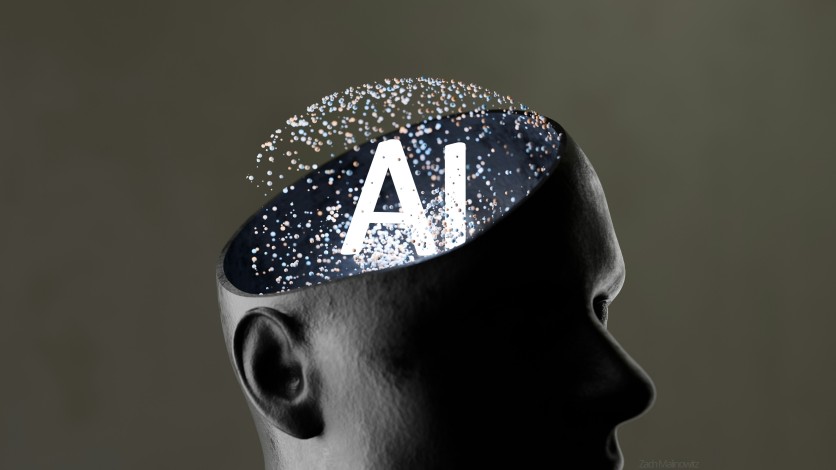
AI hallucinations continue to be a major concern in 2026, especially as more people rely on an AI chatbot for research, writing, and decision-making. Even with advances in grounding methods and retrieval systems, AI accuracy problems still appear in situations where models are required to generate factual or highly specific information.
While improvements have reduced some types of AI mistakes, the issue has not been fully eliminated. Modern systems can still produce incorrect or misleading responses, particularly when context is unclear or data sources are weak, making chatbot accuracy an ongoing challenge rather than a solved problem.
What Is AI Hallucinations
AI hallucinations refer to situations where an AI chatbot generates information that sounds correct but is actually false or unsupported. These AI mistakes can include made-up facts, incorrect explanations, or misleading summaries that are presented with confidence, making them difficult for users to immediately spot.
These AI accuracy problems happen because language models are designed to predict likely text patterns rather than verify truth in real time. As a result, even grounded AI systems can produce hallucinations when context is unclear, data is incomplete, or the model tries to fill in gaps by guessing instead of acknowledging uncertainty.
What AI Hallucinations Still Look Like In 2026
AI hallucinations in 2026 continue to appear in AI chatbot responses, even as systems become more advanced and widely used. These AI mistakes often show up in subtle ways, such as confident but incorrect facts or misleading references. Understanding what these AI accuracy problems look like today helps users better judge when chatbot accuracy can and cannot be trusted.
- Confident false answers: AI chatbots can still provide incorrect information with high confidence, making errors harder to detect.
- Outdated or unsupported facts: Some systems repeat information that was once correct but is no longer valid in 2026 contexts.
- Incorrect citations or sources: Chatbots may reference materials that do not actually support their claims, creating a false sense of reliability.
- High-stakes errors: Legal, medical, and policy-related answers can still contain serious inaccuracies despite improvements.
- Search-assisted hallucinations: Even with retrieval tools, models may misinterpret or incorrectly combine information from valid sources.
Why Accuracy Has Improved But Hallucinations Persist
Modern AI systems have improved due to grounding techniques, better training data, and retrieval-augmented generation methods. These approaches help reduce AI accuracy problems by anchoring responses in external sources rather than relying only on model memory.
However, AI hallucinations still persist because language models are designed to predict plausible text, not verify truth. This means that even when using grounded AI systems, the model can still misread context or combine facts incorrectly, leading to subtle but meaningful errors.
Another reason AI mistakes continue is that models sometimes prioritize helpfulness over uncertainty. When unsure, an AI chatbot may still generate a complete answer instead of admitting limitations, which keeps chatbot accuracy from reaching full reliability even in advanced systems.
What Users And Developers Can Do To Reduce AI Mistakes
Reducing AI mistakes in 2026 requires effort from both users and developers as AI chatbot systems continue to evolve. While improvements in grounded AI and retrieval methods help improve chatbot accuracy, they do not fully eliminate AI hallucinations. Understanding practical steps to limit AI accuracy problems is key to using these tools more safely and effectively.
- Use grounded AI systems: Connecting models to verified databases reduces AI hallucinations by limiting unsupported answers.
- Improve dataset quality: Clean, updated, and well-structured sources help improve chatbot accuracy significantly.
- Encourage uncertainty behavior: Systems that can say "I don't know" are less likely to produce harmful AI mistakes.
- User verification: Users should cross-check outputs, especially in high-stakes areas like health, finance, or legal work.
AI Hallucinations Are Smaller, Not Gone
AI hallucinations in 2026 are less frequent in well-designed systems, but they have not disappeared. Even grounded AI and retrieval-augmented generation systems can still produce AI mistakes when context is weak or when the model interprets information incorrectly.
Chatbot accuracy has improved, but it still depends heavily on data quality, system design, and user oversight. The safest approach is to treat an AI chatbot as a support tool rather than a final authority, especially when accuracy matters most.
Frequently Asked Questions
1. What are AI hallucinations?
AI hallucinations are incorrect or fabricated responses generated by an AI chatbot that sound believable but are not factually accurate. These errors can occur even when the model is confident in its answer. They often happen due to limitations in training data or interpretation. In 2026, they are less frequent but still present.
2. Why do AI accuracy problems still happen?
AI accuracy problems persist because language models generate predictions based on patterns rather than verified truth. Even grounded AI systems can misinterpret retrieved data. This leads to occasional AI mistakes when context is unclear. The problem is reduced but not eliminated.
3. Does retrieval-augmented generation stop AI hallucinations?
Retrieval-augmented generation helps reduce AI hallucinations by grounding responses in external data sources. However, it does not fully eliminate errors if the model misreads or misapplies the information. Chatbot accuracy improves but still depends on implementation quality. It is a strong improvement rather than a complete fix.
4. How can users avoid AI chatbot mistakes?
Users can reduce risk by verifying information from trusted sources. AI chatbots should not be used as the final authority for critical decisions. Comparing multiple references helps catch AI mistakes early. Treating outputs as drafts improves overall safety and reliability.
ⓒ 2026 TECHTIMES.com All rights reserved. Do not reproduce without permission.


