Seven years into Washington's semiconductor export-controls campaign, the clearest signal that the strategy is generating unintended consequences arrived not from a state-owned chipmaker — but from a smartphone brand, an electric vehicle giant, and a premium EV upstart. Xiaomi, BYD, and Nio each crossed major captive-chip milestones in 2025 and 2026, deploying competitive silicon at process nodes that US export restrictions were designed to keep out of Chinese hands. As of this week, Xiaomi officially confirmed its next-generation XRING chip will debut in 2026, extending an annual design cadence that did not exist 18 months ago.
The Bureau of Industry and Security, whose successive rounds of export controls were calibrated to widen the technology gap between American and Chinese chipmakers, now faces a more complicated calculus: in the consumer-electronics and electric-vehicle segments that matter most for near-term economic competition, the gap is closing through private R&D funded directly by product revenues — not state subsidy alone.
Xiaomi XRING Chip: From Announcement to Annual Cadence
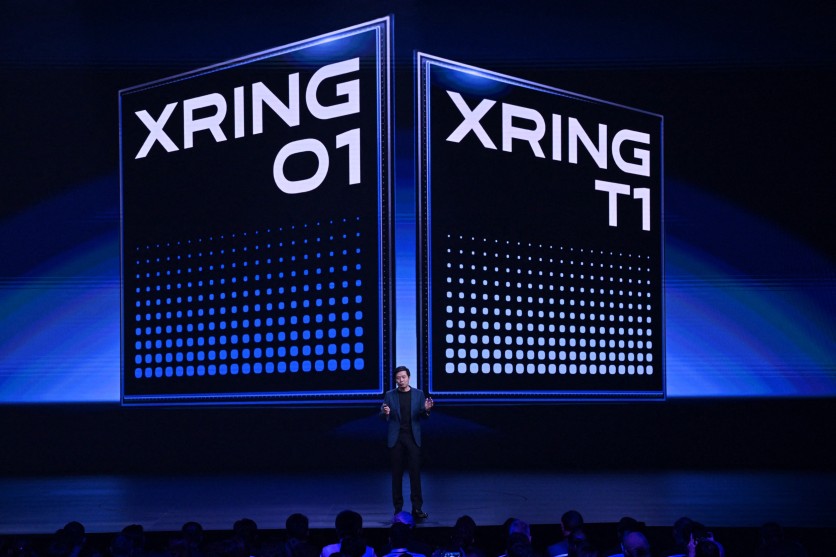
Xiaomi's entry into flagship mobile chip design is the clearest illustration of how quickly China's consumer-tech sector has accelerated. In May 2025 the company launched the XRING O1, becoming the first mainland Chinese firm — and only the fourth company globally — to independently design a 3nm-class flagship mobile processor. Manufactured by TSMC on its second-generation N3E node, the chip packs 19 billion transistors, a 10-core CPU with dual ARM Cortex-X925 cores clocked at up to 3.9 GHz, and a 6-core NPU rated at 44 trillion operations per second for on-device AI inference.
In benchmark testing, the XRING O1 scores above 3,100 single-core and 9,600 multi-core on Geekbench 6, placing it close to Qualcomm's Snapdragon 8 Elite. The chip debuted in the Xiaomi 15S Pro and Pad 7 Ultra, and shipments have exceeded one million units, CEO Lei Jun disclosed at an investor event this spring.
The pace of iteration signals a structural commitment rather than a one-time showcase. At Mobile World Congress in Barcelona, Xiaomi President Lu Weibing confirmed the company would "most likely release a yearly upgrade." Earlier this month, Lu reiterated on a live-streamed investor event that the next chip "will definitely be iterated this year" — and leaks from XimiTime indicate Xiaomi is preparing the XRING O3 for a possible August 2026 launch in the MIX Fold 5 foldable, skipping a dedicated mass-market O2 smartphone release in favor of in-vehicle and tablet applications.
That expansion plan has limits that matter. The XRING O1 and its successors continue to depend on TSMC for fabrication — a dependency the US controls have not yet disrupted, because Xiaomi is not on the Commerce Department's Entity List. But Xiaomi's competitive edge at the 3nm node is set to erode later in 2026, when Apple and Qualcomm both move to TSMC's 2nm process for their flagship chips. The XRING O2 is expected to remain on a 3nm variant, meaning the design gap may widen again even as domestic capability advances. CEO Lei Jun's stated ambition — a 2026 device running a self-developed chip, a self-developed operating system, and a self-developed large AI model simultaneously — represents the next milestone, not the current one.
How Does the XRING O1 Compare to Qualcomm and Apple Silicon?
The XRING O1 benchmarks competitively against Qualcomm's Snapdragon 8 Elite in CPU performance, reaching similar multi-core scores of around 9,600. Where the gap remains most visible is integration: the XRING O1 uses an external 5G modem, which affects battery life during cellular use compared to Qualcomm's fully integrated design. Apple's A18 Pro, manufactured on the same TSMC N3E node, remains the performance benchmark for on-device AI at the 3nm node, with more mature NPU software optimization. The XRING O1's NPU shows promise in benchmarks, but software support for third-party applications remains limited — a gap that reflects the broader challenge of building a chip ecosystem, not just a chip.
BYD Autonomous Driving Chip: Vertical Integration Under Strain
BYD's semiconductor story is about systemic resilience in a company that already produces approximately 75 percent of its vehicle components in-house — batteries, electric motors, and a growing slice of the silicon. BYD Semiconductor, the automaker's chip subsidiary, is developing AI chips aimed at competing with Nvidia and Horizon Robotics for autonomous driving compute, with a reported performance target of 80 trillion operations per second. A partnership with TSMC and MediaTek is producing a 4nm smart cockpit chip, the BYD9000, alongside an 80-TOPS central automotive controller.
The business rationale is clear: BYD's "Intelligent Driving for All" initiative, launched in 2025, equips every vehicle it sells with at least Level 2+ autonomous driving functionality, using compute platforms ranging from 100 TOPS to 600 TOPS depending on price segment. Sourcing those platforms entirely from Nvidia or Horizon Robotics at BYD's production scale — the company is the world's largest EV maker by volume — would transfer enormous margin to foreign suppliers.
The picture is more complicated than the vertical-integration narrative suggests. In March 2026, at Nvidia's GTC developer conference, BYD formally signed onto the Nvidia DRIVE Hyperion platform for Level 4 autonomous vehicle development, alongside Geely, Hyundai, and Nissan. BYD is simultaneously developing its own AI chips and deepening its dependence on Nvidia for the highest-autonomy tier — a dual-track strategy that reflects the gap between what in-house silicon can do today and what BYD's stated autonomous driving roadmap requires.
Independent verification of BYD Semiconductor's 80-TOPS performance claim has not been published by any named third-party auditor. The figures cited in EV trade press derive from company disclosures rather than external testing.
Nio Shenji Chip: From Cost Center to Revenue Line
Nio's trajectory is the most dramatic of the three. In 2021 the company committed to designing its own autonomous driving chip from scratch — a decision that CEO William Li estimated would cost the equivalent of building 1,000 battery swap stations. That investment has produced the Shenji NX9031: a 5nm automotive-grade system-on-chip with more than 50 billion transistors, a 32-core CPU, and memory bandwidth of 546 GB/s — a figure Nio describes as double that of competing flagship chips. According to the company's chip division head Zhang Danyu, computing power is approximately four times that of a single Nvidia Orin-X chip, comparable to what four Orin-X chips deliver in stack.
The chip debuted in the ET9 sedan in March 2025 and has since been adopted across Nio's entire main-brand lineup, displacing Nvidia silicon. In April 2026, Nio's sub-brand Onvo deployed the NX9031 in the updated 2026 L90 SUV — the first time the chip has appeared in a mass-market vehicle rather than a premium one. That extension into the sub-brand brings Nio's proprietary autonomous driving stack into a vehicle segment that competes at a far broader price point.
The chip is also generating its first external revenue. At Nio's Q3 2025 earnings call, CEO William Li disclosed that the company had begun licensing the NX9031 to automotive and robotics customers — the first time Nio has converted its chip investment into a direct revenue line. A second chip, reportedly called the M97, has completed tape-out and is being pitched to Leapmotor and Geely, according to Chinese media outlet 36Kr.
Despite strong specifications, the NX9031's real-world autonomous driving performance has drawn scrutiny. External tracking of Nio's smart driving software has noted gaps between benchmark compute claims and actual route-completion rates in complex urban environments. Nio has not published independent third-party audit results for the NX9031's performance claims.
US Chip Export Controls: Accelerating What They Sought to Prevent
The standard reading of US semiconductor export controls frames them as a constraint on Chinese capability-building. The Xiaomi, BYD, and Nio milestones suggest the opposite effect in the consumer and automotive segments: restrictions have functioned as a forcing function for private-sector R&D investment. Companies that once relied on Qualcomm, Nvidia, and MediaTek for silicon now fund captive design teams because the strategic cost of foreign dependency became visible.
That dynamic has a ceiling. TSMC fabrication remains the essential node for 3nm and 5nm chips — TSMC holds approximately 90 percent of the foundry market at those process nodes, with no credible near-term alternative. ASML's extreme-ultraviolet lithography machines, the hardware required for sub-5nm manufacturing, remain unavailable to Chinese foundries under Dutch export controls that align with US policy. China's chip self-sufficiency rate stood at roughly 33 percent in 2024, according to industry data cited by Nikkei Asia; a coalition of 13 Chinese semiconductor executives set a target of 80 percent by 2030 in a roadmap published this past March — a goal that analysts broadly describe as ambitious given the photolithography gap.
What China's National Intelligence Law Means for Global Chip Users
Xiaomi, BYD, and Nio are all headquartered in China and subject to the country's 2017 National Intelligence Law. Article 7 of that law obligates all organizations and citizens to support, assist, and cooperate with national intelligence efforts — a requirement that applies regardless of where a company's servers are located or what its stated privacy policy says. A companion 2017 Cybersecurity Law requires cooperation with government network inspections. No backdoor has been confirmed in the XRING O1, the Shenji NX9031, or BYD's automotive chips by any named independent security auditor, and no specific government data-handover incident has been publicly documented for any of the three companies' chip products. The legal obligation is structural: it exists whether or not it has been exercised, and it is relevant for any enterprise or government buyer evaluating supply-chain risk as these chips expand toward global markets.
Is China Actually Catching Up in Semiconductors?
The accurate answer is: partially and unevenly. In chip design for smartphones and automotive applications — the domain covered by this article — China has produced 3nm and 5nm products that compete with Western equivalents on raw specifications. In chip manufacturing, China's leading domestic foundry SMIC operates at 7nm using deep-ultraviolet multi-patterning techniques, with significant yield gaps compared to TSMC's comparable nodes. In chipmaking equipment — lithography machines, etching tools, and electronic design automation software — China remains heavily dependent on Western and Dutch suppliers, with domestic alternatives years behind the state of the art.
The consumer-electronics and EV segments that Xiaomi, BYD, and Nio operate in sit at the top of that capability stack: they benefit from TSMC's fabrication and ARM's IP licensing while demonstrating that Chinese companies can now perform the highest-value step — custom SoC design — competitively. What they have not done is replicate the full supply chain beneath them. That distinction is the difference between a structural shift and a solved problem.
Frequently Asked Questions
How effective are US chip export controls on China?
Export controls have slowed China's access to advanced AI datacenter chips and disrupted its domestic foundry equipment ecosystem — but in the consumer-electronics and automotive segments, they appear to have accelerated captive chip design by making foreign dependencies visible and costly. Xiaomi, BYD, and Nio all launched in-house silicon programs specifically in response to the strategic risk of relying on US-controlled supply chains.
What chips does Xiaomi make?
Xiaomi makes the XRING series of mobile system-on-chips. The XRING O1, launched in May 2025, is a 3nm flagship processor built on TSMC's N3E node with 19 billion transistors. A next-generation chip — reportedly the XRING O3, targeting the MIX Fold 5 foldable — is confirmed for a 2026 launch. Xiaomi also produces the XRING T1 smartwatch chip.
Is China catching up in semiconductor technology?
In chip design, yes — Xiaomi has reached the 3nm frontier and Nio has deployed a competitive 5nm automotive chip. In chip manufacturing and equipment, the gap remains significant: China's self-sufficiency rate was roughly 33 percent in 2024, and key bottlenecks including extreme-ultraviolet lithography machines remain inaccessible to Chinese foundries under US-aligned export controls.
What is the Nio Shenji NX9031 chip?
The Shenji NX9031 is Nio's in-house 5nm automotive-grade autonomous driving chip, with more than 50 billion transistors and 546 GB/s of memory bandwidth. Nio says it delivers computing power equivalent to four Nvidia Orin-X chips. It powers the full Nio main-brand lineup and was deployed in the Onvo L90 sub-brand SUV in April 2026. Nio has also begun licensing the chip to robotics and automotive companies, generating its first external revenue from the program.
ⓒ 2026 TECHTIMES.com All rights reserved. Do not reproduce without permission.


