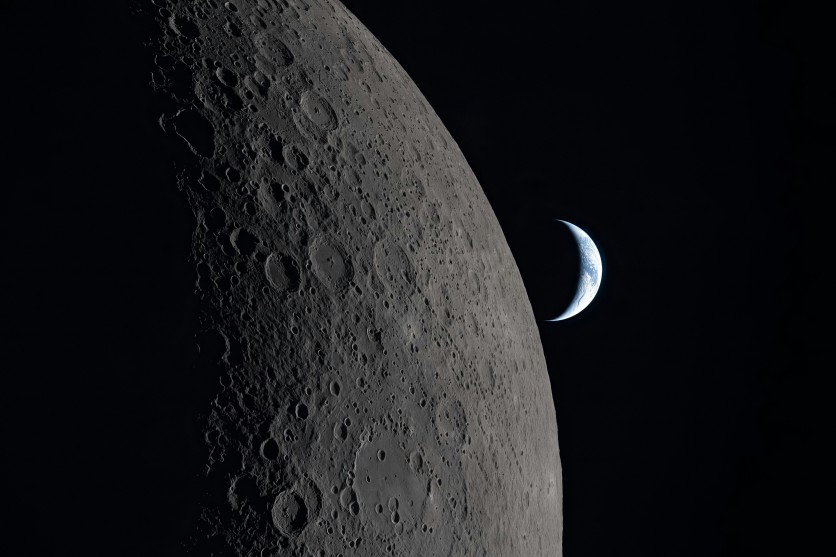
NASA's Artemis moon base is planned as a large lunar infrastructure project spanning hundreds of square miles near the lunar south pole. Instead of one station, the NASA moon base will form a network of habitats, science zones, and transport routes under the Artemis program, supporting long-term moon colonization and living on the moon.
The plan reflects how complex the lunar surface is, with sunlight, radiation, and ice deposits shaping where structures can be placed. NASA will use drones and lunar rovers to map and support early missions, ensuring data driven development as the Artemis program advances gradually.
What NASA Means By A Moon Base
The Artemis moon base is planned as a distributed system rather than a single station. Habitats, energy units, and research zones will be placed according to terrain and sunlight conditions, causing the NASA moon base to expand across the lunar south pole as needs grow.
Lunar geography plays a major role in this design. Elevated, sunlit areas may host habitats, while power systems are placed kilometers away for radiation safety. This separation turns moon colonization into a connected network instead of a compact base under the Artemis program.
Because the lunar south pole is still not fully mapped, NASA will test multiple sites before final construction. This exploratory phase allows the Artemis moon base to adapt over time as new data improves planning for living on the moon.
Read more: Ultrahigh Energy Cosmic Rays May Be Heavier Than Iron: Penn State Study Points to New Sources
How Drones And Rovers Fit In
MoonFall drones will be key to shaping the Artemis moon base, acting as small hopping scouts that survey the lunar south pole before astronauts arrive. Scheduled for launch in 2028 on a Firefly Aerospace lander, they help map safe zones for early construction.
NASA is also developing lunar rovers from Astrolab and Lunar Outpost to support mobility across the growing site. These vehicles will carry equipment and astronauts across rough terrain, linking habitats and research areas in a base that could span hundreds of square miles.
At least one lunar terrain vehicle is planned to arrive before Artemis 4. Some may even operate remotely from Earth before crewed landings. Together, drones and rovers form the core mobility system for early moon colonization.
What The Artemis Program Timeline Looks Like
The Artemis program is divided into three phases to build the NASA moon base step by step. Phase One runs through 2029, focusing on mapping the lunar south pole, testing access, and collecting environmental data to support future construction.
Phase Two spans 2029 to 2032 and begins forming the first operational base. Early habitats, systems, and transport networks will be introduced, turning planning into real infrastructure across the Artemis moon base.
Phase Three extends beyond 2032 and targets a semi-permanent human presence on the Moon. Earlier missions like Artemis 1 and 2 already tested key systems, while Artemis 4 will deliver major equipment, pushing living on the moon closer to reality.
Why The Artemis Moon Base Matters
The Artemis moon base represents a shift from short-term lunar visits to sustained infrastructure planning under the Artemis program. By combining habitats, drones, rovers, and phased construction, NASA is building a framework for long-term presence rather than temporary missions. The scale of the NASA moon base reflects how complex lunar operations become when science, mobility, and survival systems are all integrated across vast terrain.
As development continues, the lunar south pole becomes a central hub for exploration and resource use, especially due to its ice deposits and scientific value.
With each mission, moon colonization moves closer to reality, supported by systems designed for living on the moon in increasingly practical ways. The Artemis moon base is not just a destination but a gradually expanding network that will define how humanity operates beyond Earth.
ⓒ 2026 TECHTIMES.com All rights reserved. Do not reproduce without permission.


