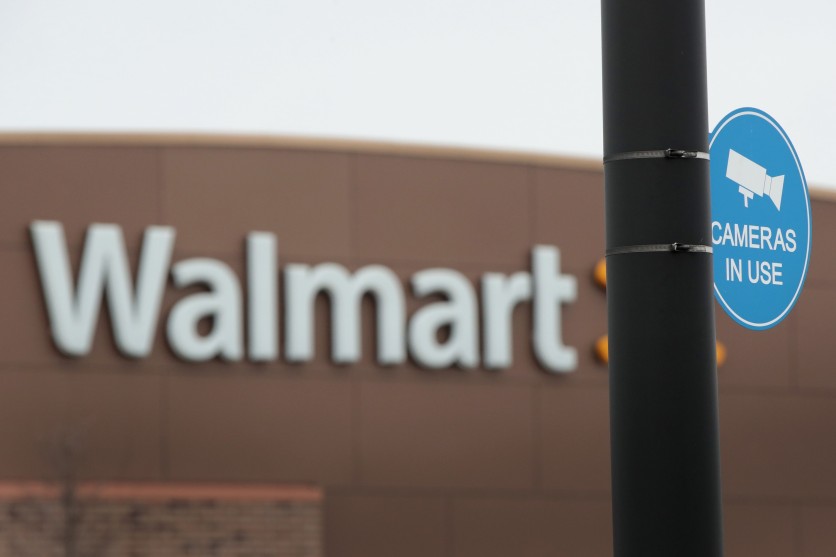
A national survey published May 26 found that 68% of Americans worry surveillance pricing will raise the cost of goods — and the technology to enable it in every physical store in America is arriving this year. Walmart is on pace to finish replacing paper price tags with digital displays at all of its US locations by the end of 2026, and in January and March the company received two patents for AI systems that can automatically update item prices and recommend pricing using customer data. The combination of the infrastructure and the patents has alarmed consumer advocates, grocery workers, and state lawmakers who until now treated surveillance pricing as primarily an online problem.
Three states have now passed bans. Maryland signed the first grocery surveillance pricing prohibition on April 28. Colorado's legislature passed a broader ban covering all industries on May 8, and Connecticut's passed an even more sweeping privacy package that includes a surveillance pricing restriction on May 4. Both Colorado and Connecticut bills now await their governors' signatures. California's ban advanced through a key Assembly committee vote on May 15. And on May 18, Reps. Josh Gottheimer (D-NJ) and Mike Lawler (R-NY) introduced the No Rigged Grocery Prices Act, the first bipartisan federal bill to ban AI surveillance pricing at grocery stores — nine days before the UFCW survey landed.
What Surveillance Pricing Is, and Why Walmart's Move Matters
Regulators distinguish two practices that can look identical from the checkout lane. Dynamic pricing adjusts what something costs based on neutral market conditions — demand, weather, inventory. Surveillance pricing adjusts it based on who you are: your location, your device, your purchase history, your browsing behavior, and what your profile suggests you are willing to pay before walking away. The latter requires building an individual data portrait of each shopper and targeting them with a price calculated to extract the maximum they'll accept.
Online retailers have deployed this for years. The FTC's January 2025 market study found that third-party pricing intermediaries — hired by at least 250 retail clients spanning grocery chains and apparel retailers — track mouse movements on webpages, abandoned shopping cart contents, demographic inferences, and real-time location data to set individualized prices. Electronic shelf labels bring that same capability into the physical store aisle.
Walmart's digital shelf labels, sourced from French manufacturer VusionGroup, are already in approximately 2,300 stores and will reach all US locations by year-end. The company says the labels are an efficiency tool — replacing what took an employee two days of manual tag-swapping with a few minutes on a mobile app — and insists that a human manager must authorize every price change. But in January 2026 Walmart received a USPTO patent for a system that "dynamically and automatically updates item prices," and in March it received a second for using machine learning to forecast demand and recommend prices at scale. Matt Hamory, a grocery industry consultant at AlixPartners, told the Financial Times that anything resembling dynamic pricing "is playing with fire" because "consumer trust is being eroded."
Walmart's AI Pricing Patents and a Security Flaw Researchers Already Found
The January 2026 patent covers a system for dynamically and automatically updating item prices across Walmart's e-commerce platform. The March patent applies machine learning to predict product demand and generate pricing recommendations at scale. Neither patent is limited to the efficiency use-cases Walmart has publicly described.
Security researchers have separately documented that the radio protocols used by most commercial electronic shelf label systems can be spoofed using off-the-shelf hardware. A developer published a Flipper Zero app in May called TagTinker that can communicate with and override ESL tags, demonstrating the vulnerability in active stores. SEC Consult's Vulnerability Lab confirmed independently that a $2 RF transceiver is sufficient to send arbitrary content to common ESL systems by sniffing their proprietary radio protocols.
Walmart has not publicly addressed whether its VusionGroup-sourced labels share this class of vulnerability.
Instacart, JetBlue, and the Documented Cost
A December 2025 investigation by Consumer Reports, Groundwork Collaborative, and More Perfect Union found that Instacart's AI pricing experiments caused prices to vary by as much as 23% for the same item from the same store at the same time, adding up to an estimated $1,200 more per year for a typical family of four. Instacart ended its item price tests within days of the report's publication.
Online, the practice has already produced its first major class action lawsuit. On April 18, a JetBlue customer posted on X that a fare jumped $230 in a single day while he was trying to book travel to a funeral, and JetBlue's official account replied by telling him to clear his cache and cookies or book in an incognito window. The post was deleted — but not before it had been widely shared. On April 22, plaintiff Andrew Phillips filed a class action in federal court in Brooklyn, Phillips v. JetBlue Airways Corp., alleging that JetBlue uses FullStory, PROS Holdings, Google Tag Pixels, TrustArc, and Dynamic Yield to build a behavioral profile of each visitor before any purchase is made and then sets fares accordingly. The complaint calls it "one of the very first class actions in American history regarding dynamic surveillance pricing."
Lee Hepner, senior legal counsel at the American Economic Liberties Project, has described the broader practice as "dystopian" — a system that "weaponizes personal data by filtering it through opaque algorithms to extract the maximum price consumers are willing to pay."
Three State Bans Passed, California Next, Federal Bill Pending
The three laws passed in the past month represent distinct regulatory approaches. Maryland's Protection From Predatory Pricing Act, signed April 28, targets food retailers over 15,000 square feet and delivery platforms; it takes effect October 1. Colorado's HB 1210, passed May 8, is broader: it covers all industries and bans individualized price-setting based on surveillance data, with exemptions for loyalty programs and discounts. Connecticut's SB 4, passed May 4, is the most comprehensive — pairing a surveillance pricing restriction with a ban on selling precise geolocation data, a state data-broker registry, and a centralized deletion mechanism that lets residents wipe their data from every registered broker with one request. Both Colorado and Connecticut await their governors' signatures.
New York's Algorithmic Pricing Disclosure Act — the first law of its kind nationally, effective November 10, 2025 — already requires businesses in the state to display the notice "This price was set by an algorithm using your personal data" whenever surveillance pricing is used. The National Retail Federation challenged it on First Amendment grounds; a federal court upheld it as factual and constitutional.
At the federal level, Senator Kirsten Gillibrand's One Fair Price Act would ban using personal data for individualized pricing nationwide. The Gottheimer-Lawler No Rigged Grocery Prices Act would do the same specifically for groceries and delivery apps, while still allowing discounts and loyalty programs. Neither has cleared committee.
The National Retail Federation and retail lobbyists argue that algorithmic pricing, properly designed, helps consumers through targeted discounts and supply-chain efficiency. Cailey Locklair, president of the Maryland Retailers Alliance, argued against the Maryland bill on the grounds that it could prohibit data-driven discounts alongside price increases. Walmart insists its digital tags are an efficiency tool and that prices will remain uniform for every consumer in every store.
What the UFCW Survey Found
The May 26 GBAO/UFCW national survey found 68% of Americans worry surveillance pricing will raise costs; only 5% believe it will lower them. Fifty-eight percent say the appearance of digital price tags in a store would make them less likely to shop there — a direct commercial signal for any retailer mid-deployment. Sixty-seven percent support banning electronic shelf labels outright, and 65% believe stores will use digital tags to raise, not lower, prices.
The survey is part of the UFCW's "Affordable Groceries and Good Jobs Campaign," active since February across 12 states. UFCW International Vice President Ademola Oyefeso said: "As large corporations, such as Walmart, rush to roll out ESLs across their stores, lawmakers have the opportunity to ban this technology before it's too late."
The backdrop is a cost-of-living crisis that has accelerated this legislative cycle beyond any previous one. The University of Michigan's May consumer sentiment index fell to a record low of 44.8 last month, down five points from April. In April, inflation ran at 3.8% annually while wages rose just 3.6% — the first time wages had failed to keep up since 2023.
What Protects You Right Now
In New York, any business using algorithmic pricing must display the required disclosure label; complaints can be filed with the Attorney General. Maryland's food surveillance pricing ban takes effect October 1.
Outside those states: using a private browsing window or clearing cookies before a significant purchase reduces the data footprint available to pricing algorithms, though it does not eliminate it. Comparing prices across devices — mobile versus desktop — can surface discrepancies. A VPN masks your location, one of the most heavily weighted inputs. Checking prices from outside a store before entering can matter too: Target was documented showing higher prices to customers browsing its app while physically inside a Target location.
Frequently Asked Questions
What is surveillance pricing?
Surveillance pricing is the practice of using your personal data — including your location, device type, browsing history, and shopping behavior — to charge you an individually calculated price rather than the same price offered to every shopper. The goal is to identify the highest amount you will pay before abandoning a purchase, and charge you that instead of a fixed price.
What are electronic shelf labels, and why do they matter for surveillance pricing?
Electronic shelf labels (ESLs) are digital displays that replace paper price tags on store shelves. Unlike paper tags, they update wirelessly in real time from a central system. On their own, ESLs are an efficiency tool. Combined with AI pricing systems and shopper data — as Walmart's two 2026 patents envision — they become the physical infrastructure for in-store surveillance pricing, enabling prices to change based on who is standing in front of the shelf.
Is personalized pricing legal in the United States?
In most of the country it remains legal. Maryland has banned it for food retailers starting October 1, 2026. New York requires disclosure when an algorithm uses personal data to set a price. Colorado and Connecticut passed bans in 2026 that are awaiting governor signatures. Federal legislation has been introduced but has not cleared committee.
How can I protect myself from surveillance pricing?
Use private browsing or clear your cookies before significant purchases. Compare prices across different devices — desktop, mobile, and different browsers often return different prices. A VPN can mask your location. In New York, look for the required disclosure label and report violations to the state Attorney General. In Maryland, food surveillance pricing is banned starting October 1.
ⓒ 2026 TECHTIMES.com All rights reserved. Do not reproduce without permission.


