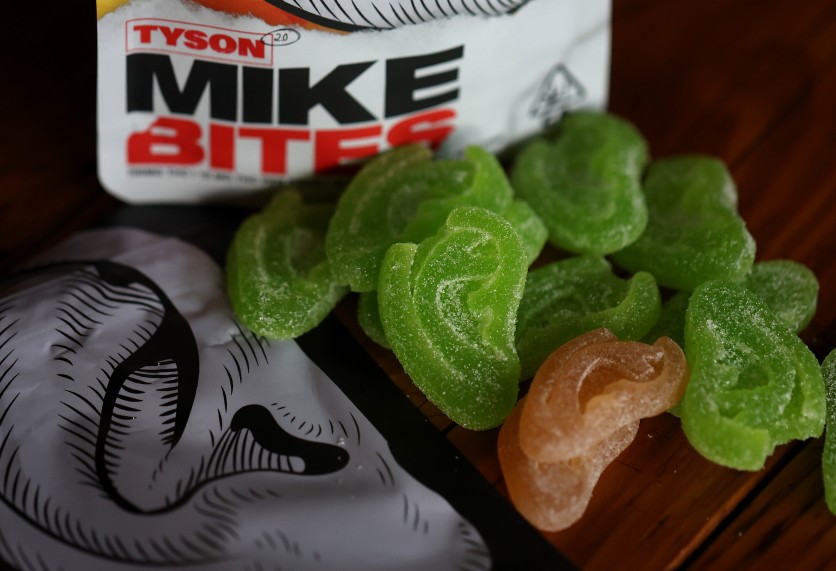
Johns Hopkins Medicine researchers published findings on May 29 warning that combining cannabis edibles with alcohol impairs driving more severely than being legally drunk on alcohol alone — and that the roadside tests police use cannot detect the resulting impairment. The study, the first controlled trial to examine cannabis edibles combined with alcohol, found that participants driving below the standard 0.08% breath alcohol limit while also using edibles were often more impaired than someone who had crossed that threshold on alcohol alone.
The implications extend to every driver in the 24 states plus Washington, D.C., where recreational cannabis is now legal. A driver who has consumed a cannabis-infused edible and had two or three drinks may be among the most impaired people on the road — and the only tool police have to assess them at a traffic stop was designed exclusively to detect alcohol.
Cannabis Edibles and Alcohol: Synergistic Impairment Worse Than Either Alone
For the study, researchers enrolled 30 healthy adults aged 21 to 55, of whom 25 completed all seven experimental sessions. Each session was separated by at least one week to allow substances to clear participants' systems before the next visit. Participants received either a cannabis-infused brownie dosed at 10 mg or 25 mg of tetrahydrocannabinol (THC), or a placebo brownie. They then consumed an alcoholic beverage calibrated to produce breath alcohol concentrations of either 0.05% or 0.08%, or a non-alcoholic placebo drink.
Before and after dosing, participants completed a high-fidelity driving simulator test, standard field sobriety tests, a battery of cognitive and psychomotor performance tasks, and questionnaires measuring subjective intoxication. Sessions ran for up to 7.5 hours after brownie consumption.
The results established something researchers had long suspected but never directly measured with edibles: combining cannabis and alcohol produced more severe and longer-lasting driving impairment than either substance alone, and the impairment grew beyond what the legal alcohol threshold would predict. Lead author Austin Zamarripa, Ph.D., assistant professor of psychiatry and behavioral sciences at the Johns Hopkins University School of Medicine, described the interaction as potentially synergistic rather than merely additive — meaning the combined effect may exceed the sum of what each substance would do individually.
"In our studies, if you give people cannabis in combination with a low dose of alcohol up to about 0.05% blood alcohol level — equal to about two to three beers for most people — they actually exceed impairment from 0.08% BAC, which is the legal intoxication limit in most of the U.S.," said principal investigator Tory Spindle, Ph.D., associate professor of psychiatry and behavioral sciences at Johns Hopkins. "Based on a breathalyzer, the person who used both cannabis and alcohol wouldn't necessarily be judged as impaired, even though they would actually be more impaired than someone who just drank alcohol to the legal limit."
The driving impairment was also longer-lasting under combined conditions than under either substance alone. A cannabis-infused edible takes 45 minutes to two hours to reach its peak effect, metabolizes differently than smoked cannabis because THC is processed differently when ingested orally, and can remain active for several hours — meaning the window during which a driver is dangerously impaired but might appear sober to a roadside test can extend across an entire evening.
Field Sobriety Tests Were Built for Alcohol, Not Cannabis Edibles
The study's second major finding addresses what law enforcement can actually detect. Field sobriety tests — the walk-and-turn, one-leg stand, horizontal gaze nystagmus, and related assessments — were designed and validated in the 1980s specifically to identify alcohol-impaired drivers at or above 0.08% blood alcohol content. They have never been formally validated for cannabis.
In the Johns Hopkins trial, these tests identified participants as intoxicated only in the high-alcohol condition — 0.08% breath alcohol concentration — compared with placebo. Cannabis, whether consumed alone or in combination with alcohol, did not push scores into the impaired range on the standard battery, even when the driving simulator data showed clearly degraded performance.
This finding aligns with corroborating research from other institutions. Thomas Marcotte, professor of psychiatry at the University of California San Diego School of Medicine and co-director of the Center for Medicinal Cannabis Research, reached similar conclusions in a 2023 randomized clinical trial published in JAMA Psychiatry. His team found that while field sobriety tests showed some sensitivity to cannabis exposure, officers misidentified approximately 49% of placebo recipients as impaired and the tests were "not accurate enough on their own to determine THC impairment." A study by RTI International, commissioned by the National Institute of Justice, concluded that both field sobriety tests and blood THC levels have severe limitations as indicators of cannabis-related impairment.
How Field Sobriety Tests Fail Impaired Drivers Who Mix Alcohol and Cannabis
The core failure is structural, not incidental. Alcohol produces a predictable, pharmacokinetically consistent relationship between blood levels and impairment — a key reason breath alcohol concentration translates reliably into legal thresholds and detection tools. THC does not work that way. Cannabis remains detectable in blood and urine long after any impairment has resolved, and the relationship between blood THC levels and actual driving impairment varies substantially between individuals. Tolerance, frequency of use, and the route of administration — inhaled versus ingested — all affect impairment duration and severity in ways that standard tests cannot account for.
Edibles compound this problem. Smoked cannabis produces impairment within minutes; an edible may take 45 minutes to two hours to reach its peak effect, meaning a driver who consumed one at dinner may be in peak impairment hours later — a timeline invisible to any behavioral or chemical test administered at the roadside. The Spindle lab at Johns Hopkins is currently evaluating a tablet-based performance application called DRUID as a potential alternative; the study data shows DRUID detected some cannabis-only impairment, though it did not show consistent sensitivity across all combined-substance conditions.
The Governors Highway Safety Association updated its drug-impaired driving policy in August 2025 to emphasize that the landscape of cannabis use is evolving rapidly, and that law enforcement tools, legal standards, and public education have not kept pace. More than half of drivers injured or killed in crashes between 2019 and 2021 tested positive for alcohol and/or drugs, according to a National Highway Traffic Safety Administration study of trauma centers, with cannabis the most commonly detected substance among those who tested positive for drugs.
Why the 0.08% Legal Drunk Driving Limit Falls Short With Cannabis Edibles
The study also directly challenges the adequacy of the standard legal threshold. The 0.08% breath alcohol concentration limit used across most of the United States reflects decades of research establishing at what point alcohol, consumed alone, reliably impairs driving. That research did not account for the interaction with cannabis edibles, which were not a significant consumer product when those standards were established.
Spindle stated plainly that the 0.08% limit is "likely too liberal if a driver has used cannabis and alcohol together." A driver who tests at 0.07% breath alcohol — just below the legal limit — after consuming a cannabis edible could be more impaired than a driver who tests at 0.08% without having used cannabis. Under current law, only the second driver faces legal consequences.
This creates a systematic gap between what the law requires and what the data shows. H.R. 6704, the Drunk Driving Prevention and Enforcement Act of 2025, introduced in the 119th Congress in December 2025, would establish a national system for tracking drug-involved crash data. As of May 2026, no federal per se THC limit for driving exists. Seven states had, as of mid-2025, enacted laws permitting roadside oral fluid screening for drug impairment — but no available test reliably identifies whether a driver is currently impaired by cannabis versus having used it days earlier.
What Enforcement Needs Next: Novel Impaired Driving Detection Tools
The Johns Hopkins researchers concluded by calling for action on two fronts. First, public health messaging across dual-legalization states — those where both alcohol and cannabis are legal — must communicate the amplified risk of combining the substances. The study's authors said the message that consuming "just a few drinks" is safe to drive on if you've also had an edible has not penetrated public awareness.
Second, and more technically challenging, the enforcement infrastructure needs new tools. Spindle's ongoing research includes developing and validating novel impaired driving detection methods that could work at the roadside. The DRUID app is one candidate; researchers are also analyzing blood biomarkers, eye-tracking tools, and performance-based assessments that measure actual cognitive and psychomotor function rather than proxying impairment through substance detection windows designed for alcohol.
The study was published May 1 in JAMA Network Open. Johns Hopkins Medicine amplified the findings through a new press release on May 29. It was funded by the National Institute on Drug Abuse, part of the National Institutes of Health.
Frequently Asked Questions
Can field sobriety tests detect marijuana impairment?
Standard field sobriety tests — including the walk-and-turn, one-leg stand, and horizontal gaze nystagmus assessments — were validated in the 1980s for detecting alcohol-impaired drivers and have never been formally validated for cannabis. Multiple controlled studies, including the Johns Hopkins 2026 trial and a 2023 University of California San Diego randomized clinical trial, found that these tests consistently miss cannabis-related impairment even when driving simulator performance is clearly degraded.
How does combining alcohol and cannabis affect driving?
Combining cannabis edibles with alcohol produces impairment that is more severe and longer-lasting than either substance alone, according to the Johns Hopkins study. The interaction may be synergistic rather than merely additive — meaning the combined effect can exceed what each substance would produce individually. A driver at 0.05% breath alcohol who has also consumed a cannabis edible may be more impaired than a driver who has reached the legal 0.08% alcohol limit on alcohol alone.
What is the legal limit for driving after using cannabis edibles?
No federal per se THC limit exists for driving in the United States as of 2026, and the standard 0.08% breath alcohol concentration limit does not account for cannabis use. The Johns Hopkins study found that the 0.08% threshold is likely too permissive when a driver has also consumed cannabis edibles. Seven states had introduced roadside oral fluid tests for drug impairment as of mid-2025, but no available roadside test reliably determines whether cannabis edibles are currently impairing a driver.
Are cannabis edibles more dangerous to drive on than smoked marijuana?
Edibles present a distinct pharmacological profile that may make them particularly hazardous for driving. Unlike smoked or vaporized cannabis, edibles take 45 minutes to two hours to begin producing effects, peak later, and last significantly longer — because THC is metabolized differently when ingested orally. Impairment from an edible can persist for many hours and may not be perceived by the driver at the time it peaks. The Johns Hopkins study was the first controlled trial specifically examining cannabis edibles combined with alcohol, as prior research had focused almost exclusively on inhaled cannabis.
ⓒ 2026 TECHTIMES.com All rights reserved. Do not reproduce without permission.


