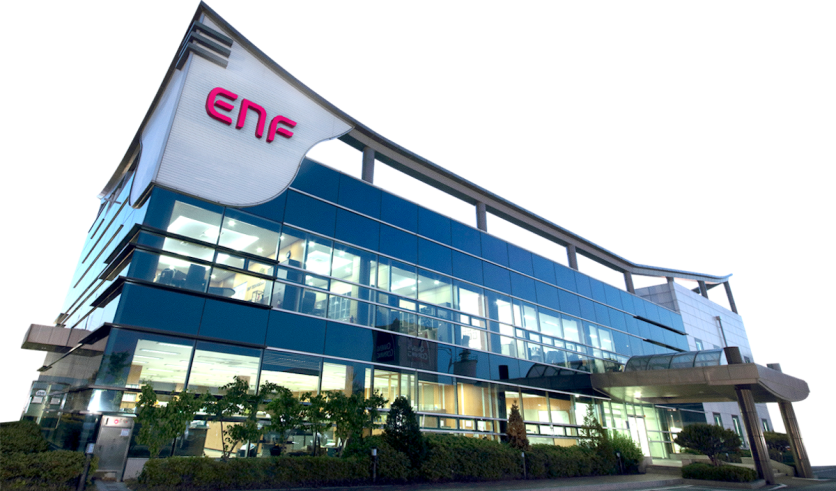
Samsung's long-delayed semiconductor foundry in Taylor, Texas, cleared a supply-chain milestone in April 2026 when ENF Technology began shipping semiconductor process chemicals from its nearby Kyle, Texas manufacturing facility — marking the first time any Korean materials company has delivered commercial volumes to the fab from U.S. soil. The development, first reported by South Korean trade outlet The Elec on Monday, June 1, comes as Samsung prepares for pilot production later this year and customer production runs in 2027.
ENF Technology's shipments cover process chemicals used in miscellaneous fabrication steps — a category that precedes supply of the high-volume chemical materials needed once full production begins. The company confirmed through industry sources that it expects its expanded Kyle plant to generate at least 30 billion to 40 billion won — roughly $22 million to $30 million — in incremental annual revenue once major chemical supply ramps up.
The activation of ENF Technology's supply line illustrates how differently Korean materials companies have positioned themselves for Samsung's Texas expansion. ENF Technology built its U.S. production base in Kyle before the Taylor fab opened, sustaining operations through years of delay by continuing to serve Samsung's older Austin facility, which ENF has supplied since 2021. That continuity allowed it to respond to Taylor's supply-chain needs immediately.
Samsung Taylor Fab Supply Chain: ENF Technology Leads Korean Peers by Years
ENF Technology's head start is the result of a $23 million facility expansion completed in 2024, which secured manufacturing capacity for thinner, stripper, ammonia water, phosphoric acid, and developer chemicals — the core process materials that a fab consumes in high volumes once wafer production scales.
Its two closest Korean peers are significantly further back. Dongjin Semichem completed plants in Killeen and Plainview, Texas, in 2024 — for thinner and high-purity sulfuric acid, respectively — but has not begun commercial production at either site. Weakness in Samsung's foundry business order flow pushed Dongjin's Texas mass-production target into the second or third quarter of 2026. As a newly established site, its ability to respond quickly to Taylor's needs remains limited.
Soulbrain, the third major Korean materials supplier in Samsung's Texas orbit, is further still. The company's Texas site remains at the land-acquisition stage. Construction delays caused by sluggish Samsung foundry orders and rising raw-material costs have pushed Soulbrain's groundbreaking out to 2028, with a design revision planned for the second half of this year. Soulbrain's plan to handle initial Taylor volumes from production facilities in South Korea means its Texas customers will face longer lead times and potential exposure to logistics disruptions that a local plant would avoid.
What Does Samsung Taylor Fab Produce, and When Does Full Production Begin?
Samsung's Taylor facility is designed for its SF2 and SF2P+ 2-nanometer process nodes — the same Gate-All-Around transistor architecture Samsung has been refining in Korea since beginning 2nm mass production of the Exynos 2600 processor in September 2025. The Taylor fab's anchor customer is Tesla, whose AI5 and AI6 autonomous-driving processors are covered by a $16.5 billion contract signed in July 2025 running through 2033.
Samsung held an equipment move-in ceremony at the Taylor fab on Friday, April 24, 2026. Margaret Han, vice president of Samsung Electronics' U.S. foundry business, told attendees of the Samsung Advanced Foundry Ecosystem (SAFE) Forum on Thursday, May 28, that customers are expected to begin production at the facility in 2027, adding: "We are ready." The fab had secured temporary certificates of occupancy for key sections earlier in 2026 and began testing EUV lithography equipment in March.
Samsung plans trial production at Taylor by year-end 2026 before entering full-scale mass production in 2027. The CHIPS Act subsidy supporting the Taylor project was finalized in December 2024 at $4.745 billion — distributed as Samsung meets project milestones, meaning ENF's active supply status and equipment installation progress are directly tied to the company's ability to draw down funding.
Samsung Foundry Texas: Why ENF Technology's Early Position Matters
The semiconductor supply chain is not a last-minute logistics problem. Process chemicals must be qualified and validated against the specific process node before a fab can rely on them for production wafers. ENF Technology's decision to build U.S. manufacturing before Samsung's Taylor fab was ready — and to absorb the cost of maintaining that plant through multiple timeline slippages by continuing to serve the Austin fab — means that when Taylor's qualification process for major chemical materials begins, ENF will be working from a local supply base that its competitors cannot yet match.
For fabless chip designers evaluating Samsung's Taylor fab as a potential manufacturing partner, the supply-chain picture matters as much as process yields. A foundry that depends on transoceanic chemical shipments from Korea for critical inputs is a more fragile supply chain than one with locally qualified suppliers. ENF's active Texas operation moves Samsung's Taylor supply chain one step closer to the domestic resilience that CHIPS Act policy was designed to create.
The gap between ENF Technology and its peers also has a competitive dimension for Samsung. Counterpoint Research director Kyeong-su Kang noted in May 2026 that 2nm wafer costs at Taylor run approximately 30 percent above 3nm production, a cost premium that puts pressure on fabless customers weighing whether to commit production to Samsung rather than TSMC. A locally sourced, continuously operated chemical supply helps constrain that cost structure.
Frequently Asked Questions
What is ENF Technology and what does it supply to Samsung?
ENF Technology is a South Korean semiconductor materials company that manufactures process chemicals — including thinner, stripper, ammonia water, phosphoric acid, and developer compounds — used in semiconductor fabrication. The company has operated a manufacturing facility in Kyle, Texas, since 2021 to supply Samsung's Austin fab, and began shipping materials to Samsung's Taylor fab in April 2026, becoming the first Korean materials supplier to deliver commercial volumes to the Taylor site from U.S.-based production.
When will Samsung Taylor fab reach full-scale production?
Samsung plans to conduct trial production at the Taylor fab by year-end 2026, with full-scale customer production runs scheduled for 2027. Samsung Foundry Vice President Margaret Han confirmed on May 28, 2026, that the facility is ready, and that customers are expected to begin production there starting next year.
How does Samsung's Taylor fab supply chain compare to competitors?
Samsung's Taylor supply chain is still activating: ENF Technology is the first Korean materials supplier to begin commercial shipments from Texas, while peers Dongjin Semichem and Soulbrain remain 1–3 years from local production readiness. Samsung's Taylor fab received $4.745 billion in CHIPS Act funding, finalized in December 2024, to support its $37 billion Texas investment — which includes two new logic fabs and an R&D facility in Taylor.
What chips will Samsung produce at Taylor Texas?
The confirmed anchor customer is Tesla, under a $16.5 billion contract signed in July 2025 for production of Tesla's AI5 and AI6 autonomous-driving processors through 2033. The Taylor fab is designed for Samsung's SF2 and SF2P+ 2-nanometer Gate-All-Around process nodes, with Tesla's AI6 chip allocated entirely to Samsung's Taylor site.
ⓒ 2026 TECHTIMES.com All rights reserved. Do not reproduce without permission.


