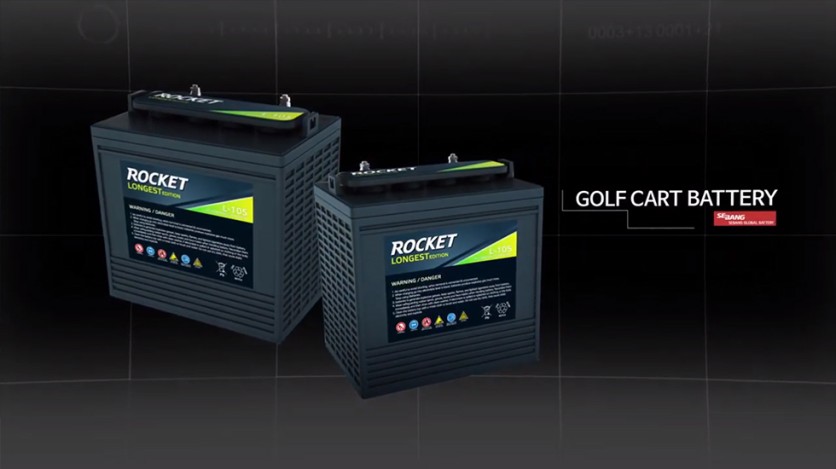
South Korea's Sebang Global Battery, best known internationally for its ROCKET-brand lead-acid batteries, disclosed Tuesday a 100 billion won capital raise — roughly $66 million at current exchange rates — to fund its subsidiary Sebang Lithium Battery's entry into the North American energy storage system market. The move, announced in a regulatory filing dated June 2, establishes a new U.S. entity, Sebang Lithium Battery America LLC, that will serve as the company's base for grid-scale and data-center storage in the United States.
The raise is structured as a third-party allotment capital increase in Sebang Lithium Battery, issuing 136.79 million new shares priced at 731 won (approximately $0.48) each, with payment due July 1. Sebang itself takes 92.1% of the allotment. The detail that distinguishes this commitment from a routine capital injection is who takes the rest: Sebang Group Chairman Lee Sang-woong receives 4.9% and his eldest son, Lee Won-seop — an executive at Sebang Battery — receives 1.4%. A Sebang Lithium Battery employee stock-ownership association receives the remaining 1.4%. Direct personal stakes by a founding family signal a level of conviction that a corporate-level vote alone does not.
FEOC Rules Open US Grid Storage to Korean Suppliers
The strategic rationale behind Sebang's move is explicitly tied to U.S. policy. The One Big Beautiful Bill Act, signed into law on July 4, 2025, tightened what are known as Foreign Entity of Concern, or FEOC, restrictions on U.S. energy storage tax credits. Under those rules, U.S. projects and manufacturers that want to claim technology-neutral investment and production tax credits must ensure that an increasing share of their battery materials and components come from non-FEOC sources — a category that includes China, Russia, Iran, and North Korea. The threshold stands at 55 to 60 percent non-FEOC content for projects beginning construction in 2026, rising to 85 percent by 2029. For Chinese battery manufacturers, which supply roughly three-quarters of U.S. lithium-ion battery imports by value, the restriction is effectively prohibitive for any project seeking federal subsidies.
That policy gap is precisely what Korean suppliers are racing to fill. Analysts at Intertek CEA estimate that Korean companies already account for more than 80 percent of FEOC-compliant ESS cell capacity in the United States. LG Energy Solution, Samsung SDI, and SK On — the three largest Korean battery makers — have all moved to convert electric vehicle production lines at their U.S. plants to lithium iron phosphate cell production for stationary storage, and have secured multi-billion-dollar supply contracts with Tesla, NextEra Energy, and other major developers.
How Sebang Lithium Battery Fits Into Korea's Second Wave
Sebang is not part of that first tier. Its parent, Sebang Global Battery, is publicly traded in South Korea (KRX: 004490) and generated trailing 12-month revenues of roughly $1.5 billion, making it a mid-tier operator by global standards. Its flagship product remains the lead-acid battery, which accounted for approximately 86 percent of consolidated first-quarter sales. On a consolidated basis, the company reported first-quarter sales of 525.4 billion won (approximately $346 million) and operating profit of 33.2 billion won (approximately $22 million), down 0.3 percent and 34.4 percent year-on-year, respectively. Sebang attributed the profit decline to lower volumes and higher labor and raw-material costs, with Middle East tensions weighing on sales to that region.
The lithium subsidiary, Sebang Lithium Battery, was founded in 2015 and launched full-scale production in 2022, initially focused on 12-volt lithium battery modules for Hyundai and Kia vehicles. In a July 2025 interview, Sebang Lithium Battery CEO Heungsub Oh described the company's ambitions to expand into ESS and broader overseas markets, noting that while the company does not produce cells itself, it specializes in assembling them into high-performance battery packs and systems. The subsidiary reported first-quarter sales of 75 billion won (approximately $49 million).
The U.S. entity anchoring the ESS push — Sebang Lithium Battery America LLC — is new and distinct from the lead-acid-focused Sebang Global Battery North America LLC that the parent established in August 2021. The company signaled this direction in its 2025 sustainability report, stating it would reorient its portfolio toward eco-friendly mobility and energy storage in response to decarbonization policy.
Module and pack manufacturers are also entering the U.S. market alongside the cell makers. Seojin System, through its U.S. subsidiary Seojin Global, signed a ten-year ESS supply contract in February 2026 with a major Korean battery company — identified by industry sources as SK On — worth approximately 1.9 trillion won ($1.3 billion) in cumulative supply through 2030. DeltaX, a South Korean startup founded in 2020, is designing ESS modules for SK On's U.S. product line and was selected by SoftBank in May 2026 to build ESS for AI data centers.
What Is the US Energy Storage Market Trajectory?
According to a SEIA and Benchmark Mineral Intelligence report released in late May 2026, U.S. energy storage installations are now projected to exceed 610 gigawatt-hours by 2030 — driven by grid modernization requirements and rapidly rising electricity demand from AI data centers and other large commercial loads. The first quarter of 2026 alone saw 9.7 gigawatt-hours of new capacity installed, the strongest first quarter on record and up 32 percent year-over-year.
That apparent oversupply at the cell level does not necessarily spell trouble for a downstream entrant like Sebang Lithium Battery America. Sebang's ambition is not to manufacture cells in the U.S. — it does not produce cells itself — but to integrate them into complete ESS products and deliver them to American utility and data-center customers. That downstream integration layer is still being built out, and Korean suppliers at every level of the stack are competing to establish early relationships with U.S. project developers before the market's highest-growth years arrive.
Frequently Asked Questions
Why is Sebang entering the US energy storage market now?
New U.S. regulations under the One Big Beautiful Bill Act restrict federal tax credit eligibility for energy storage projects that use components from designated Foreign Entities of Concern, a category that includes China. That policy shift has opened a significant market opportunity for Korean battery companies, which can supply FEOC-compliant products, just as the U.S. grid-scale storage market is growing rapidly.
How does Sebang Lithium Battery differ from the larger Korean battery companies?
Unlike LG Energy Solution, Samsung SDI, and SK On — which manufacture battery cells — Sebang Lithium Battery focuses on assembling cells sourced from others into battery modules and packs. Founded in 2015 and in full-scale production since 2022, it built its initial business supplying 12-volt lithium modules to Hyundai and Kia, and is now pivoting that manufacturing expertise toward large-scale energy storage systems.
What will the new US entity, Sebang Lithium Battery America LLC, actually do?
Sebang Lithium Battery America LLC is being established to serve as the company's North American base for energy storage system sales and integration. The 100 billion won ($66 million) capital raise is earmarked specifically for this entity, which is intended to supply grid-scale and data-center storage customers in the United States.
How much will the US energy storage market grow by 2030?
A SEIA and Benchmark Mineral Intelligence report released in May 2026 projects U.S. energy storage installations will exceed 610 gigawatt-hours by 2030, driven by grid modernization and surging electricity demand from AI data centers and large commercial loads. The U.S. installed a record 9.7 gigawatt-hours of storage in the first quarter of 2026 alone, up 32 percent year-over-year.
ⓒ 2026 TECHTIMES.com All rights reserved. Do not reproduce without permission.


