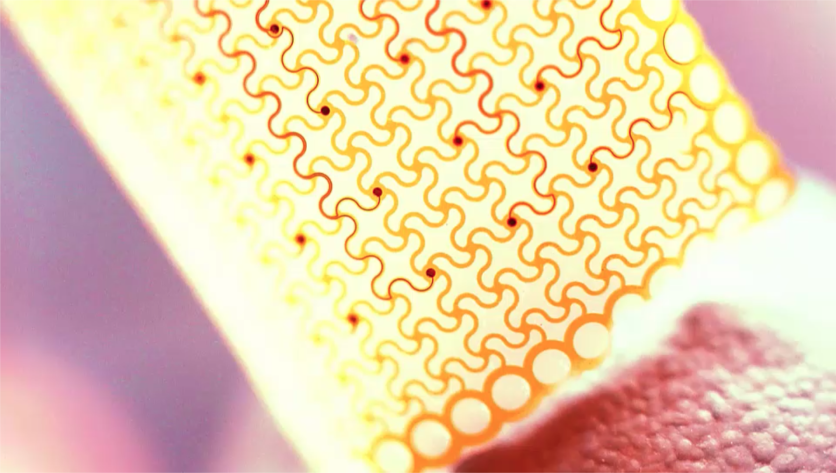
Every wearable device on the market today faces the same structural problem: biology bends, and circuits do not. A smartwatch is still a rigid box pressed against skin; a cardiac monitor strapped to a chest is still a brick of silicon waiting to crack. That physical mismatch has limited how closely AI computing can work alongside living tissue — until researchers at the University of Chicago decided to rethink the transistor itself.
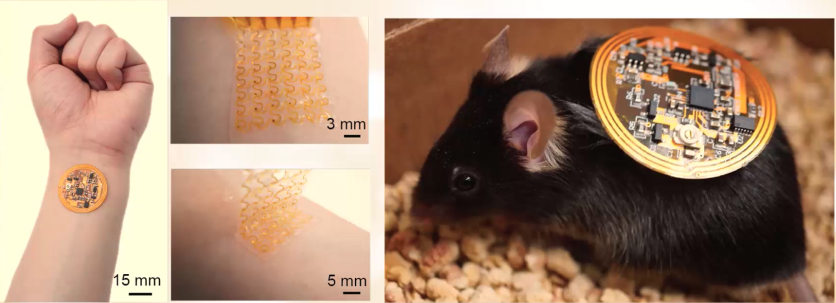
In a paper published in Nature Electronics on May 20, 2026, a team led by associate professor Sihong Wang at UChicago's Pritzker School of Molecular Engineering and computer scientist Fangfang Xia at Argonne National Laboratory reported a working large-scale stretchable neuromorphic computing patch capable of running artificial intelligence algorithms directly on the body, in milliseconds, with no wireless connection to an external server. In simultaneous coverage picked up by major science outlets in recent days, a March 2026 companion review paper in the International Journal of Extreme Manufacturing — authored by the same research group — maps the full technical roadmap behind that device.
Together, the two publications mark a specific transition: from theoretical demonstrations of stretchable AI hardware to a fabricated, tested circuit that achieves 99.6% accuracy at a clinical-grade cardiac task while being stretched to 150% of its resting length.
Why Smartwatches Cannot Do This
The speed problem at the center of this research is not abstract. Ventricular fibrillation — an electrical storm in the heart that can become fatal in minutes — propagates wavefronts through cardiac tissue so quickly that identifying their position and transmitting that data to an external computer and back takes too long to inform real-time treatment. Researchers have proposed treating fibrillation not with a blunt whole-heart defibrillator shock but with precisely targeted pulses delivered just ahead of the advancing wavefront — but that approach only works if the analysis happens in milliseconds, inside the body.
"This is a situation where it's not feasible to have remote computing," Wang told the University of Chicago's news office. "It just takes too long. But if you have a computing device that can do the analysis within the body, it could be possible."
The same latency gap applies to any cardiac event where seconds matter. Current wearables — including the most capable clinical-grade smartwatches — collect data and transmit it to external servers for analysis before returning a result. That round trip is acceptable for heart-rate trends; it is not acceptable for ventricular fibrillation mapping.
Stretchable Neuromorphic Electronics: How Organic Electrochemical Transistors Work
The device is built from organic electrochemical transistors, a class of component that behaves fundamentally differently from the silicon transistors inside a standard computer chip. In a silicon transistor, current is modulated by an electric field applied to a rigid semiconductor crystal. In an organic electrochemical transistor, current is modulated by the movement of ions through a soft, gel-like electrolyte layer — a mechanism called organic mixed ionic-electronic conduction.
That dual transport of both ions and electrons is what makes the organic electrochemical transistor simultaneously flexible and neuromorphic. When a voltage pulse is applied to the transistor's gate, ions from the electrolyte penetrate the polymer channel, changing its doping state and altering its electrical conductance. Those conductance changes persist after the pulse ends: the transistor retains a memory of what voltages it has seen, encoded in the ion distribution within its channel. A single soft transistor therefore serves simultaneously as a processing unit and a memory cell — the architecture of a biological synapse, where connection strength is encoded in the physical state of the junction itself.
This non-von-Neumann design eliminates the memory wall that constrains conventional computing: in standard chips, data must shuttle repeatedly between separate processor and memory units, consuming energy and time at each transfer. In the OECT patch, each transistor holds its own synaptic weight and executes computations locally. The result is the 10-millisecond inference time demonstrated in the Nature Electronics paper — fast enough for cardiac wavefront tracking.
Why Silicon Has Never Worked on Moving Tissue
The categorical advantage of organic electrochemical transistors over silicon in a wearable context comes from their tolerance of physical deformation. Silicon transistors rely on precise crystalline geometries; bending them fractures both the substrate and the metal traces connecting components. Resistive switching devices — another neuromorphic approach — work by forming and breaking nanoscale conductive filaments; mechanical strain disrupts those filaments after limited stretching cycles.
Organic electrochemical transistors do not rely on any nanoscale geometric structure. Their operation — volumetric ion penetration into a bulk polymer channel — is inherently tolerant of the continuous mechanical deformation of a beating heart or a flexing joint. The March 2026 review paper confirms this distinction explicitly: OECTs' tolerance for deformation "is largely rooted in their operational mechanisms," while resistive switching devices "often fail after limited cycling."
The question until the Nature Electronics paper was not whether individual OECTs could stretch — several research groups had demonstrated that — but whether they could be scaled into arrays dense enough to run a useful neural network on a body-worn device.
On-Body Edge Computing: The Fabrication Breakthrough That Solved Scaling
The answer required solving a manufacturing problem that had blocked the field for years. Gel electrolytes — the key ingredient in organic electrochemical transistors — behave like liquids. In a tightly packed array, adjacent transistors' gel layers merged into each other, causing short circuits and making the array nonfunctional. Standard semiconductor photolithography, which uses ultraviolet light to precisely pattern components on a substrate, could not be applied to a material that flowed.
Wang's team resolved this by engineering a new type of polymer gel that becomes rigid when exposed to ultraviolet light. By formulating an electrolyte that responds to UV exposure — hardening into precise patterns without losing its ionic properties — the team applied standard photolithographic techniques to a material class that had previously resisted them. The result: arrays at a density of up to 10,000 organic electrochemical transistors per square centimeter, fabricated with equipment already in use across the semiconductor industry.
"What we had to ask was whether we could use or change the properties of these polymers to make them compatible with photolithography — the main patterning method used in the microelectronics industry," Wang said.
Graduate student Zixuan Zhao, co-first author of the paper, described the conceptual shift the hardware demanded: "As computer scientists, we're used to thinking of a neural network weight as just a number. In hardware, it's a material — with variability, history and physical limits. The challenge was to hold those constraints in mind and still compute with enough precision to matter."
The fabricated array was then tested against two separate cardiac tasks using real data from a deidentified donor human heart. In the first, the patch located ventricular fibrillation wavefront positions with 99.6% accuracy compared with software-based calculations — maintaining that accuracy while stretched to 60% strain, with negligible degradation through 100 repeated stretch cycles to 100% strain. In the second, a neural network encoded in the array estimated heart attack risk from nine health inputs including cholesterol, blood sugar, and electrocardiogram measurements, achieving 83.5% accuracy. Each inference completed in 10 milliseconds.
What Stretchable Neuromorphic Electronics Still Cannot Do
Both publications are candid about the gap between the current demonstration and a deployable clinical device. Memory retention is the most pressing constraint: most OECT-based memory devices exhibit strong short-term plasticity — they hold their conductance state well over the duration of a task — but degrade over longer timescales. The review paper describes this as the primary remaining bottleneck and identifies a partial engineering workaround: island-bridge architectures, in which stable memory elements are placed on tiny rigid islands protected from mechanical strain, while stretchable coiled conductors link the islands. This hybrid approach preserves memory durability while retaining macroscopic flexibility, but adds fabrication complexity.
Scaling the array beyond laboratory demonstrations presents a second challenge. The 10,000-transistor arrays in the Nature Electronics paper showed good performance uniformity — which matters because variability across a large neuromorphic array propagates errors through the entire neural network computation. Assembling arrays an order of magnitude larger, as would be needed for sophisticated prosthetics or full-body bioelectronic skin applications, while maintaining equivalent uniformity has not yet been demonstrated.
Long-term biocompatibility is a third open question. The current experiments measure performance over hours and hundreds of stretch cycles. Validation over the multi-year timescales required for a clinical implant — including tissue response, ion leaching, and material degradation — remains future work. Wang's lab is now working to pair the computing array with stretchable wireless communication components and improved sensors, moving toward a system that can sense, analyze, and respond as an integrated whole. Both papers describe the current work as a hardware demonstration stage, not a finished medical device. Any implantable clinical application would require an Investigational Device Exemption and full FDA-supervised clinical trials — a regulatory pathway that is years away.
Wearable AI Without the Cloud: Why Eliminating the Server Matters
The cardiac application is the clearest case for on-body computing, but the architecture's implications extend beyond any single use. "Instead of sending data away to a remote server, we can begin making sense of it right where life is happening," said Fangfang Xia, the Argonne National Laboratory computer scientist who co-led the work. That shift from cloud-dependent wearable computing to on-device neuromorphic processing removes the latency barrier for any time-critical application — ventricular fibrillation mapping, seizure prediction, real-time prosthetic limb control — while simultaneously eliminating the data-transmission channel that creates privacy and security vulnerabilities in conventional wearables.
The broader picture, articulated in the March 2026 review, is a convergence of four previously siloed disciplines: polymer chemistry, nanocomposite engineering, organic electrochemistry, and spiking neural network architecture. That convergence is now producing not just roadmaps but working hardware, and the specific engineering barrier that blocked scale-up — the inability to pattern gel electrolytes with industry-standard photolithography — has a specific, working solution.
What comes next is less a materials question than an integration question: sensors, power, wireless communication, and the body's own long-term biological response to a layer of soft computing woven into it.
A Safer Path Toward Brain-Computer Interfaces?
The most pointed question the technology raises is whether it could eventually reduce the medical risks of brain-computer interfaces — devices like Neuralink's implant that require surgically threading electrodes into brain tissue to record from individual neurons.
The problem with today's penetrating BCI implants is mechanical, not electrical. Silicon and iridium electrodes have a stiffness — a Young's modulus — on the order of 150 to 180 gigapascals. Brain tissue sits at roughly 1 to 30 kilopascals. That is a disparity of five to six orders of magnitude between the implant and the tissue it sits in. When the brain moves — during normal head movement, breathing, or even a heartbeat — the rigid electrode does not move with it. The resulting micromotion causes two distinct failure cascades: acute trauma to blood vessels at the moment of insertion, and chronic gliosis, in which immune cells (reactive astrocytes and microglia) form a high-impedance scar around the electrode over weeks to months. That scar progressively insulates the device from the neurons it needs to reach. Neuralink's own engineering documentation acknowledges that the body's tendency to encapsulate foreign materials in scar tissue is "one particular challenge" that "could degrade the implant's ability to detect and decode neural signals." Independent researchers are more direct: as one analysis of the technology put it, "gliosis actually insulates electrodes over time, reducing their signal quality" — a process that "alone can render electrodes useless over the period of months to years."
Organic electrochemical transistors do not penetrate brain tissue. They laminate onto the cortical surface — an approach known as electrocorticography, or ECoG — recording the aggregate electrical activity of neuron populations beneath the surface rather than single cells. This is inherently less invasive: no needle insertion, no blood-brain barrier rupture, no anchored tethering force that transmits skull movement directly to tissue. A 2013 Nature Communications study by George Malliaras and colleagues at the École des Mines de Saint-Étienne demonstrated OECT-based ECoG arrays placed on the rat cortical surface achieving signal-to-noise ratios matching those of iridium penetrating electrodes for detecting epileptiform activity — without breaking the brain's surface. Subsequent work, including a 2023 Advanced Science study reporting 100-channel biodegradable OECT arrays with 1.42-millisecond temporal resolution and signal-to-noise ratios up to 37 decibels, has extended the record toward what clinical applications would require. A March 2026 Advanced Electronic Materials paper (Barbosa et al.) is now specifically examining OECT foreign body reaction for long-term implantable biosensing — an acknowledgment that the trajectory leads toward permanent cortical devices.
The honest caveat is important: ECoG is not a full substitute for deep-penetrating implants in every application. Neuralink's stated goal — single-neuron resolution from deep motor cortex and sub-cortical structures to restore voluntary movement in paralyzed patients — requires the spatial resolution that only an electrode physically adjacent to individual neurons can provide. For that application, penetrating implants remain the only current path, and the gliosis problem is one that companies like Neuralink are actively working to reduce through thread geometry and surface chemistry rather than by abandoning the penetrating approach entirely.
But a large class of clinical applications does not require single-neuron deep access. Epilepsy seizure detection and localization, closed-loop neuromodulation, cortical motor mapping for surgical planning, and prosthetic limb control driven by broad motor-cortex activity patterns — all of these have been demonstrated with ECoG at clinically useful resolution. The density milestone in the UChicago paper matters directly here: at 10,000 transistors per square centimeter, a stretchable OECT array can sample the cortical surface at a spatial resolution that approaches the columnar organization of the cortex itself, substantially narrowing the gap that has historically made penetrating implants necessary for fine-grained spatial decoding. Whether that density, combined with the on-device neuromorphic inference demonstrated in the Nature Electronics paper, is sufficient for a specific clinical application is a question that requires clinical trials to answer — but the engineering gap is measurably smaller than it was before this fabrication breakthrough.
The longer-term vision, expressed across both the UChicago publications and the broader literature, is a conformal computing layer that adheres to neural or cardiac tissue with the compliance of the tissue itself — processing signals at the site of origin, without the mechanical conflict that has historically made long-lived neural implants so difficult to build.
Frequently Asked Questions
What are organic electrochemical transistors and why do they matter for wearables?
Organic electrochemical transistors are soft, carbon-based components that control electrical current through the movement of ions through a gel-like layer rather than through a rigid semiconductor crystal. Because their operation relies on volumetric ion transport rather than nanoscale geometric structures, they tolerate the bending and stretching of human tissue without cracking or losing function — a property that makes them uniquely suited to wearable and implantable computing.
How does wearable AI health monitoring work without sending data to a phone or server?
In the UChicago design, the computing patch encodes a trained neural network directly in the conductance states of thousands of organic transistors on a skin-conforming patch. When physiological signals arrive, the hardware computes a classification result — such as identifying a cardiac wavefront location — in approximately 10 milliseconds, using the ionic state of its transistors rather than any external processor. No wireless transmission is required for the inference step.
What engineering barriers remain before stretchable neuromorphic devices reach clinical use?
The primary unsolved challenges are memory retention over long timescales, performance uniformity in arrays larger than current laboratory demonstrations, and multi-year biocompatibility validation in living tissue. Island-bridge architectures address memory retention partially, but scaling uniformity and biological durability require further research before any clinical application can proceed through the FDA's Investigational Device Exemption and clinical trial pathway.
What is bioelectronic skin and what would it enable?
Bioelectronic skin refers to a stretchable sheet of integrated sensing, memory, and computing material that conforms to the body's surface. Rather than mounting separate rigid sensors and processors on a flexible backing, the goal is to print a single elastomeric layer in which the material itself performs all three functions. Applications would include continuous physiological monitoring, smart prosthetics that interpret touch and motion locally, and implantable AI systems that respond to biological signals faster than any server-connected device could.
Could stretchable organic transistors replace brain implants like Neuralink?
Not for all applications — but for a large class of clinical uses, they represent a meaningfully safer alternative. Current penetrating BCI implants cause gliosis, where immune cells form an insulating scar around the rigid electrode over months to years, progressively degrading signal quality. Organic electrochemical transistors do not penetrate brain tissue; they record from the cortical surface. This approach cannot access deep brain structures or single neurons at the resolution Neuralink targets for paralysis treatment, so it is not a universal substitute. But for epilepsy monitoring, motor-cortex mapping, and prosthetic control driven by surface signals, surface OECT arrays have matched penetrating electrode performance in animal studies — and at 10,000 transistors per square centimeter, the density is now high enough to approach cortical-column spatial resolution from the surface alone.
ⓒ 2026 TECHTIMES.com All rights reserved. Do not reproduce without permission.


