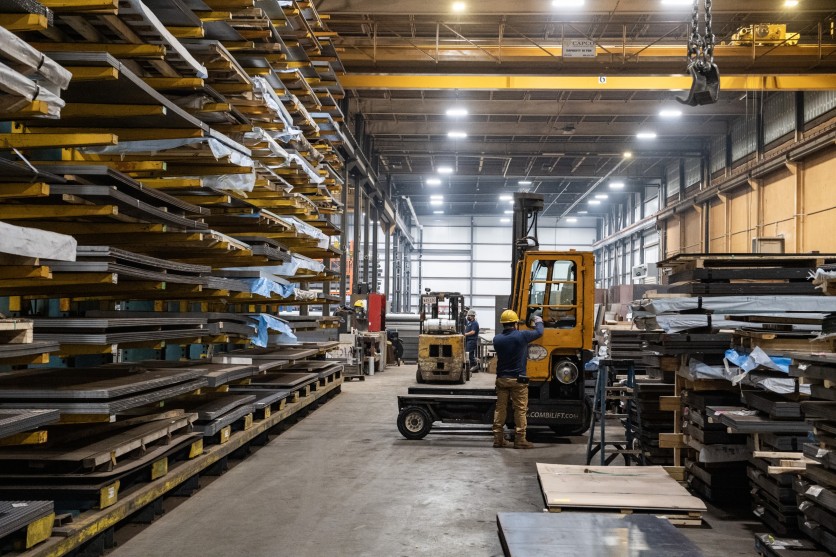
A White House proclamation signed June 1 rewrites the rate structure for steel, aluminum, and copper derivative imports starting at 12:01 a.m. ET on June 8 — tonight — with targeted tariff reductions for agricultural equipment, residential HVAC systems, and mobile industrial machinery running alongside new duties that will raise costs for importers of steel storage racks and aluminum lithographic plates. The changes cover roughly $58 billion in annual imports and produce a net annual duty reduction of about $3.4 billion, according to Global Trade Alert, an independent trade policy analytics organization. U.S. Customs and Border Protection issued Automated Commercial Environment filing instructions on June 5 under Cargo Systems Messaging Service number 68855869.
Importers and customs brokers who have not yet updated their Harmonized Tariff Schedule classifications, Chapter 99 headings, and Automated Commercial Environment entries face incorrect duty assessments on every shipment entered for consumption on or after 12:01 a.m. tonight. The proclamation contains no provision for goods in transit — consistent with how earlier Section 232 actions have operated — meaning shipments already at sea or in port are subject to the new rules at the moment of consumption entry.
The changes are temporary, running through December 31, 2027, after which products covered by the new structures will revert to the rate regime established by Proclamation 11021, the April 2, 2026 action that restructured Section 232 duties across the full customs value of imported goods rather than their declared metal content.
Who Pays Less Starting Tonight
The proclamation's most commercially significant relief expands the temporarily reduced 15 percent ad valorem Section 232 rate to cover agricultural equipment — combines, harvesters, mowers, plows, agricultural tractors, and related tractor components — and certain heating, ventilation, and air conditioning systems and components predominantly for residential use. Both product categories had been subject to the standard 25 percent derivative tariff under Annex I-B of Proclamation 11021.
The Heating, Air-conditioning and Refrigeration Distributors International trade group estimated the HVAC tariff reduction alone would generate nearly $2.3 billion in consumer savings and measurable positive effects on economic activity. In their first-quarter 2026 earnings reports, HVAC manufacturers Lennox and Carrier had cited Section 232 tariff costs as contributors to elevated input expenses. The administration's stated rationale for the agricultural and HVAC reductions — that these products support essential American economic activity — signaled responsiveness to domestic industry advocacy even within an otherwise aggressive tariff posture.
Annex I-C: New Tier Structure for Forklifts, Bulldozers, and Cranes
The most structurally novel element of tonight's changes is the creation of Annex I-C, an entirely new product classification covering mobile industrial equipment and machinery — forklifts, bulldozers, cranes, non-agricultural tractors, earth-moving machinery, mobile cranes, and related equipment. These products had previously been outside the reduced-rate framework entirely.
Annex I-C establishes a four-tier duty structure through December 31, 2027. The general rate is 25 percent. For products imported from Argentina, Ecuador, El Salvador, Guatemala, Japan, South Korea, Liechtenstein, Switzerland, Taiwan, the United Kingdom, and European Union member states, the combined Column 1 most-favored-nation duty rate and the Section 232 rate will be capped at 15 percent total — meaning that if the product's existing Column 1 duty already reaches 15 percent, no additional Section 232 charge will apply. For products whose Column 1 duty falls below 15 percent, the Section 232 addition will bring the total to 15 percent.
For Annex I-C products from Canada and Mexico that qualify for preferential treatment under the United States-Mexico-Canada Agreement, the 25 percent rate will apply only to the non-U.S.-content portion of the product — the total customs value minus the value attributable to parts produced in the United States. A 15 percent floor applies regardless of how large the U.S. content share is. For steel articles specifically, a cap limits the exemption: no more than 40 percent of total value may be treated as exempt U.S. content. The Commerce Department will issue guidance to Customs and Border Protection on how to assess U.S. content, and the proclamation explicitly warns that importers who misrepresent content origin face civil and criminal penalties.
Which Products Now Owe More Starting Tonight
Not all importers benefit. Two product categories are newly swept into Section 232 coverage as derivative products subject to the 25 percent rate. Aluminum lithographic plates — used in commercial offset printing — will face Section 232 duties for the first time, classified under Harmonized Tariff Schedule heading 3701.30.00. Steel shelving, racks, and related parts classified under heading 9403 are also newly covered. Global Trade Alert calculated that the steel racks addition alone will raise annual duties by approximately $900 million, as those products had previously been subject only to the lower Section 122 rate.
Importers of these products who have not identified the new classification should treat tonight as a hard compliance deadline.
How the 85% American-Metal Threshold Lowers the Bar
One structural shift that benefits a broad range of manufacturers: the U.S.-origin metal threshold for qualifying as made entirely from American aluminum, steel, or copper has been lowered from 95 percent to 85 percent by weight. Products that clear this threshold qualify for a 10 percent rate rather than the standard 25 percent derivative tariff.
The practical effect is that manufacturers whose products contain predominantly — but not exclusively — American-sourced metal, and who were sitting just below the old 95 percent line, may now qualify for the reduced rate without any supply-chain reconfiguration. The change is measured by weight of the metal content, not by value.
Low-Metal Products Leave Section 232 Scope Entirely
One change at the boundary of the regime's coverage: products whose steel, aluminum, or copper content is 15 percent or less of the total product will no longer be subject to Section 232 metals tariffs at all. This removal affects a significant class of finished goods that previously carried Section 232 liability despite containing only minor quantities of covered metal — a source of disproportionate duty burden that trade attorneys and industry associations had flagged in comments to the Commerce Department.
What Customs Compliance Teams Must Do Before Midnight
For customs brokers and trade compliance teams, the actions required before 12:01 a.m. tonight are specific. Review the product-specific Harmonized Tariff Schedule subheadings in the proclamation's annexes to confirm coverage. Determine whether Annex I-C applies to any imported mobile industrial equipment and which country-of-origin rate tier governs each product. Assess whether USMCA-qualifying goods from Canada and Mexico can use the non-U.S.-content methodology — and document U.S.-content calculations in advance of Customs and Border Protection scrutiny, given the proclamation's explicit penalty language. Update Chapter 99 headings and duty rates in Automated Commercial Environment entry filings to reflect the new classifications effective June 8. Monitor for additional Commerce Department guidance on U.S.-content calculation methods for USMCA goods, which had not been fully issued as of June 7.
The broader compliance risk is one that trade attorneys have been emphasizing since the April 2026 Proclamation 11021 overhaul, which shifted Section 232 from a valuation-based exercise into a classification and origin-documentation regime. A lawsuit filed in January 2026 — Express Fasteners v. United States, Case No. 26-853, at the U.S. Court of International Trade — challenged Customs and Border Protection's valuation methodology for derivative tariffs and remains pending. That litigation, combined with a February 2026 letter from a coalition of major industry associations to the Commerce Department documenting "enormous" administrative burdens and "complex entry filing instructions," illustrates the compliance environment into which tonight's new classifications land.
How Section 232 Works — and Why Tonight's Changes Matter
Section 232 of the Trade Expansion Act of 1962 authorizes the president to restrict imports that the Commerce Department has determined threaten national security. President Trump first invoked it for steel and aluminum in March 2018. In April 2026, Proclamation 11021 made the most significant structural change in the regime's recent history by shifting the tariff base from declared metal content to full customs value — meaning a product worth $1,000 that contained $200 of steel owed 25 percent of $1,000, not 25 percent of $200. Tonight's proclamation does not alter that base methodology; it recalibrates which products get relief within that framework and which get newly captured.
The tiered structure that results is layered. A raw steel coil faces 50 percent. A steel-intensive derivative product faces 25 percent unless it qualifies for a country-specific or content-specific reduction. A product with 85 percent or more American metal faces 10 percent. A product with 15 percent or less metal faces zero Section 232 duty. Annex I-C occupies the middle of that structure for mobile industrial equipment, with a country-of-origin overlay that creates different effective rates for trade-agreement partners versus all others.
Frequently Asked Questions
Which products qualify for the 15% Section 232 rate under the June 8 changes?
Agricultural equipment — including combines, harvesters, mowers, plows, and agricultural tractors — and residential HVAC systems and components now qualify for the 15 percent rate under the expanded Annex III of Proclamation 11021. Mobile industrial equipment and machinery listed in Annex I-C also qualifies for a 15 percent combined duty cap when imported from trade-agreement partner countries such as Japan, South Korea, the United Kingdom, and European Union member states.
What is the new domestic-content threshold for the 10% Section 232 tariff rate?
As of June 8, 2026, a product qualifies for the 10 percent reduced rate if at least 85 percent by weight of its steel, aluminum, or copper content is made from metal smelted and cast, or melted and poured, in the United States. The June 1 proclamation lowered this threshold from the prior 95 percent requirement, making the reduced rate accessible to a broader range of manufacturers that use predominantly American metal without any supply-chain changes.
How does the USMCA content methodology work for Section 232 tariffs on forklifts and industrial equipment?
For Annex I-C products from Canada and Mexico that qualify for United States-Mexico-Canada Agreement preferential treatment, the 25 percent Section 232 rate applies only to the non-U.S.-content portion of the product — calculated as total customs value minus the value of U.S.-produced parts. The effective rate cannot fall below 15 percent of the full product value. For steel articles, an additional constraint limits the exemption: only up to 40 percent of total product value may be treated as exempt U.S. content. Importers must document U.S.-content calculations; the proclamation authorizes penalties for misrepresentation.
What new products became subject to Section 232 tariffs on June 8, 2026?
Aluminum lithographic plates (Harmonized Tariff Schedule heading 3701.30.00) and steel shelving, racks, and parts (heading 9403) are newly covered as derivative products subject to the 25 percent Section 232 rate. These products had not previously been captured under Section 232 derivative coverage.
ⓒ 2026 TECHTIMES.com All rights reserved. Do not reproduce without permission.


