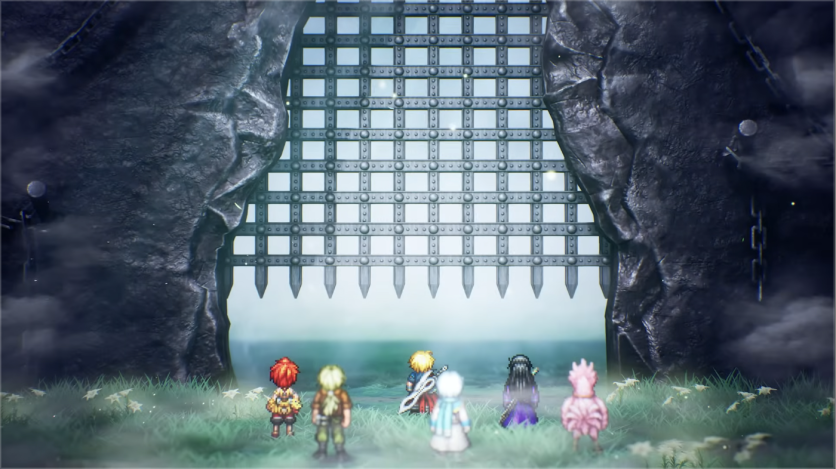
Square Enix surprised audiences at the June 9 Nintendo Direct by unveiling Final Fantasy Resonance — the first mainline Final Fantasy title built in the HD-2D visual engine and, more significantly for longtime fans, the first to restore a traditional turn order in place of real-time combat timers since Final Fantasy III shipped on the NES in 1990. The game launches October 22, 2026, on Nintendo Switch, Nintendo Switch 2, PlayStation 5, Xbox Series X|S, and PC via Steam and the Microsoft Store. Standard digital pre-orders are live now at $49.99 for PS5, Xbox, and PC; Nintendo Switch and Nintendo Switch 2 pre-orders have not yet opened.
The announcement came during a particularly strong showing for Square Enix at the Direct, which also brought new Kingdom Hearts IV gameplay footage and the Kingdom Hearts Collection [I~III] for Switch 2. Final Fantasy Resonance stands apart as the publisher's biggest surprise: a new original RPG bearing the flagship Final Fantasy name, built in a visual style that the brand has never previously used, and designed to answer a decade of fan demand for a return to the series' mechanical roots.
HD-2D Pipeline: Billboard Sprites, Point-Light Shadows, Full 3D Backgrounds
Understanding what "HD-2D" means technically is essential to understanding why the visual style generates the response it does — and why Square Enix considers it more expensive to produce than its pixel-art appearance suggests. The pipeline, trademarked by Square Enix in 2019 and built on Unreal Engine 4, does not produce a traditional 2D game with upgraded resolution. It places flat, pixel-art character sprites — technically called billboard sprites, because they rotate to always face the camera — into fully three-dimensional environments. Every background, town, and dungeon in an HD-2D game is rendered in real-time 3D geometry, not a prerendered or painted flat backdrop.
The defining technical feature is lighting. A point light source placed into the 3D scene causes the 2D pixel sprites to cast real shadows onto the 3D environment around them, creating the dynamic interaction between characters and world that makes the style feel alive rather than pasted together. Layered on top of that foundation are modern post-processing effects: tilt-shift blur, which produces the signature diorama miniature appearance; depth-of-field; bloom; volumetric lighting and fog; parallax scrolling; and particle effects. The result looks like a 16-bit classic realized at cinematic scale, but the underlying rendering is fully contemporary.
Square Enix producers have noted that HD-2D costs significantly more to produce than outside observers assume, due in part to the rigorous internal quality-control pipeline required to maintain visual consistency when multiple development teams work in the style concurrently. For Final Fantasy Resonance, Square Enix collaborated with Lancarse — the Nagoya-based studio confirmed as co-developer on the Steam page and in Gematsu's announcement coverage — marking the HD-2D engine's first use by the flagship Final Fantasy brand.
Traditional Turn Order Replaces ATB for First Time Since NES Era
The Active Time Battle system — designed by Hiroyuki Ito and introduced in Final Fantasy IV in 1991 — replaced the series' original pure turn-based format with a real-time timer that allowed characters and enemies to act at their own pace, creating urgency and pressure even during menu navigation. ATB defined the Super Nintendo and PlayStation era of the series, running from Final Fantasy IV through Final Fantasy IX. The games released after Final Fantasy X largely abandoned menu-based combat in favor of increasingly action-oriented systems, culminating in the full real-time action of Final Fantasy XVI in 2023.
Final Fantasy Resonance reverts to the format that predates ATB: a traditional turn order in which each character acts in sequence without a real-time pressure element. Square Enix describes it as a "strategic turn-based battle system with a modern twist" — the Visions system and Resonance attack mechanics represent the modern additions — but the foundational architecture is the kind of unhurried, menu-driven turn structure that the numbered series has not shipped as a new game in over three decades. For a portion of the fanbase that has watched the franchise move progressively further from that structure, Resonance's mechanical announcement carries weight that goes beyond nostalgia.
Visions System Assembles Heroes From Across Final Fantasy History
The game's most distinctive mechanical layer is the Visions system, which allows players to collect iconic characters from across the Final Fantasy catalog and assign them to party members to unlock new jobs and abilities. Confirmed Visions in the announcement trailer include Cloud Strife from Final Fantasy VII, Tidus from Final Fantasy X, and the Warrior of Light. The mechanic draws conceptually from the Visions system in the game's mobile predecessor — in Brave Exvius, summoning classic Final Fantasy characters as Visions was the central gacha mechanic — but the console version separates collection from random monetized pulls, delivering it as part of the core single-player experience.
The system serves as both a fan-service element and a job customization framework. Party members equipped with a Vision gain access to that character's job class and associated ability set, adding a layer of strategic depth to party construction. The trailer also confirmed the return of series staples including chocobos, espers, and airships, framing Resonance as a deliberate assembly of the franchise's most recognized classic elements rendered in the new visual idiom.
From Gacha Mobile to $49.99 Console RPG: What Square Enix Rebuilt
Final Fantasy Resonance is adapted from the first story arc of Final Fantasy Brave Exvius, the free-to-play mobile RPG that ran from its Japan launch in October 2015 until both its global and Japanese service versions had shut down by October 2025. The story — centering on a knight named Rain from the kingdom of Grandshelt and a world sustained by eight crystals — earned praise for its narrative and music even as the free-to-play grinding structure drove players away.
Square Enix describes the console adaptation as "far from just a direct port," stating it has been "refined and extensively rebuilt as a full-fledged console-quality RPG experience." A new overworld, new transportation systems including a fully realized airship, and an entirely new turn-based combat framework have replaced or substantially rebuilt the original game's systems. The mobile game's gacha elements — random-pull character acquisition and premium currency mechanics — are absent. The original Brave Exvius soundtrack carries over to Resonance, augmented by 33 new original compositions written specifically for the console release.
The transformation mirrors what Square Enix accomplished with Octopath Traveler 0 in December 2025 — an HD-2D adaptation of a mobile gacha game that critics broadly praised as a complete console RPG experience despite skepticism about its origins. That precedent has shaped early Resonance reaction: Kotaku noted that Brave Exvius "had a decent story, fun battles and absolutely amazing music" buried under mobile trappings, while some Nintendo Life commenters flagged concerns about the Visions system's resemblance to its gacha predecessor.
Three Editions, One Platform Gap: Switch Pre-Orders Still Closed
Final Fantasy Resonance launches in three editions. The standard digital edition is $49.99. The Digital Deluxe Edition at $59.99 adds the Magitek & Grimoire Deluxe Pack — including a Magitek Armor appearance for the player's chocobo, the Archwitch's Grimoire that unlocks the Fel Meteor Limit Burst, a Mastery Ring that boosts Vision affinity, and consumable items. Pre-order buyers across all eligible platforms receive the Magitek Airship & Squire Starter Pack at no additional cost, which includes a Magitek-themed airship appearance, the Knight's Greatsword weapon, and the Chestplate of Preparation armor that increases experience earned in battle.
The Collector's Edition retails at $209.99, available exclusively through Square Enix's official online store, and bundles all Digital Deluxe bonuses with four physical items: an acrylic block set, a pixel art book, a 120-track soundtrack CD, and an exclusive Final Fantasy Trading Card Game promotional card. Pre-orders are currently live for PS5, Xbox Series X|S, and PC. Digital pre-orders for Nintendo Switch and Nintendo Switch 2 have not opened as of June 9, 2026; Square Enix has not announced a timing for when they will.
Square Enix Dominates June Direct Alongside Kingdom Hearts IV
The Nintendo Direct was a strong showing for Square Enix across its full catalog. Kingdom Hearts IV received its first substantial gameplay footage since its 2022 announcement, confirming simultaneous launch on Nintendo Switch 2, PlayStation 5, and Xbox Series X|S with no release date announced. The Kingdom Hearts Collection [I~III], bringing the full back catalog to Switch 2, launches October 8, 2026. Square Enix also confirmed Final Fantasy XIV Online's arrival on Nintendo Switch 2 in August 2026, and announced that Final Fantasy X and Final Fantasy X-2 HD Remaster will launch on Switch 2 as a digital bundle on July 23 — timed to the 25th anniversary of Final Fantasy X's original Japan release.
The cross-generational release strategy for Resonance stands out in the current lineup. Shipping simultaneously on original Nintendo Switch hardware alongside the newer Switch 2, Final Fantasy Resonance is the only new mainline Final Fantasy title confirmed to launch on the original Switch, ensuring that the franchise's sizable Nintendo audience does not face a hardware upgrade requirement to access the new game.
Frequently Asked Questions
Is Final Fantasy Resonance a remake of Final Fantasy Brave Exvius?
It is an adaptation rather than a direct remake. Square Enix rebuilt the game's combat system from scratch with a new traditional turn-based framework, added a new overworld and airship system, removed all gacha monetization, and added 33 original compositions to the existing soundtrack. The first story arc of Brave Exvius — its characters, world, and narrative structure — serves as the foundation, but the console release is a substantially different product from the free-to-play mobile original.
What is HD-2D and how does it work in Final Fantasy Resonance?
HD-2D is a Square Enix-trademarked rendering technique built on Unreal Engine 4 that places flat pixel-art billboard sprites — characters that always face the camera — inside fully three-dimensional game environments. A point light source causes the pixel sprites to cast real shadows onto the 3D backgrounds, and the scene is completed with post-processing effects including tilt-shift blur, depth-of-field, volumetric fog, and particle systems. The combination produces the appearance of a classic 16-bit RPG at cinematic scale. Final Fantasy Resonance is the first mainline Final Fantasy title to use the engine.
What platforms is Final Fantasy Resonance on, and can you pre-order it now?
Final Fantasy Resonance launches October 22, 2026, on Nintendo Switch 2, Nintendo Switch, PlayStation 5, Xbox Series X|S, and PC via Steam and the Microsoft Store. Digital pre-orders are live now for PS5, Xbox Series X|S, and PC at $49.99 for the standard edition. Pre-orders for Nintendo Switch and Nintendo Switch 2 have not yet opened as of June 9, 2026, and Square Enix has not announced when they will.
What is the Visions system in Final Fantasy Resonance?
Visions are iconic characters from across the Final Fantasy franchise — Cloud Strife, Tidus, the Warrior of Light, and others — that players collect and assign to party members. Each Vision unlocks a job class and associated abilities for the equipped party member, serving as the game's primary character customization and party-building layer. The system descends conceptually from the Brave Exvius mobile game's character summoning, but operates entirely as single-player content without gacha or random-pull mechanics.
ⓒ 2026 TECHTIMES.com All rights reserved. Do not reproduce without permission.


