Tesla switched on unsupervised Robotaxi service across the entire Austin metropolitan area on June 3, opening roughly 245 square miles of Central Texas to driverless rides in the program's fifth and largest expansion since launch last summer. The announcement reads like scale. The numbers underneath it do not: Electrek reports the active unsupervised fleet stands at about 20 vehicles, a count that has been shrinking, down from a late-April peak near 25, according to Robotaxi Tracker data cited in the report. For anyone weighing Tesla's autonomy claims against its $1 trillion-class valuation story, the distinction between map and fleet is the whole game.
The contrast became public record on May 28, when Texas published its first official database of authorized driverless operators under a new state law. The filings show Tesla has 42 autonomous vehicles authorized for driverless ride-hailing statewide, against 577 for Waymo, 317 for Avride, and 35 for Amazon's Zoox. The law requires operators to self-certify their vehicles as SAE Level 4 autonomous. As CNBC noted, Tesla's authorized Texas robotaxi fleet is less than one-tenth the size of Waymo's, nearly a year after CEO Elon Musk launched the service with predictions of rapid scaling.
What Do Austin Riders Actually Get From the Metro-Wide Map?
For a rider with the Robotaxi app, the June expansion is genuinely useful. A driverless Model Y can now be summoned anywhere in the metro, including to and from Austin-Bergstrom International Airport, instead of within a limited central slice of the city. Tesla has also removed the in-car safety monitors that accompanied the program's June 2025 invite-only launch, when rides cost a flat $4.20 and an employee sat in the front seat, making today's rides fully driverless rather than supervised demonstrations.
Coverage, however, is not capacity. Spreading about 20 active cars across 245 square miles means longer waits and fewer available rides than the map suggests, and Electrek, which has tracked the program since its June 2025 launch, reported in late May that the fleet was shrinking rather than growing even as the geofence ballooned. Safety records add another data point: Tesla's Austin operation logged 17 known incidents between July 2025 and April 2026 in filings with the National Highway Traffic Safety Administration, two involving minor injuries, one of which required hospitalization, according to TechCrunch's review of the records.
How Far Does Tesla Trail Waymo on Fleet and Trips?
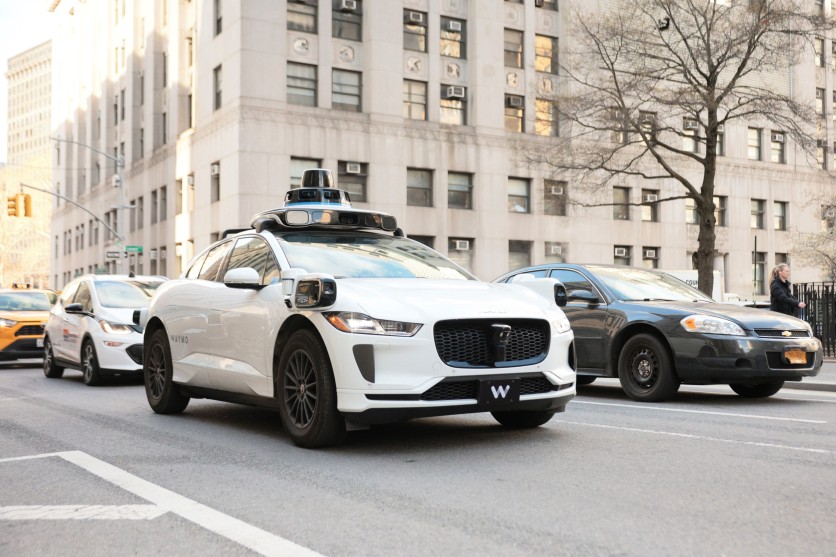
Waymo's operating numbers define the gap. The Alphabet unit reported to the National Highway Traffic Safety Administration in December 2025 that it operates 3,067 robotaxis running its fifth-generation driver, and the company now serves more than 500,000 paid rides every week across ten US cities. Four of those cities sit in Tesla's home state: Austin, Dallas, Houston, and San Antonio, and in Austin itself Waymo competes head-on with Tesla by serving riders through the Uber app. Weekly ridership is up tenfold from the 50,000 rides Waymo reported in May 2024, with volume roughly doubling in under a year, a curve that comes from holding fleet size near constant while squeezing more utilization out of each vehicle.
Tesla does not publish ride counts for Austin. With around 20 active vehicles, simple arithmetic caps its weekly trips in the low thousands, roughly three orders of magnitude below Waymo's volume. The Texas filings turn that asymmetry into a regulator-maintained scoreboard: 42 versus 577, refreshed by the state rather than by either company's marketing department.
Why Is Musk Waiting for the FSD v15 Rewrite?
Musk has tied meaningful fleet growth to software, not hardware. Tesla is holding back aggressive Robotaxi expansion until FSD v15, a rewrite he frames as a major architectural change that grows the driving model from roughly 1 billion parameters to about 10 billion. On Tesla's first-quarter earnings call, Musk argued it would not make sense to deploy unsupervised FSD at large scale while knowing major architectural improvements were pending. The window he has pointed to for aggressive scaling is late 2026 or early 2027.
The technical logic is straightforward: a tenfold-larger model, trained on Tesla's fleet video, is supposed to generalize to streets no one pre-mapped, which is the capability a 20-car fleet covering 245 square miles conspicuously lacks today. Until v15 ships, the expanding geofence functions as a placeholder that keeps the program visible while the software catches up to the map.
What Did Reuters Find Behind the Robotaxi Demos?
How much human scaffolding supports today's service is the subject of a Reuters investigation published May 28. Based on interviews with nine former Tesla data labelers, a former self-driving engineer, and 11 traffic-safety researchers, the report found that ahead of high-profile rollouts, Tesla staffers worked long hours mapping routes and training the software on specific hazards to make FSD appear more capable than it is in unfamiliar territory.
Before the June 2025 Austin launch, Reuters reported, staff tested prototypes nightly from 6 p.m. until dawn, collecting video of the exact routes the robotaxis would later drive, while data labelers spent hundreds of hours annotating curbs and road markings to head off embarrassing incidents. Former employees told Reuters that this kind of route-specific preparation is impossible to deploy at the millions-of-vehicles scale Musk envisions. The findings cut directly against Musk's long-standing claim that Tesla's camera-only approach avoids the laborious local mapping that rivals like Waymo depend on.
The investigation also challenged Tesla's safety arithmetic. Researchers found Tesla's headline comparison of FSD against national crash averages inflated the system's apparent advantage by roughly a factor of three, because Tesla measured its own airbag-deployment crashes against a broader federal dataset that includes minor incidents where airbags never deployed. Ten of the 11 traffic-safety researchers who reviewed the methodology for Reuters described the resulting statistics as misleading marketing, and seven of the nine former data labelers said they would not trust FSD to drive them.
What Would Actually Close the Gap?
Tesla's structural advantage remains manufacturing. The company builds hundreds of thousands of camera-equipped vehicles every quarter, and if FSD v15 delivers generalized driverless capability, Tesla could field robotaxis at a per-vehicle cost far below Waymo's sensor-laden builds, then flood markets at a pace Waymo's supply chain could not match. That is the bull case, and it is entirely contingent on software that does not yet exist in customers' hands.
Waymo's advantage is everything already deployed: 577 authorized vehicles in Texas, 3,067 nationwide, half a million paid trips a week, ten cities, and years of incident data that regulators have learned to audit. The May 28 Texas database matters because it converts this competition from dueling press releases into public record. Until the v15 rewrite proves it can drive streets nobody pre-mapped and pre-labeled, Tesla's entire-metro geofence remains a promise about future software, drawn on a map currently served by about 20 cars.
Frequently Asked Questions
How many robotaxis does Tesla actually have in Austin?
About 20 active unsupervised vehicles as of early June 2026, according to Robotaxi Tracker data cited by Electrek, down from roughly 25 in late April. Texas state filings list 42 Tesla vehicles authorized for driverless ride-hailing statewide.
Is Tesla Robotaxi available everywhere in Austin now?
Yes. As of June 3, 2026, the unsupervised service covers the entire Austin metro, roughly 245 square miles including the airport. The small fleet means availability and wait times do not match the size of the coverage map.
How many robotaxis does Waymo operate, and how many rides does it give?
Waymo reported 3,067 robotaxis to federal regulators in December 2025 and now serves more than 500,000 paid rides per week across ten US cities, including four in Texas. Texas filings list 577 Waymo vehicles authorized in the state.
What is FSD v15 and why does it matter for Tesla's robotaxi plans?
FSD v15 is Tesla's next self-driving software rewrite, expanding the driving model from about 1 billion to roughly 10 billion parameters. Musk says Tesla will not scale the robotaxi fleet aggressively until v15 arrives, targeting late 2026 or early 2027.
ⓒ 2026 TECHTIMES.com All rights reserved. Do not reproduce without permission.


