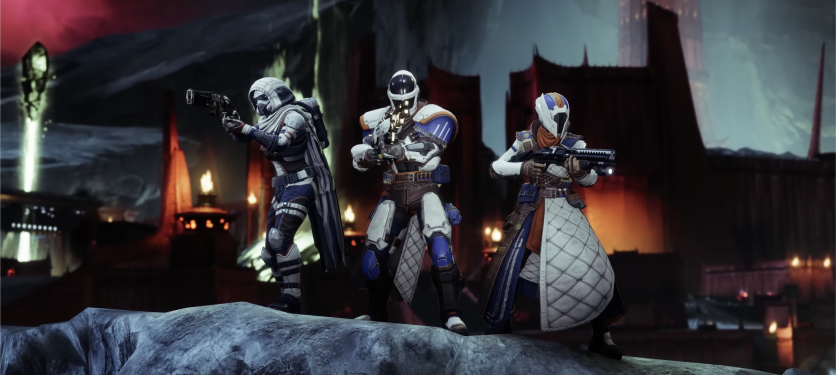
Monument of Triumph adds permanent Sparrow Racing and free Triumph rewards as Bungie braces for cuts
Destiny 2's final live-service update arrives today — and the numbers surrounding its release tell a story that goes well beyond nostalgia. Monument of Triumph, Update 9.7.0, is scheduled to go live at 1:00 p.m. ET after a maintenance window that took servers offline at 8:30 a.m. ET, drawing a hard line under nearly nine years of continuous content development. For the players logging in today, the update is free, loaded with returning content, and permanent. For Sony, it closes a chapter in which the company wrote down approximately $765 million of Bungie's assessed value in a single fiscal year — a financial acknowledgment that one of the most expensive gaming acquisitions of the decade has not delivered what the $3.6 billion price tag implied.
The two stories — what players get and what Sony lost — are not separate. They are the same story, told from either side of the live-service model's central gamble: that a game built on perpetual content demand can sustain a studio indefinitely. Destiny 2 ran that experiment for nearly a decade. Today is what its conclusion looks like.
Monument of Triumph: What Players Get
Monument of Triumph is free for all players and will remain in the game indefinitely, per Bungie's official support guide.
The headline addition is the permanent return of the Sparrow Racing League, which had not appeared in regular rotation for years. Alongside it, Pantheon — a tiered boss-gauntlet mode — becomes a permanent fixture with updated difficulty levels. A new game-wide Triumph challenge system lets all players earn Legendary Marks by completing activities across the game's history; those marks can be redeemed for free armor ornaments, weapon engrams, and accessories. A new Title and armor ornament set will be available with no expiration date.
The update also restructures the game's navigation. Legacy Vanguard Ops playlists and the older Legends node have been merged into consolidated hubs. Trials of Osiris and Iron Banner continue on existing rotation schedules. Vault capacity expands from 1,000 to 1,300 slots. The Destiny 2 API and the official Companion App will remain supported.
For players willing to spend money, a final "Triumphant Rewards Pass" is available — two additional armor ornament sets, shaders, emotes, a finisher, and an exotic hand cannon. Players who already own the Renegades pass, the Year of Prophecy, or the Year of Prophecy Ultimate Edition receive the Triumphant Pass automatically. The Eververse storefront is shifting to an "evergreen" state with a new Daily Offers tab and a revamped Bright Engram Focusing system that lets players spend Bright Dust to target specific cosmetic categories rather than pulling from a random loot pool.
What goes away permanently: Guardian Games, Solstice, Festival of the Lost, and The Dawning are all retired. Some of their associated rewards are folded into the Monument of Triumph vendor system or made available for Bright Dust. The game Bungie built over nearly nine years is not disappearing — but it has stopped growing.
Sony's $765M Reckoning: What the Live-Service Bet Cost
To understand why today's update carries the weight it does, start with a balance sheet. Sony's FY2025 earnings report, filed May 8, 2026, documents one of the steepest write-downs in modern gaming history.
Sony acquired Bungie in early 2022 for $3.6 billion — a price built on projected revenue from Destiny 2's ongoing seasons and from Bungie's next title, Marathon. Neither projection held. By the time Sony reported its fiscal year 2025 results, the company had recorded two separate write-downs against Bungie's asset value: approximately $201 million in the second quarter, tied to Destiny 2's continued decline, and a further $565 million in the fourth quarter, recorded weeks after Marathon launched on March 5, 2026. The combined total — approximately $765 million — is the amount by which Sony formally acknowledged that Bungie is now worth less than it paid.
An impairment loss in accounting is not a cash payment — it is a recognition that an asset's expected future cash flows no longer justify the figure on the balance sheet. In Sony's earnings disclosure, the company stated that earnings from Bungie's title portfolio had not reached expectations, that Sony had revised its business projections, and that it had written down the full amount of Bungie's fixed assets, goodwill excluded.
The core problem is structural: with Destiny 2's content pipeline ending, the development team that built and maintained it has no approved successor project. Destiny 3 has not been greenlit. That leaves Marathon — Bungie's extraction shooter and first new franchise since the original Destiny in 2014 — as the studio's only actively supported title.
Marathon Season 2 Launches, but the Math Remains Difficult
Marathon arrived on March 5, 2026, at $39.99, to reviews that were largely positive — earning an 82 on Metacritic. Alinea Analytics estimated the game sold approximately 1.2 million copies across all platforms in its first month, generating roughly $55 million in gross revenue.
Those figures, for a studio Sony paid $3.6 billion to acquire, represent a significant shortfall. Steam concurrent player counts fell from an all-time launch peak of 88,337 to below 15% of that peak within weeks. Before Season 2's launch, the game's concurrent daily audience had shrunk to roughly 6,000 active players on Steam.
Season 2, titled Nightfall, went live June 2 alongside an Open Play Week that made the full game free through this morning. The season's headline addition is a redesigned character progression system called the Cradle, which replaces the Season 1 faction-gating architecture that tied specific stats to specific faction grinds. Player counts climbed to approximately 40,000 concurrent on Steam during the free week — a meaningful recovery from the pre-Season 2 baseline, but not yet evidence of sustainable retention. Season 2's performance is not merely a player-satisfaction question: it is, as Sony's write-down made explicit, a financial one.
Bungie Layoffs: Third Wave Since Sony Acquisition, No Timeline Confirmed
On the same day Bungie announced Destiny 2's end — May 21, 2026 — Bloomberg's Jason Schreier reported that the studio was planning a significant new round of layoffs, its third since Sony's acquisition. No confirmed headcount or timeline has been released. The announcement follows two prior rounds: an initial reduction in late 2023, and a second round of approximately 220 employees — roughly 17% of the studio — in July 2024, when Bungie announced it was cutting costs and deepening integration with Sony Interactive Entertainment.
The timing creates a specific structural problem. A studio that built and maintained a live-service game for nearly a decade assembled its workforce around that pipeline. When the pipeline stops, the justification for that headcount stops with it — unless a successor project is ready to absorb it. Marathon is not a Destiny-scale product by any current metric. Destiny 3 does not exist in approved production. Multiple internal pitches have reportedly been made to Sony, but none have been greenlit.
The workforce implications of today's update extend beyond Bungie. More than 44,000 game development jobs have been cut across the industry since 2022, according to a 2026 analysis citing the GDC State of the Game Industry report and data from analytics firm Epyllion. That figure encompasses the post-pandemic correction that Bungie is a part of — and that Destiny 2's end illustrates as clearly as any single event in the industry's recent history.
What the Live-Service Collapse Reveals About the Model
The live-service model's central promise was stability through perpetual demand: players who keep paying for new content generate revenue that funds the team creating it. The model works while the demand holds. What Destiny 2's nine-year run demonstrates — and what Sony's write-down makes financially legible — is the model's structural vulnerability: once player retention starts declining, the cost of producing content at scale outpaces revenue, and the workforce built to sustain peak content velocity has nowhere to go.
Bungie is not an outlier. The same structural pressure has closed studios and triggered layoffs across the industry since 2022 as the pandemic-era gaming boom unwound. What distinguishes Bungie's situation is scale: the studio was acquired for $3.6 billion precisely because Sony believed the live-service model could be replicated into a broader PlayStation strategy. Sony's formal write-down of the full amount of Bungie's fixed assets is the accounting system's way of recording the distance between that belief and what actually happened.
What Comes Next
For players, today's update is the practical endpoint of a cycle that will not recur. Everything in Destiny 2 as of Update 9.7.0 remains accessible, locked only by the same expansion ownership rules that applied before. The game is not shutting down; servers will stay online indefinitely. Bungie has confirmed it may still release hotfixes if stability issues arise. The seasonal event calendar — Guardian Games, Solstice, Festival of the Lost, The Dawning — is over. What replaces it is the permanent content vault of nearly nine years of Destiny 2, without new additions.
For Bungie, the path forward is Marathon's Season 2 performance and whatever internal pitches survive Sony's review. For the game industry as a whole, Destiny 2's end is a data point — one more example of a live-service game that ran its course and left the people who built it in an uncertain position. The Guardians who spent years clearing raids and hunting god-roll weapons have a permanent game world to return to. The team that built it is waiting to find out what comes next.
Frequently Asked Questions
Is Destiny 2 shutting down after the final update?
No. Destiny 2 servers will remain online indefinitely after Update 9.7.0. All content present as of the update — raids, dungeons, destinations, competitive modes, and everything added in Monument of Triumph — will continue to be accessible based on existing expansion ownership. Bungie has confirmed it may still release hotfixes if stability issues emerge, but no new seasons, expansions, or major content will ever be produced.
What is included for free in the Destiny 2 final update?
The core Monument of Triumph event is free for all players and includes the permanent return of Sparrow Racing League, permanent Pantheon mode, a game-wide Triumph challenge system offering Legendary Marks redeemable for armor ornaments, weapon engrams, and accessories, and a new Title with a permanent armor ornament set. A paid "Triumphant Rewards Pass" offering additional cosmetics is also available, but it is not required to access the free portions of the update.
What happens to Destiny 2 after June 9, 2026?
The game enters a permanent maintenance state. All existing content stays available; seasonal events and new content development end entirely. Update 9.7.0 is the last planned live-service update, though Bungie may release hotfixes if stability issues arise. The game is not shutting down — it is simply frozen at this point in its development, much like the original Destiny, which remains online years after its own live support ended.
Is Destiny 3 in development?
As of May 2026, Destiny 3 has not been greenlit by Sony. Bloomberg's Jason Schreier reported that no approved successor project exists for the Destiny 2 development team, and that multiple internal pitches have been made to Sony without a green light. Marathon remains Bungie's only actively developed live-service title, though the studio has confirmed it is incubating new project pitches.
ⓒ 2026 TECHTIMES.com All rights reserved. Do not reproduce without permission.


