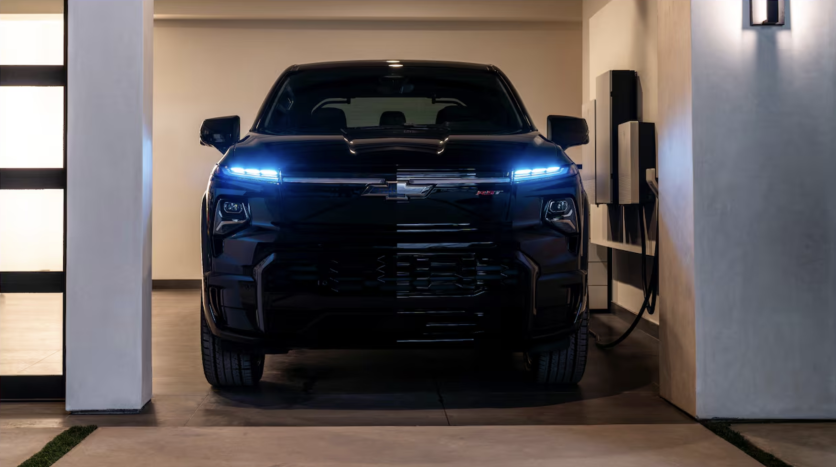
General Motors activated vehicle-to-grid capability for more than 250,000 of its existing bidirectional electric vehicles on Tuesday — no new hardware required — turning the largest single-automaker EV fleet in U.S. history into a software-dispatched distributed energy resource that grid operators can call on during peak demand. The announcement, made by Chief Product Officer Sterling Anderson at the company's GM Empower 2026 event in San Francisco, came alongside a sodium-ion battery research partnership with Denver-based startup Peak Energy, a second-life battery deployment program already serving an AI data center in Nevada, and the unveiling of a universal public charging interface called Energy Pass. GM is not merely expanding its EV lineup. It is entering the wholesale electricity market as a virtual power plant operator.
GM's 250,000-Vehicle Fleet Operates as Virtual Power Plant
A virtual power plant is a software-defined system that aggregates distributed energy resources — solar panels, batteries, demand-response loads, and now EV batteries — and dispatches them as a single controllable unit on the wholesale grid. GM's network of more than 250,000 bidirectional-capable vehicles is precisely this structure: geographically dispersed batteries that a central platform can coordinate to discharge electricity into the grid when demand peaks and recharge when rates are low. The company is piloting the program with Pacific Gas and Electric in Northern California and DTE Energy in Michigan, and has issued an open invitation to every utility in the country to join.
The scale of what GM activated via over-the-air software update sets it apart from most V2G announcements, which are typically forward-looking commitments attached to future model launches. GM is describing an existing fleet — spanning affordable models like the Chevrolet Equinox EV and flagship vehicles like the Cadillac Escalade IQ — that can begin participating in grid services without a single hardware modification. By 2030, GM projects that 130,000 of its EVs will be operational in the PG&E service territory in Northern California alone, with more than 52,000 actively providing grid-balancing services during peak periods.
For EV owners, the economic case is straightforward: a parked car becomes a revenue-generating asset that sells stored electricity back to the grid during high-demand events, then recharges at off-peak rates. GM and its peers, including Ford, Tesla, Kia, Volvo, and Polestar, all honor the full battery warranty when V2G is used with certified hardware. Academic research has documented a 9–14 percent increase in degradation rates over a decade of V2G use compared with smart-charging-only operation, though studies using managed V2G — which limits discharge depth and rate — show the gap narrows considerably.
Read more: GM: Vehicle-to-Home Charging is Coming for Ultium EVs by 2026; Use Your Car as a Generator
Sodium-Ion Batteries Eliminate Active Cooling: Grid Storage Tradeoff
The economics of grid-scale battery storage hinge on a problem that lithium iron phosphate batteries — the chemistry dominant in stationary storage today — have never fully solved: thermal management. LFP cells perform optimally between roughly 15°C and 35°C. Keeping a utility-scale installation within that band requires active liquid cooling systems: pumps, chillers, plumbing, sensors, and the parasitic power draw to run them. A large LFP storage facility can consume a meaningful fraction of its own output just to stay at temperature.
Sodium-ion cells are chemically and structurally similar to LFP — both use an intercalation mechanism where ions shuttle between electrodes during charge and discharge — but their wider operating temperature range, from -40°C to approximately +60°C, changes the infrastructure equation entirely. Peak Energy, GM's partner in the R&D program, validated this advantage in an 875-kilowatt, 3.5-megawatt-hour commercial system deployed in Colorado in 2025 — the first utility-scale sodium-ion grid battery in the U.S. The company says its passively cooled design eliminates up to 97 percent of the auxiliary power consumption of a comparable LFP system, translates to savings of more than $1 million per year per gigawatt of installed capacity, and lowers 20-year lifetime costs by roughly 20 percent.
The tradeoff is energy density. Sodium-ion cells carry less energy per kilogram and per liter than LFP. For a vehicle, that means shorter range — a meaningful penalty. For a stationary storage system bolted to the ground, it means more cells for the same capacity, but that cost is offset by the elimination of the thermal management infrastructure that LFP requires. GM VP of Battery and Sustainability Kurt Kelty noted that sodium is one of the most geochemically abundant elements on Earth, creating a path toward battery systems that are not subject to lithium's supply-chain concentration or geopolitical exposure.
Not everyone is equally bullish. Evelina Stoikou, an energy storage analyst at BloombergNEF, has cautioned that expectations among sodium-ion battery manufacturers have cooled as LFP prices continue to decline — and two U.S. sodium-ion startups, Natron Energy and Bedrock Materials, went bankrupt in 2025, illustrating the risks facing the chemistry before it reaches commercial scale. GM's bet is that building on existing R&D infrastructure and cell-manufacturing expertise offsets those risks.
GM's sodium-ion work is centered at the Wallace Battery Cell Innovation Center in Warren, Michigan, where the same engineering team developing lithium-manganese-rich chemistry for future EVs is now applying those methods to sodium-ion cells optimized for stationary use. Prototype cells are expected before the end of 2026; trial production at commercial scale is targeted for 2028. GM plans to manufacture the cells and supply them to Peak Energy, which integrates them into its own storage system products — making GM the first automaker outside China to commit to sodium-ion chemistry at the cell-manufacturing level.
Simultaneously, through its Ultium Cells joint venture with LG Energy Solution, GM expects to begin LFP battery production by July 2026 to meet near-term commercial energy storage demand while the sodium-ion program advances.
Second-Life Batteries Power AI Data Center Now
GM's grid energy strategy is not entirely prospective. Working with Redwood Materials — the Nevada-based battery recycler founded by Tesla co-founder JB Straubel — GM has already deployed roughly 10,000 repurposed EV battery packs into energy infrastructure. Among those deployments is a 12-megawatt, 63-megawatt-hour system at a Crusoe AI data center in Sparks, Nevada, where second-life GM battery packs provide dispatchable power for AI computing loads.
Second-life batteries retain 70–80 percent of their original energy capacity after they fall below the threshold suitable for vehicle use. Repurposing them for stationary storage extends the economic life of the underlying materials, delays the need for recycling, and provides storage capacity at a cost well below that of new cells — because the initial manufacturing cost has already been amortized against the vehicle's first-life economics.
Starting in 2027, GM plans to deploy approximately 100 second-life battery packs at one of its own Michigan manufacturing facilities. The 1.5-megawatt, 7.2-megawatt-hour system is expected to provide dispatchable energy for the plant and save more than $3 million in electricity costs over the system's lifetime.
Ford Builds Hardware; GM Deploys Software: Two Roads Into Grid Storage
GM's announcements arrive three weeks after Ford Motor Company took its own sweeping step into the grid storage market. Ford Energy, a wholly owned subsidiary launched May 11, 2026, signed a five-year, 20-gigawatt-hour supply agreement with EDF Power Solutions on May 18 to deliver its Ford Energy DC Block — a standardized 20-foot containerized battery storage system using 512-ampere-hour LFP prismatic cells in 2-hour and 4-hour discharge configurations. Ford is converting its former EV battery manufacturing plant in Glendale, Kentucky, into a production line for its new grid storage hardware. First deliveries under the EDF agreement are scheduled for 2028.
The contrast between the two Detroit automakers' approaches is instructive. Ford is building a hardware manufacturing business: standardized containers, LFP cells, sold to grid developers and utilities. GM is leveraging its existing fleet: software-dispatched distributed resources, utility partnerships, and a longer-term bet on novel chemistry. Neither approach forecloses the other, and both companies are moving simultaneously because the macroeconomic signal is identical: AI data center buildout is driving a surge in electricity demand that existing infrastructure cannot meet, and batteries are the fastest-deployable solution.
Regulatory Gap: No Federal V2G Compensation Standard Exists
The single largest structural obstacle to GM's V2G ambitions is not technical — it is regulatory. The United States has no federal framework governing how EV owners are compensated for grid services delivered through V2G participation. The Federal Energy Regulatory Commission has not issued rules specifically addressing V2G as a distributed energy resource eligible for wholesale electricity market compensation. Maryland's Distributed Renewable Integration and Vehicle Electrification Act, signed in April 2024, was the first state-level V2G support law in the country; no comparable federal legislation exists.
The technical standard governing communication between EV and charger for bidirectional power flow — ISO 15118-20 — is emerging but not yet universally deployed in the U.S. market. Most current GM V2G implementations use proprietary protocols; open-standard interoperability across manufacturers' systems is still limited. GM's open invitation to utilities is partly a response to this fragmentation: the company is effectively asking utilities to form bilateral partnerships rather than waiting for a federal standard to arrive.
The program's ambition — 130,000 EVs in active Northern California grid-balancing by 2030, with more than 52,000 providing peak services — is a testable, specific projection. Whether those numbers hold will depend as much on what utilities are willing to pay and what regulators are willing to permit as on what the technology can do.
Frequently Asked Questions
How does GM's vehicle-to-grid technology work without new hardware?
GM's existing bidirectional-capable vehicles — over 250,000 units on U.S. roads — already contain bidirectional inverters that can convert the battery's stored direct current back to grid-compatible alternating current. The missing piece was software and utility integration. GM is delivering both via over-the-air update: a unified mobile app that manages vehicle charging, home energy use, and grid interaction in one interface, linked to utility dispatch systems at PG&E and DTE Energy.
Why does sodium-ion work better than lithium for grid storage?
Sodium-ion cells operate safely across a much wider temperature range — roughly -40°C to +60°C — than LFP, which requires active liquid cooling to stay within its optimal 15–35°C window. That temperature tolerance allows sodium-ion grid systems to rely on passive cooling only: no pumps, chillers, or cooling plumbing. Peak Energy, GM's partner, says this eliminates up to 97 percent of the auxiliary power consumption of a comparable LFP system and cuts 20-year lifetime costs by roughly 20 percent. The tradeoff is lower energy density, which matters for vehicles but not for a stationary system that does not move.
Can V2G use damage an EV battery?
Research shows managed V2G participation increases battery degradation by 9–14 percent over a 10-year period compared with smart charging alone. GM and other major automakers, including Ford, Tesla, Kia, and Volvo, honor the full battery warranty when V2G is used with certified hardware. Software-controlled discharge limits and rate caps are designed to protect battery health, and participation remains opt-in.
How does GM's approach differ from Ford's grid storage strategy?
Ford is building a hardware manufacturing business — standardized 20-foot containerized LFP battery storage systems sold directly to grid developers and utilities, with a 20 GWh supply agreement with EDF already signed and first deliveries expected in 2028. GM is taking a fleet-software approach: activating its existing 250,000-vehicle fleet as distributed grid resources while simultaneously developing sodium-ion chemistry as a longer-term stationary storage bet. Ford sells hardware to the grid; GM is trying to make its cars part of the grid.
ⓒ 2026 TECHTIMES.com All rights reserved. Do not reproduce without permission.


