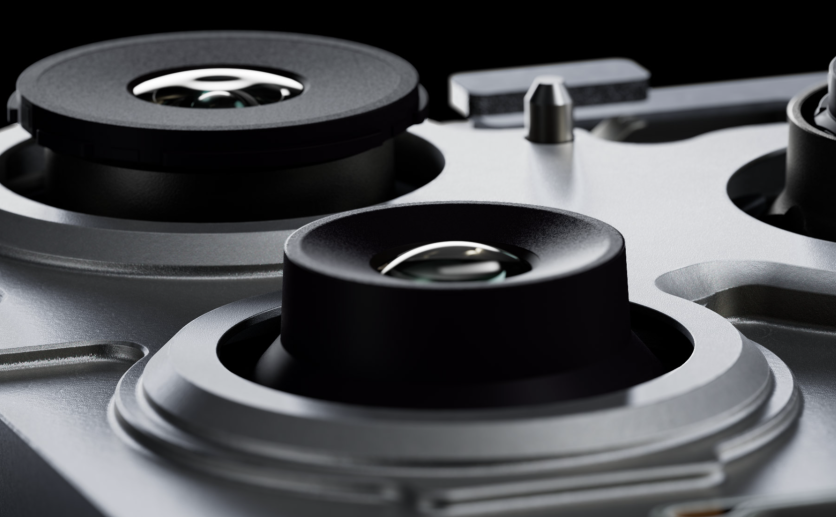
With supplier component production already underway and a September 2026 launch on the horizon, the iPhone 18 Pro is taking shape as an unusual upgrade cycle — one in which the biggest improvement is optical rather than computational. For the first time in iPhone history, the Pro lineup's main camera is expected to feature a mechanical variable aperture, replacing the fixed f/1.78 lens carried unchanged through four generations of Pro iPhones. Paired with Apple's first 2nm A20 Pro chip and three independent sources of battery improvement, the leaks suggest that users on iPhone 16 Pro hardware or older have a compelling case to wait until fall.
Apple has confirmed nothing about the iPhone 18 Pro. Every detail in this article is drawn from supply chain analysts, hardware suppliers, and unnamed industry insiders, all of whom have track records that range from generally reliable to occasionally imprecise.
iPhone 18 Pro Camera: First Mechanical Aperture in iPhone History
From the iPhone 14 Pro through the iPhone 17 Pro, the main Fusion camera has shipped with a single, unchanging lens opening: f/1.78, always wide open, every shot. The camera cannot close down, which means every image is exposed at that fixed setting regardless of conditions. Bright scenes require computational processing to avoid overexposure; shallow depth of field in portrait shots is simulated in software.
Supply chain analyst Ming-Chi Kuo reported in December 2024 that both iPhone 18 Pro models would receive a variable aperture main camera — a feature Apple had considered for the iPhone 17 Pro before pushing it to 2026. By April 2026, active supplier production of the iris blade assembly had begun on schedule, putting the feature on track for the September launch.
The component order trail points to two suppliers: Sunny Optical, which Kuo identified as the lens module maker, and BE Semiconductor, the Dutch manufacturer providing equipment for the aperture blade system. The camera module for the iPhone 18 Pro is expected to cost Apple roughly 50 percent more than the current hardware — a cost increase the company will need to decide whether to absorb or pass on in the retail price.
Read more: iPhone 18 Pro Camera Upgrades: Variable Aperture Lens and Next-Gen Photography Features Revealed
How Variable Aperture Works: Iris Blades, Not Software Blur
A variable aperture on a camera works like the pupil of a human eye: metal blades overlap to form a roughly circular opening that can expand or contract, physically controlling how much light reaches the sensor before any software processing occurs. On a professional camera, the aperture typically ranges from f/1.4 (wide open, low-light performance, shallow depth of field) to f/22 (nearly closed, bright daylight, deep focus from foreground to horizon). On a smartphone, the physical space constraints limit the range, but the principle is identical.
Samsung first attempted this on a smartphone with the Galaxy S9 in 2018, but its implementation was binary — the lens could only switch between two positions, f/1.5 and f/2.4. Reviewers found the coarse two-position toggle too limited to deliver meaningful creative benefit, and Samsung removed the feature from the Galaxy S10 a year later. Xiaomi's 14 Ultra (2024) refined the concept with a continuous range from f/1.63 to f/4.0, which allowed natural starburst effects at narrow apertures, real depth-of-field control in video, and the ability to shoot in bright conditions without relying on digital processing to recover highlights.
Apple's version is expected to be continuous rather than binary, though the specific aperture range has not been confirmed. What is confirmed by the supplier production timeline is that the system uses a multi-blade iris diaphragm — a physical mechanism that moves metal blades to change the lens opening, not a software simulation layered over a fixed lens.
There is a legitimate technical criticism worth naming: depth-of-field effects are more pronounced at longer focal lengths, which is why photographers traditionally reserve wide lenses for maximizing light and use telephoto for compression and isolation. On a main wide camera, the aperture's primary practical benefit is exposure control — being able to stop down in bright sunlight without neutral-density filters or computational workarounds. For video, the value is clearer: closing the aperture allows longer exposure times per frame and introduces natural motion blur for cinematic footage, something the current fixed lens cannot do optically.
A20 Pro Chip: Gate-All-Around Transistors Replace FinFET for First Time
The A20 Pro will be Apple's first chip built on TSMC's N2 (2nm) process node — a manufacturing transition that involves far more than shrinking a number.
Every iPhone chip from the A14 to the A19 Pro uses FinFET transistors: the fundamental switch controlling current flow inside the chip is shaped like a three-dimensional fin, with gate metal contacting the silicon channel on three sides. At the 3nm node, FinFET is reaching its physical limits — the fin is so narrow that the gate can no longer fully prevent electrical leakage when the transistor is supposed to be off, a failure mode called drain-induced barrier lowering.
TSMC's N2 process replaces FinFET with Gate-All-Around (GAA) nanosheet transistors. Instead of a single fin, the new design uses a vertical stack of three to four horizontally suspended silicon nanosheets, each only a few atoms thick. Gate metal wraps completely around every nanosheet on all four sides simultaneously — providing far tighter electrostatic control over the channel and suppressing the leakage that limits 3nm performance. The result, per TSMC's published data and analyst projections, is approximately 15 percent faster CPU performance at equal power, or roughly 30 percent lower power consumption at equal performance, compared with the A19 Pro.
Apple has secured more than half of TSMC's total 2nm production capacity, positioning it as the primary beneficiary of a process node that entered volume production in Q4 2025. The A20 Pro also introduces TSMC's Wafer-Level Multi-Chip Module packaging, which integrates memory directly onto the same wafer as the CPU, GPU, and Neural Engine. Both Pro models are expected to carry 12GB of RAM. Tighter physical proximity between compute and memory reduces the energy cost of data transfer, delivering tangible gains for Apple Intelligence tasks, gaming, and real-time camera processing.
Three Battery Gains Compound: Cell, Chip, and C2 Modem
The iPhone 18 Pro Max is expected to arrive with a slightly larger battery cell — leaked figures from Digital Chat Station suggest approximately 4,288 mAh for the standard Pro (US eSIM model) and between 5,100 and 5,200 mAh for the Pro Max, up from 5,088 mAh in the iPhone 17 Pro Max. On its own, that is a modest increase. It does not represent the full picture.
The second factor is the A20 Pro's efficiency improvement. A chip that achieves the same workload while drawing 30 percent less current extends run time independently of battery size. The iPhone 17 Pro Max already tops independent battery-life testing across 35 smartphones despite not having the largest physical cell among tested Android phones — an outcome entirely attributable to silicon efficiency. The 2nm transition amplifies that dynamic.
The third factor is the in-house C2 modem. Apple's first-generation C1 modem debuted in the iPhone Air; the C2 is its successor and is expected to debut in the iPhone 18 Pro lineup, replacing Qualcomm's modem entirely. The modem is among the most power-hungry components in any smartphone. An in-house modem co-designed alongside the application processor allows tight integration that reduces inter-chip communication overhead — energy that, in a Qualcomm-based design, is spent on a separate chip's bus interface. The C2 is also expected to support mmWave 5G connectivity and a privacy-focused mode that limits the precise location data available to mobile networks.
Together — a slightly larger cell, a 30-percent-more-efficient processor, and a better-integrated modem — the battery improvement is the product of three overlapping engineering decisions rather than one.
Dynamic Island Shrinks via Under-Display Face ID Components
The Dynamic Island cutout is expected to shrink by roughly 35 percent on the iPhone 18 Pro models, per measurements of leaked dummy units, reclaiming a noticeable strip of usable display real estate. The reason is structural: Face ID's flood illuminator — one of the infrared components that makes face unlock work — is being moved beneath the OLED panel. With fewer components needing to interrupt the screen surface from above, the pill-shaped cutout narrows from roughly 20.76mm to approximately 13.5mm.
The front-facing camera itself is not expected to move under the display until at least 2027, per current reporting. What moves is the infrared sensor array, which is invisible to the eye but currently takes up space within the Dynamic Island footprint. Bloomberg's Mark Gurman has independently confirmed the smaller Dynamic Island, making it one of the most institutionally sourced claims in this year's iPhone 18 Pro leak cycle.
The Camera Control button introduced on the iPhone 16 series is also reportedly being revised, with early reports describing a simplified version that reduces the control scheme.
Dark Cherry and Return to Black: iPhone 18 Pro Colors
Following Cosmic Orange's commercial success on the iPhone 17 Pro — a finish that reportedly drove imitation across Android devices and accessories — Apple is expected to debut Dark Cherry as the 2026 signature color. Physical dummy units photographed by tipster Sonny Dickson show a vivid reddish-pink hue; descriptions from those who have handled samples range from burgundy to cherry to deep purple, with reports suggesting the real-world shade skews more pink and brighter than early digital renders indicated.
The full rumored color lineup: Dark Cherry, Light Blue, Dark Gray, and Silver. Cosmic Orange and Deep Blue are both expected to be discontinued.
The return of a dark option is notable. Black was absent from the iPhone 17 Pro lineup, drawing complaints from buyers who prefer understated finishes. Dark Gray fills that gap for 2026.
One practical note for buyers: the camera bump's back glass is expected to match the titanium frame more closely than on current models, addressing the two-tone look that has been a point of criticism since the iPhone 17 Pro's aluminum chassis debuted.
Should iPhone 17 Pro Owners Upgrade?
The honest answer is probably not, unless variable aperture is the specific feature you have been waiting for.
The iPhone 17 Pro Max already holds first place in CNET's battery-life testing across 35 smartphones, a ranking achieved not through brute cell capacity but through the A19 Pro chip's efficiency. The A20 Pro will extend that advantage, but a phone that already outlasts every tested Android rival has less room to impress at the margin. The Dynamic Island reduction is visible but not transformative. The new colors are cosmetic. Variable aperture is the only genuinely architectural change — and it delivers its clearest benefit in video work and bright outdoor stills, not in everyday social media photography.
For iPhone 16 Pro users or anyone older, the case is stronger. The leap from a 3nm FinFET chip to a 2nm Gate-All-Around architecture is the largest process-node transition since Apple moved from 5nm to 3nm with the A17 Pro in 2023. Combined with a modem that no longer depends on a third-party component and a camera that produces optical depth of field rather than simulating it, the iPhone 18 Pro represents a meaningful generational step.
One caveat worth naming: the iPhone 17 Pro brought a durability complaint that Apple has not resolved for 2026. The anodized aluminum chassis, introduced last year to replace titanium, developed surface chipping within months for a subset of users. Apple classified the issue as normal wear and told affected customers it was not covered under warranty. Per leaker Fixed Focus Digital, the iPhone 18 Pro will use the same material and the same design approach. Buyers who found the iPhone 17 Pro's finish unacceptably fragile should know that does not change.
iPhone 18 Pro Release Date and Lineup Strategy
Apple is expected to announce the iPhone 18 Pro and iPhone 18 Pro Max at its traditional fall event, with pre-orders and shipping typically following within days of the announcement. September 2026 is the widely anticipated target.
What is different about 2026 is everything else in the lineup. The iPhone Fold — Apple's first foldable, rumored to carry a price above $2,000 — is expected to share the stage. The standard iPhone 18 and iPhone 18e are not coming until spring 2027, a deliberate production decision Apple has made to prioritize manufacturing resources for its highest-margin and most technically complex devices. Buyers who typically purchase a standard iPhone model will need to wait.
Frequently Asked Questions
What is variable aperture on the iPhone 18 Pro?
Variable aperture is a mechanical system that uses overlapping metal blades to physically adjust the size of the lens opening, controlling how much light reaches the camera sensor. On current iPhones, the main lens is fixed at f/1.78 — it cannot close down regardless of lighting conditions. A variable aperture changes that, allowing the camera to stop down in bright settings for better exposure control, or open wide in low light, with genuine optical effects on depth of field rather than software simulation.
When does the iPhone 18 Pro come out?
Apple is expected to announce the iPhone 18 Pro and iPhone 18 Pro Max at its traditional September 2026 event, with availability following shortly after. Apple has not confirmed any announcement date. The standard iPhone 18 is not expected until spring 2027.
Will the iPhone 18 Pro have better battery life than the iPhone 17 Pro?
Very likely, based on three compounding factors: a slightly larger battery cell, a 2nm A20 Pro chip that is approximately 30 percent more power-efficient than the current 3nm A19 Pro, and a new in-house C2 modem replacing Qualcomm's modem. The iPhone 17 Pro Max already leads battery-life testing across 35 smartphones; the iPhone 18 Pro adds efficiency gains on top of that foundation.
What colors will the iPhone 18 Pro come in?
Current leaks point to four colors: Dark Cherry, Light Blue, Dark Gray, and Silver. Cosmic Orange and Deep Blue from the iPhone 17 Pro are expected to be discontinued. Dark Cherry is expected to be the signature color, analogous to Cosmic Orange's role in 2025.
ⓒ 2026 TECHTIMES.com All rights reserved. Do not reproduce without permission.


