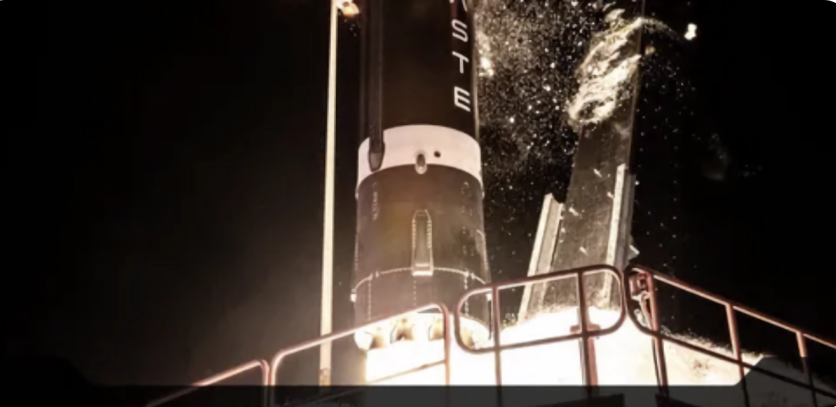
Rocket Lab's "Curveball" mission — a classified hypersonic test flight for an undisclosed government customer — did not lift off during its first launch window Thursday morning at Wallops Island, Virginia, with the vehicle placed on hold while crews awaited propellant loading. The window ran from midnight to 5:15 a.m. ET on June 11, 2026, and closed without a launch. The next opportunity opens at midnight ET Friday, June 12, with nightly backup windows available through June 17 if weather or technical conditions prevent an attempt.
"Curveball" Mission: What Is Being Tested
The Curveball mission flies on HASTE — Rocket Lab's Hypersonic Accelerator Suborbital Test Electron — a suborbital launch vehicle derived from the company's workhorse Electron rocket but engineered to accelerate classified payloads to speeds exceeding Mach 20 (roughly 7.5 km/s) before they complete their test profiles on a southeastward arc over the Atlantic Ocean. Unlike a standard Electron orbital mission, HASTE strips out the upper-stage hardware designed for orbit insertion and replaces it with a modified Kick Stage whose trajectory and payload release conditions can be tuned mission by mission — allowing engineers to recreate specific aerodynamic heating environments, test scramjet ignition sequences, or characterize guidance system behavior at hypersonic speeds.
Rocket Lab has not disclosed the payload or customer for Curveball, as is standard for the company's classified defense missions. What is publicly confirmed: the flight is suborbital, it is operated by Rocket Lab National Security (RLNS) — a wholly owned subsidiary serving U.S. defense and intelligence customers — and it departs from Launch Complex 2 at NASA's Wallops Flight Facility on Virginia's Eastern Shore.
How HASTE Works: Electron Modified for Mach 20
HASTE uses the same carbon composite structure and 3D-printed Rutherford engines as the standard Electron rocket, but with a critical third-stage redesign. The Rutherford is notable in its own right: it is the first flight-ready rocket engine to use electric pump-fed propellant delivery, replacing the heavy turbopumps of conventional rockets with battery-driven electric motors — a tradeoff that reduces mass and mechanical complexity at the cost of on-board electrical energy storage.
The key modification on HASTE is the Kick Stage. On Electron, the Kick Stage is a small, restartable third stage used for precision orbit insertion. On HASTE, it is reconfigured for suborbital hypersonic payload delivery: rather than circularizing an orbit, it imparts the final velocity vector needed to place a test article in the correct portion of the upper atmosphere at the correct speed and angle to produce the hypersonic aerothermal environment the customer wants to characterize. Payload capacity is up to 700 kilograms — more than double Electron's orbital capacity — because the vehicle does not need to reach orbital velocity.
The result is a hypersonic test environment achievable for roughly $7.5 million to $9.5 million per flight — compared with legacy government test programs that have historically cost $50 million or more per attempt. That cost gap is the core of the commercial model, and it is what the Pentagon's MACH-TB program has contracted around.
US Hypersonic Weapons Testing: The Strategic Stakes Behind Every HASTE Flight
Curveball is not a one-off. It is part of a systematic effort by the U.S. Department of Defense to close what defense officials and the Government Accountability Office have documented as a persistent gap in hypersonic weapons development — not a gap in ideas or funding, but a gap in test infrastructure.
Russia fielded an operational hypersonic weapon, the Kinzhal air-launched missile, in 2017, and used it against targets in Ukraine beginning in 2022. China fielded hypersonic anti-ship ballistic missiles and demonstrated a fractional orbital bombardment system in 2021. The U.S., despite decades of research, had not fielded an operational hypersonic strike weapon as of mid-2026, according to publicly available DoD assessments.
A July 2024 GAO report noted the central problem plainly: abundant investment and considerable technical progress had not yet produced a fielded weapon system. The core reason, Pentagon officials and industry analysts have said, is that the U.S. lacked the test flight cadence needed to iterate hypersonic designs quickly. Full-scale hypersonic tests using legacy government infrastructure have been expensive, infrequent, and scheduled years in advance — a tempo fundamentally incompatible with the rapid design-test-fix cycles that modern weapons development requires.
HASTE's commercial model is the structural answer to that problem. DoD leaders set a goal in 2022 of reaching approximately one hypersonic flight test per week — a cadence that would require the government to treat hypersonic testing more like commercial orbital launch: standardized vehicles, block buy contracts, and fixed prices rather than government-managed projects priced per mission.
MACH-TB: Rocket Lab's Pentagon Contract and What It Covers
The formal structure for that commercial pivot is the Multi-Service Advanced Capability Hypersonic Test Bed program — MACH-TB 2.0 — a five-year, $1.45 billion contract awarded to Kratos Defense and Security Solutions in January 2025. Kratos leads a team that includes Leidos, Rocket Lab, Stratolaunch, and a coalition of smaller aerospace firms and research institutions. The program is managed by the Pentagon's Test Resource Management Center in partnership with the Naval Surface Warfare Center Crane Division.
On March 18, 2026, Rocket Lab announced the single largest launch contract in its history: a $190 million block buy for 20 HASTE missions over four years under MACH-TB 2.0. Six weeks later, on May 7, 2026, Rocket Lab secured an additional $30 million contract for three HASTE flights from Anduril Industries — the defense technology company founded by Palmer Luckey — with each mission funded entirely from Anduril's own capital rather than a government program. Together, those two contracts represent almost a third of Rocket Lab's manifest of more than 70 launches in backlog.
What Curveball Scrubbing Means for the Schedule
The June 11 scrub does not represent a technical anomaly. Pre-launch holds for propellant loading are routine, and the backup windows through June 17 give Rocket Lab seven additional opportunities before the current launch campaign must be recycled. Weather at Wallops on Thursday included moderate rain, full cloud cover, and winds near 16 mph — all conditions that can force a hold or a scrub even after propellant operations begin.
HASTE has posted a 100% mission success rate across every flight since its inaugural launch on June 17, 2023. That record has been a central selling point in Rocket Lab's pitch to the defense community: a commercial platform that is not only cheaper than legacy test vehicles but more reliable.
The February 27, 2026 Cassowary Vex mission — HASTE's most recent completed flight — carried Hypersonix's DART AE, a hydrogen-fueled scramjet demonstrator, to hypersonic speeds under a contract with the Defense Innovation Unit. That mission required a custom 4.3-meter payload fairing, the longest HASTE had flown to that point, and demonstrated the vehicle's ability to accommodate the range of aerodynamic shapes and propulsion systems that different customers need to test.
Wallops Island: Sole US Range for Rapid Hypersonic Suborbital Tests
Wallops Island occupies a specific and difficult-to-replace role in the U.S. hypersonic test infrastructure. Located on Virginia's Eastern Shore with unobstructed Atlantic Ocean range to the southeast, it is one of only a handful of U.S. ranges capable of supporting rapid-turnaround suborbital hypersonic tests without the scheduling overhead of major orbital launch ranges such as Cape Canaveral.
HASTE's choice of Wallops as its exclusive launch site was deliberate. The facility is operated by NASA's Goddard Space Flight Center and maintains a long history of sounding rocket and suborbital research operations — providing the safety infrastructure, range instrumentation, and government coordination channels that classified defense missions require. Rocket Lab operates from Launch Complex 2, a pad that has hosted 12 rocket launches to date.
Frequently Asked Questions
What is the HASTE rocket?
HASTE (Hypersonic Accelerator Suborbital Test Electron) is a modified version of Rocket Lab's Electron orbital rocket, redesigned for suborbital hypersonic test missions. It uses the same carbon composite structure and 3D-printed Rutherford electric-pump-fed engines as Electron but has a modified Kick Stage for hypersonic payload delivery, a larger payload capacity of up to 700 kilograms, and customizable fairings to accommodate different test article shapes. It launches exclusively from NASA's Wallops Flight Facility in Virginia.
What is the MACH-TB program?
MACH-TB (Multi-Service Advanced Capability Hypersonic Test Bed) is a Pentagon program designed to increase U.S. hypersonic weapons testing cadence to approximately one flight per week by using commercially operated launch vehicles. The current MACH-TB 2.0 phase, managed by the Test Resource Management Center and Naval Surface Warfare Center Crane Division, awarded a five-year, $1.45 billion contract to Kratos Defense and Security Solutions in January 2025. Rocket Lab holds a $190 million block-buy contract under the program for 20 HASTE missions.
How fast does the HASTE rocket fly?
HASTE accelerates test payloads to speeds exceeding Mach 20 — roughly 7.5 km/s or about 27,000 km/h. This places test articles in authentic hypersonic aerothermal environments where thermal protection systems, guidance electronics, scramjet ignition sequences, and aerodynamic shapes can be validated under real flight conditions at a fraction of the cost of full-scale weapon system tests.
Why hasn't the US fielded a hypersonic weapon yet?
The primary obstacle has been test infrastructure, not funding or ideas. Full-scale hypersonic tests under legacy government programs have been infrequent, expensive, and scheduled years in advance — a tempo too slow for the iterative design cycles that modern weapons development requires. The MACH-TB program and vehicles like HASTE exist specifically to close that gap by treating hypersonic testing as a commercial, high-cadence operation rather than a bespoke government project.
ⓒ 2026 TECHTIMES.com All rights reserved. Do not reproduce without permission.


