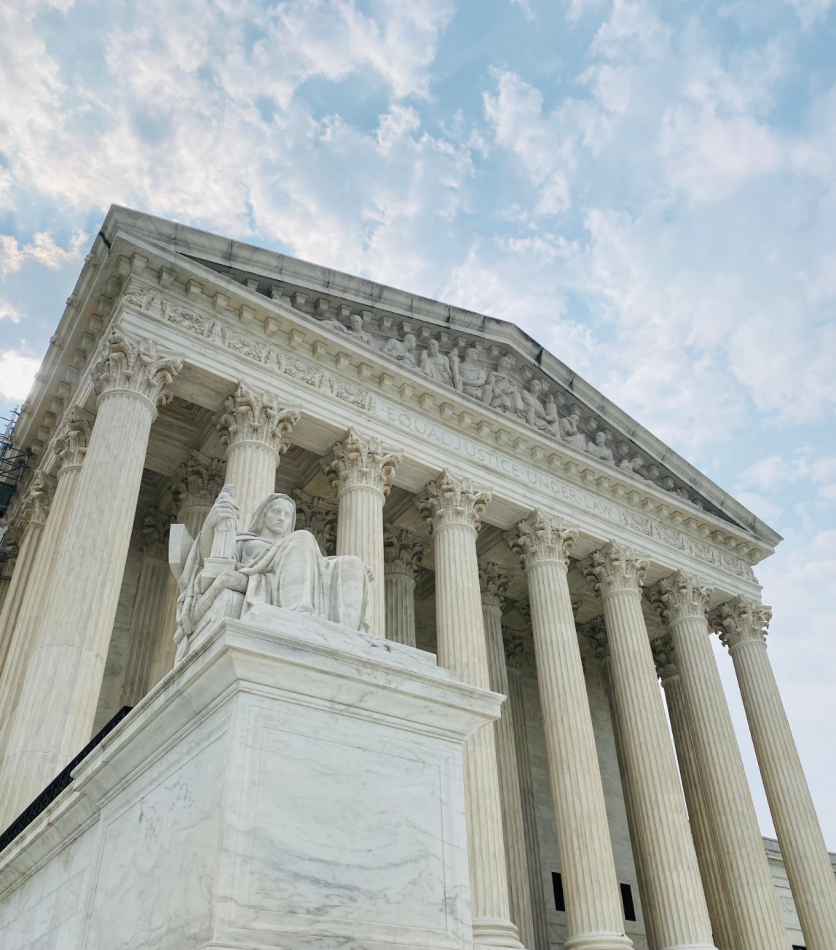
The Supreme Court voted unanimously Thursday to vacate a ruling that stripped a truck accident victim of his right to sue — a decision that also set off a deeper debate about whether one of the most routinely invoked doctrines in federal civil courts should exist at all.
In Keathley v. Buddy Ayers Construction, Inc., decided June 11, 2026, all nine justices agreed that the Fifth Circuit had applied an excessively rigid version of judicial estoppel, the doctrine that bars litigants from taking contradictory positions across separate court proceedings. But the unanimous vote concealed a three-way fracture in how far the court is prepared to go: Justice Ketanji Brown Jackson delivered the majority opinion, Justice Sonia Sotomayor argued the doctrine should likely never apply in open bankruptcy cases at all, and Justices Clarence Thomas and Neil Gorsuch went furthest, questioning whether federal courts have any legal authority to apply judicial estoppel anywhere.
Bankruptcy Debtor Lost Tort Claim Without Evidence of Bad Faith
The case began when Thomas Keathley and his wife filed for Chapter 13 bankruptcy protection in the Eastern District of Arkansas in December 2019, agreeing to repay creditors the full value of their debts over five years, interest-free. Under federal bankruptcy law, debtors filing Chapter 13 must swear under penalty of perjury that their schedules of assets are complete — including claims against third parties, whether or not a lawsuit has yet been filed.
In August 2021, while the bankruptcy case remained open, Keathley was injured in a car accident in Mississippi involving a driver employed by Buddy Ayers Construction, Inc. He retained a personal injury attorney and informed his bankruptcy lawyer he intended to sue the company — but neither he nor his bankruptcy counsel disclosed the potential claim to the bankruptcy court. Keathley filed the personal injury lawsuit in December 2021, again without notifying the bankruptcy court. He then submitted two more amended bankruptcy plans in 2022, neither of which mentioned the pending suit. The bankruptcy court, unaware of the tort claim, confirmed his modified plan in July 2022.
When Buddy Ayers Construction discovered the omission in March 2023, it moved for summary judgment on judicial estoppel grounds. Keathley immediately filed an amended schedule disclosing the claim and submitted affidavits explaining that the omission had been inadvertent — he had told his bankruptcy lawyer and believed he had done everything required. His bankruptcy counsel added an affidavit stating Keathley had received no monetary benefit from the nondisclosure.
The district court dismissed the personal injury lawsuit anyway. Under Fifth Circuit precedent, an omission is considered inadvertent only if the debtor was unaware of the underlying facts of the claim or had no hypothetical motive to conceal it. The court found both conditions met against Keathley: he knew he had been injured, and he had a theoretical financial motive to hide the claim, because disclosing a valuable lawsuit could have required him to repay creditors with interest. The Fifth Circuit affirmed that ruling in March 2025, though one judge on the panel called the outcome "a potential miscarriage of justice" given evidence the omission was an honest mistake.
Supreme Court Bankruptcy Ruling: Totality of Circumstances Must Govern
Justice Jackson's majority opinion, which all nine justices joined, held that the Fifth Circuit's two-factor rule was both too rigid and too broad. The problem with rigidity: judicial estoppel is an equitable doctrine, and equity demands case-by-case flexibility, not mechanical formulas. By permitting courts to look only at knowledge and motive, the Fifth Circuit excluded all other evidence bearing on whether an omission was truly deliberate — including Keathley's affidavits, his bankruptcy counsel's statement, and the Chapter 13 trustee's explanation that debtors in that district customarily disclosed post-petition claims near settlement rather than immediately. The problem with breadth: the two conditions the Fifth Circuit treated as nearly dispositive — awareness of the claim and a hypothetical motive to conceal it — are almost always satisfied by any bankruptcy debtor with a pending tort claim. A test that will "almost always" result in dismissal is not a test for inadvertence; it is a presumption of bad faith.
The court vacated the Fifth Circuit's judgment and remanded the case for further proceedings under the correct standard: a holistic examination of all relevant facts and circumstances.
Notably, the majority opinion did not actually decide two larger questions the case raised: whether judicial estoppel can apply in the bankruptcy context at all, and whether bad faith is a prerequisite for its application. The court assumed those questions in Keathley's favor and went no further — leaving them expressly open for a future case.
Thomas and Gorsuch Question Whether Doctrine Should Exist at All
Thomas's concurrence, joined by Gorsuch, went considerably further. Judicial estoppel, Thomas wrote, has been "applied broadly by lower federal courts without clear authority to do so." It has no basis in any federal statute or Federal Rule of Civil Procedure, and federal courts' general equitable authority is not unlimited — under the court's recent precedents, it requires what Thomas called a "founding-era antecedent." Judicial estoppel, which entered mainstream federal doctrine only over the past few decades, appears to lack one. Its first known articulation was an 1857 Tennessee state court decision; as late as 1980, the District of Columbia Circuit had declined to adopt it.
The implications of Thomas and Gorsuch's position are substantial. Today, every federal circuit applies some version of judicial estoppel. The doctrine is used not only in bankruptcy cases but in employment disputes, contract litigation, and civil rights suits — wherever a party is accused of taking inconsistent positions across proceedings. A future ruling accepting Thomas's challenge to the doctrine's legitimacy would require courts nationwide to abandon it entirely, or to reconstitute it on different legal grounds.
Thomas closed by stating that in a future case, the court "should reexamine" the doctrine — a call that, with Gorsuch joining, represents two of the nine sitting justices.
Why Sotomayor Sees Open-Bankruptcy Estoppel as Harmful to Creditors
Sotomayor's separate concurrence argued from a different angle. She focused specifically on the bankruptcy context and questioned whether judicial estoppel should ever apply to a debtor whose bankruptcy case is still open. Her reasoning centers on who actually benefits from its application.
In a case like Keathley's, she noted, the party who gains when judicial estoppel bars a tort claim is not the creditors — it is the alleged tortfeasor, who was not party to the bankruptcy at all. If Keathley had been permitted to pursue and win the personal injury claim, that recovery could have been used to pay creditors more, or to accelerate the repayment schedule. By dismissing the tort claim, the lower courts had "vaporized assets that could be used for the creditors' benefit" — quoting a Seventh Circuit opinion. Bankruptcy courts, Sotomayor continued, have ample tools to address actual misconduct: they can modify the repayment plan, impose sanctions, convert the Chapter 13 to a Chapter 7 case that lets a trustee pursue the tort claim on creditors' behalf, or refer the matter for perjury prosecution. Judicial estoppel — a blunt dismissal of the tort claim — bypasses all of those targeted remedies and delivers a windfall to the defendant at creditors' expense.
Sotomayor wrote that her analysis applied specifically to open bankruptcy cases, where the bankruptcy court still has jurisdiction and the equitable tools to address any harm. She left open whether judicial estoppel might be appropriate after discharge and acknowledged the proper calculus might differ in that context.
How Bankruptcy Debtors Should Understand This Ruling
For the hundreds of thousands of Americans currently in active Chapter 13 cases, today's ruling means that a missed disclosure does not automatically end a tort claim. Courts in the Fifth and Tenth Circuits — which had applied the strictest version of the rule — must now conduct a full review of circumstances before invoking judicial estoppel to dismiss any lawsuit. Courts in other circuits, which had already applied the totality-of-circumstances standard, are unlikely to see immediate change.
But the ruling stops short of providing clear guidance on the harder questions. The majority assumed without deciding whether judicial estoppel applies to bankruptcy at all. It did not address what level of intentionality — simple bad faith, deliberate fraud, or something in between — is required before the doctrine can be invoked. Those questions will need to be resolved in future litigation, and Thomas's concurrence signals that at least two justices may be ready to challenge the doctrine's foundations when that case arrives.
Bankruptcy attorneys advising debtors should note one practical point: the ruling does not give debtors a free pass on disclosure. The Bankruptcy Code requires debtors to list all potential claims under oath. Keathley prevailed today on the threshold procedural question — the right standard for analyzing his omission — but his case now returns to the Fifth Circuit, where the totality of his circumstances will be assessed. Courts can still apply judicial estoppel to debtors who deliberately conceal claims; today's ruling simply ensures that deliberate concealment must actually be shown, not merely presumed from the fact of the omission.
Frequently Asked Questions
What did the Supreme Court decide in Keathley v. Buddy Ayers Construction?
The Court unanimously vacated a Fifth Circuit ruling that had dismissed a bankruptcy debtor's personal injury lawsuit solely because he had a motive to conceal the claim — without any finding that he actually intended to deceive the court. Going forward, courts in all circuits must weigh the totality of circumstances surrounding an omission before invoking judicial estoppel to bar a lawsuit.
What happens if you don't disclose a lawsuit in bankruptcy?
Under federal bankruptcy law, debtors must disclose all potential legal claims as assets, signed under penalty of perjury. Failing to do so can result in dismissal of the undisclosed lawsuit under judicial estoppel, sanctions, denial of discharge, or referral for perjury prosecution. After today's ruling, courts must assess the full context of the omission — including whether it was inadvertent — rather than presuming bad faith solely from the fact that the debtor had a hypothetical motive to hide the claim.
What is the inadvertence exception to judicial estoppel?
The inadvertence exception holds that judicial estoppel should not bar a lawsuit when the debtor's failure to disclose was an honest mistake rather than a deliberate attempt to mislead. Today's ruling clarifies that courts must examine all facts and circumstances to determine whether an omission was inadvertent — not just whether the debtor knew about the claim and could have benefited from hiding it, which is almost always true and would make inadvertence nearly impossible to prove.
Could the Supreme Court eliminate judicial estoppel entirely?
The question is now live. Justices Thomas and Gorsuch, in a concurrence issued today, argued that judicial estoppel lacks the statutory or constitutional authority needed for federal courts to apply it, because it has no founding-era precedent in equitable law. They called explicitly for the court to reexamine the doctrine in a future case. Justice Sotomayor separately argued it should not apply to open bankruptcy cases. With at least two justices skeptical of the doctrine's very basis, a direct challenge to its existence is likely to find a receptive audience at the court.
ⓒ 2026 TECHTIMES.com All rights reserved. Do not reproduce without permission.


