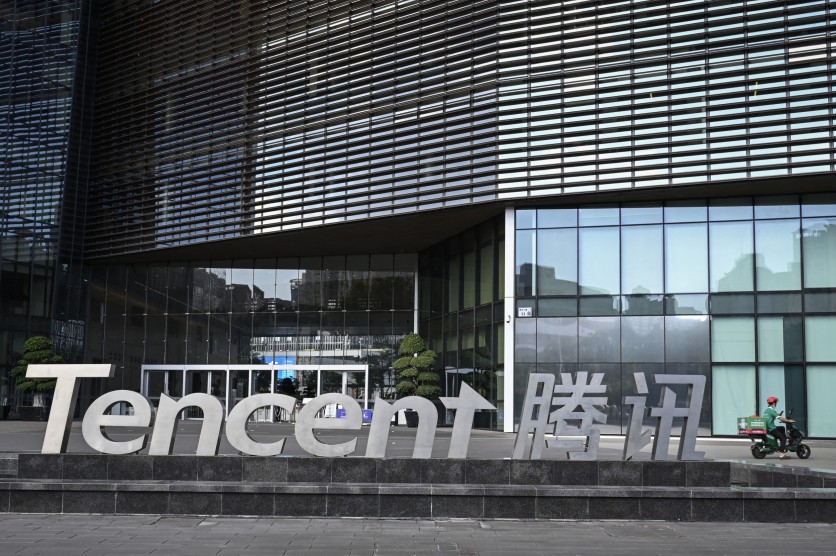
Tencent is reportedly testing a WeChat AI agent that could navigate mini programs and complete multi-step tasks, giving China's dominant super app an execution layer that ChatGPT still has to build.
The Financial Times reported that the prototype could complete tasks such as booking flights by moving through services inside WeChat. Tencent declined to comment, and no public launch date has been confirmed.
The reported system matters because WeChat already combines messaging, payments, shopping and transportation with millions of mini programs used by roughly 1.4 billion people. A native agent could act inside an established commercial ecosystem instead of waiting for every service to build a separate AI integration.
WeChat already contains the tools an AI agent needs to take action
Most consumer AI assistants can answer questions and call a limited set of tools. Completing a real transaction is harder because an agent must identify a service, authenticate the user, obtain permission, navigate the workflow, handle payment and recover from errors.
WeChat's mini programs compress many of those steps into one platform. The lightweight applications run inside WeChat and can use its account, interface and payment infrastructure. A native agent could translate a request into a sequence of actions across those services without making the user leave the app.
A flight-booking request, for example, may require searching schedules, comparing prices, selecting passenger information, paying and delivering confirmation. The AI model interprets and plans the task, while mini programs provide the structured service and WeChat Pay provides the transaction layer.
That could be more reliable than a device assistant that visually interprets arbitrary phone screens and simulates taps. Chinese phone makers have demonstrated interface-controlling agents, but public evidence does not confirm that assistants from Honor, Xiaomi and Oppo all have native WeChat control. Tencent has also not disclosed its prototype's technical design or permission model.
ChatGPT is approaching the super app from the opposite direction
OpenAI is expanding ChatGPT from a conversational interface into a platform that can use tools and take actions. ChatGPT agent can browse websites and complete online tasks, while OpenAI's app ecosystem brings outside services into conversations.
The strategic direction resembles a super app, but the starting points differ. ChatGPT has a widely used AI interface and must add services, commerce and trusted execution. WeChat already has services, payments and identities, and must add an AI layer capable of coordinating them safely.
This gives Tencent a structural advantage inside China. Merchants already build mini programs, and users already complete daily transactions through WeChat. The agent could become a new interface for the existing ecosystem rather than a separate destination.
The same structure creates a competition risk. If users ask an agent to choose restaurants, products or travel services, Tencent's ranking logic could determine which mini programs receive traffic. Smaller merchants may become dependent on recommendation rules they cannot inspect.
WeChat's distribution advantage does not establish technical reliability
Tencent has not published benchmarks, task-completion rates, error rates or independent evaluations for the reported prototype. There is also no public evidence showing how it handles ambiguous instructions, malicious mini programs, payment disputes or changes to a service's interface.
WeChat's integrated ecosystem may reduce some navigation failures compared with controlling arbitrary apps. It can also increase the consequences of a mistake because the same platform connects communication, identity and payments. Until Tencent discloses the agent's permission architecture and outside researchers can test it, claims of superior reliability remain unverified.
Tencent's stock rally does not verify the agent's capabilities
Investors have linked Tencent's recent share gains to excitement around WeChat's agent and other AI developments. However, the available public reporting does not verify the claim that the prototype added approximately 360 billion yuan to Tencent's market value in one day.
Stock prices also respond to multiple factors. Investor enthusiasm can show that markets value the possibility of turning WeChat into an AI transaction layer, but it cannot confirm the prototype's features, launch timing or commercial success.
The business opportunity is clear. If an agent increases completed transactions, Tencent could benefit through payments, advertising, mini program services and stronger user retention. It would also inherit higher inference costs, fraud exposure and responsibility for actions the agent performs incorrectly.
A native WeChat agent would process unusually sensitive data
An agent capable of completing transactions may need access to contacts, locations, payment details, purchase histories and mini program activity. Tencent has not publicly explained which data the prototype uses, whether every consequential action requires confirmation or how users could review and revoke permissions.
Tencent also operates under Chinese law. Article 7 of China's National Intelligence Law requires organizations and citizens to support, assist and cooperate with national intelligence work. China's Cybersecurity Law, Data Security Law and Personal Information Protection Law create additional requirements governing data processing and security.
WeChat has previously faced scrutiny over censorship and surveillance. Citizen Lab research found that documents and images shared by accounts registered outside China were used to train censorship systems applied to China-registered accounts.
A capable agent could process more context and make decisions with larger consequences. Useful protections would include task-specific permissions, confirmation before payments or messages, visible action logs, separation between private conversations and model training, and a complete opt-out. Tencent has not announced whether those protections will be included.
Regulation will shape whether WeChat can turn intelligence into action
China requires public-facing generative AI services to comply with content, security and data rules. A transactional agent may face additional scrutiny because failures can cause financial loss, privacy exposure or fraud rather than only inaccurate answers.
Users and regulators will need clear accountability when an agent selects the wrong service, sends an unintended message or completes an unwanted purchase. Mini program developers will also need to know how the agent ranks and invokes their services.
WeChat demonstrates why super apps may become the most powerful environment for consumer AI agents. They already contain the identities, payments and services that make agents useful. That same integration means mistakes, censorship and data access can spread across more of a user's life.
If Tencent launches the reported system, it could establish a distinct Chinese model for agentic AI: the assistant does not gradually become a super app. It begins inside one.
This article is not investment advice.
Frequently Asked Questions
Has Tencent launched the WeChat AI agent?
No. The system is reportedly being tested, but Tencent has not confirmed a public launch date or detailed its capabilities.
How would a WeChat AI agent complete tasks?
It could interpret a user's request and navigate WeChat mini programs that already provide services and payments. Tencent has not disclosed the production architecture or permission model.
How is WeChat's approach different from ChatGPT agent?
ChatGPT is adding tools and services around an AI-first interface. WeChat begins with an established super app containing identities, payments, merchants and mini programs, then adds AI coordination.
What are the main privacy risks?
A native agent may require access to sensitive behavioral, social and financial data. Key unanswered questions include user consent, action confirmation, data retention, model training and government-access obligations.
ⓒ 2026 TECHTIMES.com All rights reserved. Do not reproduce without permission.


