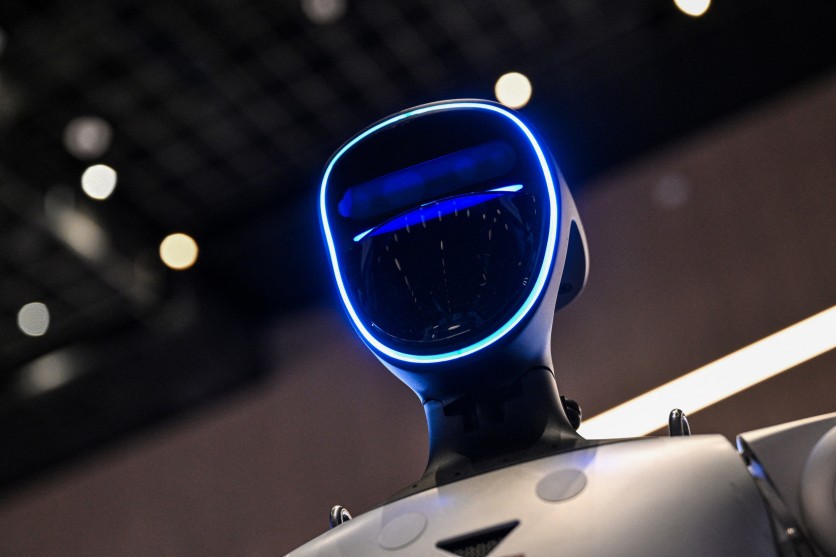
A Nasdaq-listed facility-services company is betting that the future of commercial cleaning is a humanoid robot, and that the data its human workers generate today is as valuable as the robots themselves. On June 9, 2026, YY Group Holding (NASDAQ: YYGH) announced it is deploying Unitree G1 Edu Ultimate humanoid robots across its facility-management operations, targeting the labor-intensive cleaning and maintenance work that fills malls, hotels and commercial real estate.
What is YY Group deploying?
The hardware is Unitree's G1 Edu Ultimate B-U4, a humanoid that pairs advanced mobility with 3D touch-sensitive robotic hands and an onboard Nvidia Jetson Orin AI computer. YY Group is aiming it at high-frequency, physically demanding sanitation and maintenance tasks, and folding the robots into its existing software stack, including its YY Circle workforce platform and a system it calls 24IFM. The company frames the move as a way to expand margins and offset a chronic labor shortage in facility services.
The real strategy: harvesting workflow data
The most revealing part of the plan is not the robots, it is the data. YY Group says its human cleaning staff will wear proprietary data-collection gear during normal shifts, capturing high-fidelity records of how the work is actually done: spatial movement through a building, human body kinematics, environmental readings and the real-time decisions a cleaner makes.
That detail explains the whole strategy. The hardest part of training a useful humanoid is not the body but teaching it the messy, physical know-how of a real job, and the cheapest way to get that know-how is to record skilled humans doing it. YY Group is effectively turning its existing workforce into a data-collection fleet, building the training set that could let robots eventually do the same work. It is a clear, if uncomfortable, illustration of how "physical AI" gets built: today's workers generate the data that trains their potential replacements.
Read more: Humanoid Robot Prices Near $30,000:Beijing Factory's 500,000-a-Year Plan May Halve Cost, Buyers Lag
Why it matters, and the caveats
YY Group is a small company, and a press-release deployment is not the same as humanoids reliably cleaning a mall at scale. Today's humanoids are slow, expensive and still clumsy at the open-ended dexterity that even basic cleaning demands, so the near-term reality is likely a handful of robots in controlled settings while the data effort runs in the background.
But the model it describes is the one to watch across the whole sector. Pairing a real-world service workforce with a data-capture layer, then feeding that into off-the-shelf humanoids like Unitree's, is a template many labor-heavy businesses could copy. The robots are the headline. The data pipeline is the actual business.
Frequently Asked Questions
What did YY Group announce?
On June 9, 2026, YY Group (NASDAQ: YYGH) said it is deploying Unitree G1 Edu Ultimate humanoid robots across its facility-management business, focusing on commercial cleaning and maintenance in settings like malls and hotels, and integrating them with its YY Circle and 24IFM software.
Which humanoid robot is YY Group using?
It is using Unitree's G1 Edu Ultimate B-U4, a humanoid with advanced mobility, 3D touch-sensitive hands and an onboard Nvidia Jetson Orin AI computer.
Why are YY Group's human cleaners wearing data-collection gear?
The company says staff will record high-fidelity workflow data during shifts, capturing movement, body mechanics, environmental readings and decisions. That data is used to train AI and robots to perform the same physical tasks.
Are humanoid robots ready to replace cleaners?
Not yet. Current humanoids are slow, costly and limited at the open-ended dexterity cleaning requires, so near-term use is likely small and controlled. The data-collection effort is a longer-term bet on training robots for the work.
ⓒ 2026 TECHTIMES.com All rights reserved. Do not reproduce without permission.


