
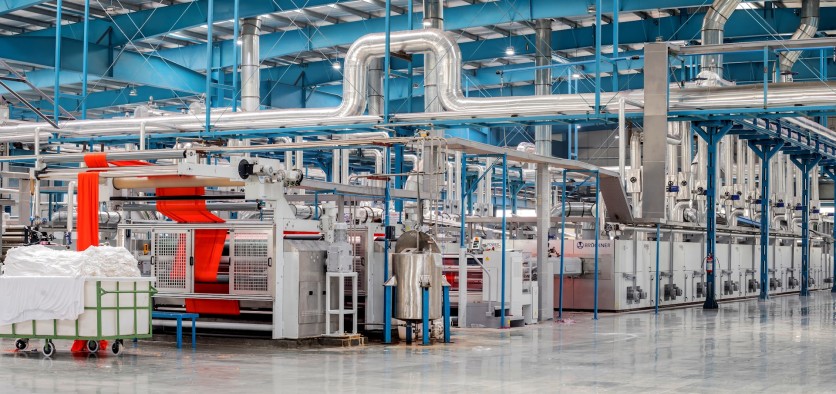
If you walk through a typical factory today, nothing seems dramatically different at first glance. Machines still hum, forklifts still beep, and operators still know the quirks of every line.
But underneath all that familiar noise, something else is happening, a shift that's easy to miss if you're not paying attention.
Data, not hardware, has quietly become the most valuable asset on the floor.
You see it in all kinds of subtle ways. A camera setup now spots a defect the moment it appears, instead of hours later when the batch is already boxed.
A supply chain system reroutes materials because it can sense a delay before a human planner even checks email.
And energy use drops at certain hours because an algorithm predicts when a line is about to slow down.
None of this feels futuristic or cinematic. It's not meant to. The change is woven into everyday routines, making the whole operation a little smarter, a little faster, and a lot more intentional.
Why Many Digital Transformations Fail Before They Even Start
For all the excitement around AI, a lot of manufacturing projects still flame out before they produce anything meaningful. People usually blame the technology, but the real reasons tend to be much more ordinary and far more human.
A few patterns pop up again and again:
- Teams buy a shiny new tool but have no plan for where it fits.
- Plants run a small pilot that never scales past one line.
- Years of data sit in old systems with mismatched labels and half-filled fields.
- Ownership bounces awkwardly between engineering, IT, and operations, and no one is entirely sure who's steering the ship.
A small fictional example illustrates this well:
A factory tests an AI model that predicts machine failures. It works great on one press. Everyone is excited. But when they try to use it on other machines, they realize those machines were installed at different times, use different naming conventions, and store data in completely different ways.
The team spends months trying to clean it up. Eventually, the momentum dies, leadership gets distracted, and the "successful pilot" stays forever stuck as... a pilot.
The technology wasn't the issue; the lack of groundwork was.
The Move Away from One-Off AI Pilots Toward Structured Planning
The manufacturers who actually make progress tend to avoid the "let's try something and see what happens" approach. Instead, they map out where AI could deliver the most value before they build anything.
They look for use cases that have a measurable financial impact, not just internal curiosity. They get alignment from engineering, IT, and operations early, so nobody is surprised halfway through. And they prioritize what's practical rather than what's flashy.
A lot of companies build this foundation with help from ai strategy consulting for manufacturing industry, which provides a structured way to figure out which projects matter, what the roadmap should look like, and what pitfalls to avoid before spending money.
That shift—from scattered experiments to strategy-first thinking—is what separates companies that talk about AI from those that actually benefit from it.
What Actually Works: The Core Components of High-Impact AI in Manufacturing
When you look at the manufacturers who are consistently getting real value out of AI, the same ingredients show up across the board.
- They have operational data that's clean enough to trust.
- They define metrics ahead of time so everyone knows how success will be measured.
- They deliver outcomes in small, iterative chunks rather than betting everything on one big reveal.
- And they put together cross-functional teams instead of expecting IT or engineering to run an entire transformation alone.
These conditions make it possible to scale the kinds of use cases everyone talks about, but few execute well: predictive maintenance that actually prevents downtime, yield models that point to the exact step in the process causing scrap, quality inspection that picks up on tiny visual cues, and scheduling tools that balance dozens of constraints simultaneously.
The magic isn't in the buzzwords. It's in the groundwork.
Why AI Adoption Is Now a Leadership Issue, Not Just a Technology Issue
There's been a noticeable shift in the last few years: AI initiatives no longer belong exclusively to technical teams. They've become leadership conversations.
Leaders are now the ones setting expectations about what's realistic. They're the ones encouraging teams to experiment without being punished for learning. And they're the ones thinking about how to reskill workers and keep the environment safe and supportive while all this change unfolds.
To guide these shifts, many leaders use resources like ai for business leaders, which helps them understand how to shape culture, manage risk, and support teams through the uncertainty that comes with new technology.
The role of leadership has moved from approving budgets to steering the entire direction of transformation.
What the Most Advanced Manufacturers Are Doing Differently
Factories that are a little further along show what's possible when AI becomes part of day-to-day decision-making rather than an occasional project.
One company uses pattern-based alerts that spot unusual machine behavior long before it becomes a shutdown event.
Another plant has cut back on recalls because their quality models flag potential issues mid-process instead of after final inspection.
A supply-chain team adjusts production plans based on AI-driven forecasts, allowing them to respond faster to sudden changes in demand or logistics.
What these organizations have figured out is that adopting AI isn't the finish line. Integrating it into daily workflows is.
The Competitive Landscape of the Next Decade
Looking ahead, competition in manufacturing will revolve around learning, not just production.
Factories will rely on lines that adjust themselves based on patterns they've seen before. Operators will combine their intuition with machine recommendations to make faster, more confident decisions.
Global companies will optimize entire networks, not just individual plants, with insights flowing instantly from one region to another.
The manufacturers who thrive will be the ones who mix technology with strong leadership and operational discipline—not the loudest adopters, but the ones who weave intelligence into everything they do.
ⓒ 2026 TECHTIMES.com All rights reserved. Do not reproduce without permission.


