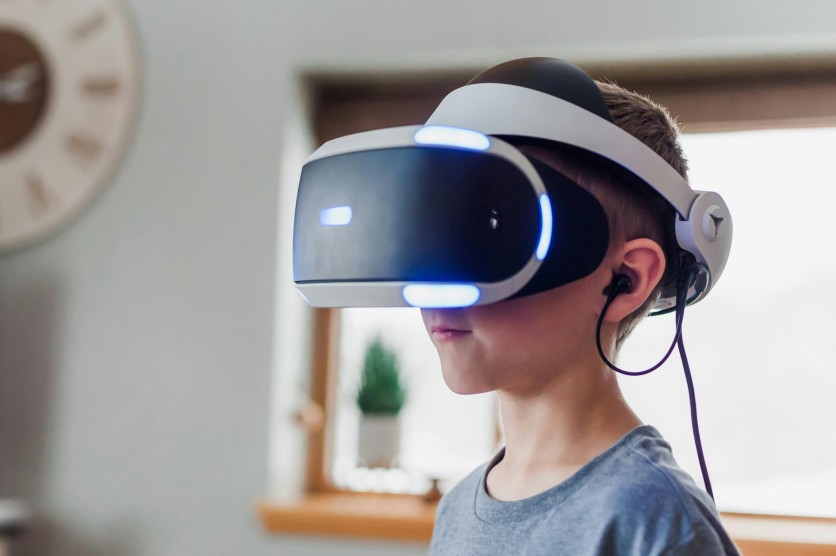
Virtual reality (VR) and augmented reality (AR) are at the forefront of immersive tech trends, each offering distinct experiences that appeal to different markets. VR delivers full digital immersion, ideal for gaming, fitness, and training, while AR overlays digital elements onto the real world, enhancing productivity, retail, and navigation. Market projections estimate a combined $250 billion industry by 2030, fueled by consumer and enterprise adoption alike.
The next decade will see convergence rather than outright dominance, with hybrid devices blending VR and AR capabilities. Apple Vision Pro and Meta Quest hint at a future where VR's fully immersive experiences coexist with AR's everyday utility, offering both entertainment and practical enhancements in work, health, and social interaction.
VR vs AR: Core Differences in Immersive Experiences
VR vs AR experiences highlight a key difference in immersive tech. VR requires complete headset occlusion, transporting users into entirely digital environments. Applications range from gaming to professional simulations, including fitness apps that burn over 500 calories per hour through high-intensity, interactive workouts. In contrast, AR overlays holograms or data onto camera feeds, enabling experiences like IKEA Place, which boosts purchase conversion by 98% by allowing users to visualize furniture in their homes before buying. Hardware differences further emphasize the VR vs AR divide: the Meta Quest 3 offers 4K resolution at 120Hz for full immersion, whereas AR glasses target micro-OLED displays weighing under 100 grams by 2028, suitable for all-day wear.
- VR Immersion: Fully digital environments block out the real world for complete focus.
- AR Overlay: Enhances the real world with digital information, holograms, or instructions.
- Fitness Applications: VR burns 500+ calories/hour with interactive workouts; AR supports lighter activity and guided exercises.
- Retail & Visualization: AR allows furniture placement or product previews, boosting purchase confidence by 98%.
- Gaming Experience: VR provides fully immersive, 360° gameplay; AR adds interactive elements to real-world environments.
- Training & Simulation: VR simulates hazardous or complex scenarios safely; AR provides real-time guidance in workplaces or surgery.
- Hardware Requirements: VR headsets like Meta Quest 3 offer 4K/120Hz displays; AR glasses aim for lightweight micro-OLED designs under 100 grams.
- All-Day Use: AR glasses are designed for extended wear; VR is typically limited to shorter sessions due to comfort and motion sickness.
- Mobility: AR is wearable and mobile, blending seamlessly into daily life; VR is stationary or requires a dedicated play area.
- Social Interaction: VR often isolates users in virtual worlds; AR supports shared experiences and remote collaboration.
- Content Creation: VR requires fully built 3D environments; AR can integrate digital elements into existing real-world scenes.
- Energy Consumption: VR headsets consume more power due to high-resolution graphics; AR glasses prioritize low power for lightweight usage.
Market Adoption and Enterprise Potential
Immersive tech trends indicate that AR is rapidly gaining traction in enterprise environments. Companies are adopting AR for manufacturing, assembly, and maintenance, with projected market growth reaching $100 billion by 2027. Devices like Microsoft HoloLens provide workers with real-time spatial guidance, overlaying instructions directly onto equipment, while remote experts can assist from anywhere, reducing errors and downtime. These applications demonstrate how AR enhances efficiency and safety in professional settings.
VR, by contrast, continues to dominate consumer gaming, generating around $50 billion annually. High-intensity VR games and simulations offer unparalleled immersion, but motion sickness limits session lengths to roughly 30 minutes. Despite these challenges, VR excels in training scenarios, therapy, and fitness, where fully immersive environments can replicate real-world conditions safely. Enterprises also use VR for design visualization, pilot training, and emergency preparedness exercises.
AR glasses, including prototypes like the Meta Orion, are positioned to transform daily routines beyond the workplace. Persistent overlays could replace certain smartphone functions, providing notifications, navigation, and contextual information without needing to pull out a device. Hybrid mixed reality (MR) devices bridge the gap between VR and AR, allowing seamless transitions between full immersion and real-world interaction. This convergence suggests that the next decade will see both VR and AR complementing each other rather than competing directly.
Future Trends: Spatial Computing and Hybrid Realities
Spatial computing merges VR and AR capabilities, enabling a more natural interface between humans and digital content. Apple predicts up to 1 billion users by 2035 using lightweight, prescription-compatible lenses. Immersive tech trends also include brain-computer interfaces enhancing VR presence, while AR supports remote expert guidance in medical procedures, increasing accuracy by up to 99%. In social applications, AR allows persistent shared experiences across locations, while VR remains relatively isolated, influencing the development of metaverse economies that favor AR for continuous engagement.
- Spatial Computing: Combines VR immersion with AR overlays for seamless interaction with digital and real-world environments.
- User Growth: Apple predicts 1 billion users by 2035 with lightweight, prescription-compatible AR/VR devices.
- Brain-Computer Interfaces: Enhance VR presence by translating neural signals into actions within digital environments.
- Medical Applications: AR supports surgeons with real-time overlays, boosting accuracy in procedures by up to 99%.
- Social Interaction: AR enables persistent shared experiences across locations, while VR is typically isolated to single users.
- Enterprise Use: Hybrid spatial computing aids training, design, and collaboration in manufacturing, architecture, and engineering.
- Metaverse Economies: AR supports ongoing social persistence and commerce, whereas VR focuses on isolated gaming and immersive worlds.
- Wearable Tech: Future AR glasses and MR devices aim for lightweight, all-day usability, bridging the gap between mobile and immersive tech.
Conclusion
The evolution of VR vs AR over the next decade points to a symbiotic coexistence rather than a clear winner. AR glasses are likely to dominate daily interfaces, providing lightweight, practical overlays that complement real-world tasks, while VR continues to thrive in entertainment, fitness, and high-intensity simulations. Hybrid MR devices will accelerate mainstream adoption by offering seamless transitions between immersive and augmented experiences. As immersive tech trends advance, consumers and enterprises alike will benefit from a richer, more interactive digital ecosystem.
Frequently Asked Questions
1. Which burns more calories: VR or AR fitness?
VR fitness apps like Beat Saber reach 8–12 METs, providing intense cardio comparable to running. AR overlays enhance walking or cycling but offer lower calorie burn. VR workouts require full body movement, while AR focuses on mixed activity. Both can complement traditional exercise routines.
2. Will AR replace smartphones?
Analysts predict AR glasses could shift up to 50% of screen time by 2035. Persistent overlays reduce the need to pull out phones for navigation, notifications, or shopping. Some functions like messaging and calls may transition entirely to AR. Smartphones may remain as backup or for high-resolution media tasks.
3. What limits VR mass adoption?
Motion sickness affects 30–80% of VR users depending on device and experience. AR passthrough technology reduces discomfort to around 5%. Hardware comfort, battery life, and content variety also limit adoption. Continued refinement and hybrid solutions are likely to overcome these barriers.
4. Which enterprise market grows faster: VR or AR?
AR training and manufacturing adoption is projected at $100 billion by 2027, outpacing VR gaming revenue. AR's ability to integrate with real-world workflows drives faster uptake. VR remains strong in simulation but is less practical for daily operations. Enterprise adoption is likely to favor AR for long-term growth.
ⓒ 2026 TECHTIMES.com All rights reserved. Do not reproduce without permission.


