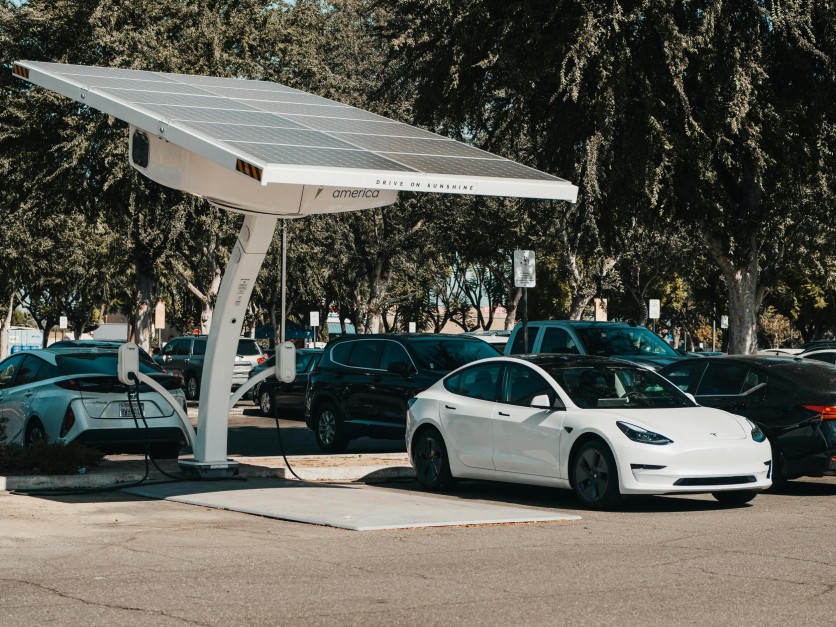
The EV future is poised to redefine transportation over the next decade. Analysts project that by 2035, 60% of global new car sales will be electric, fueled by solid-state batteries delivering 600+ mile ranges and charging in just 10 minutes. Electric vehicle trends also include bidirectional vehicle-to-grid (V2G) charging, allowing cars to power homes during peak demand, while autonomous robotaxis transform urban mobility. Declining battery costs, dropping below $50 per kWh, will make $20,000 electric cars a mainstream reality, shifting ownership patterns and energy consumption.
Infrastructure and technology developments are key to achieving this future. Ultra-fast charging networks, swappable batteries, and wireless charging pads are set to eliminate range anxiety and reduce reliance on personal garages. Autonomous fleets and smart grid integration mean cities will rely more on shared, electrified mobility than conventional cars. As production scales, EV adoption will accelerate while sustainability gains improve environmental outcomes, highlighting a decade of profound change in automotive, energy, and urban planning sectors.
Solid-State Batteries and Charging Innovations
Solid-state batteries are poised to replace conventional lithium-ion cells by 2030, offering roughly double the energy density. This increase allows vehicles to travel longer distances on a single charge while eliminating reliance on cobalt and nickel, which reduces environmental impact and supply chain constraints. Manufacturers are actively testing prototypes that promise higher safety, lower fire risk, and longer lifespans, making them a cornerstone of the EV future.
Ultra-fast 800V charging architectures complement these batteries, allowing drivers to add 200 miles of range in just 10 minutes at the growing network of 350kW stations along major highways. These rapid charging solutions aim to replicate the convenience of traditional fuel stops, alleviating range anxiety for long-distance trips. Commercial fleets and delivery services stand to benefit the most, as downtime between shifts can be drastically reduced, increasing operational efficiency and fleet utilization.
Swappable battery networks, inspired by the Gogoro scooter model, offer another solution for fast energy replenishment, particularly in urban or commercial applications. Instead of waiting at a station, drivers or fleet operators can replace a depleted battery with a fully charged one in minutes. Combined with wireless charging pads for parking lots and autonomous fleet hubs, these innovations make EV adoption more practical and flexible. Together, advances in battery chemistry, fast charging, and swappable systems are transforming how electric vehicles will be used for both personal travel and large-scale commercial operations.
Read more: EV Cost Savings: Electricity vs Fuel Cost, EV Car Maintenance & True EV Ownership Cost in 2025
Autonomy and V2X Integration
Electric vehicle trends increasingly emphasize vehicle-to-everything (V2X) capabilities, allowing EVs to act as mobile energy storage units that stabilize renewable energy grids during solar or wind fluctuations. This bidirectional power flow helps reduce blackouts and optimizes energy use across cities and communities. Beyond energy management, autonomous fleets such as Tesla Optimus robots and Cybercab services are projected to create a $10 trillion robotaxi market by 2035, offering convenient, on-demand transportation and potentially reducing personal car ownership in dense urban areas by up to 50%.
Companies like Huawei and BAIC are pushing Level 4 autonomy forward, enabling vehicles to navigate complex, unmapped rural roads using a combination of satellite mapping and vision-based AI. These systems promise safer, more efficient travel while reducing human error, traffic congestion, and emissions. Integrating V2X communication, autonomous operations, and mobility-as-a-service platforms ensures that the EV future is not only electric but smart, connected, and optimized for both urban and rural environments. This convergence of technology is reshaping transportation infrastructure and how people interact with mobility.
Affordable EVs and Sustainable Materials
Sodium-ion batteries will enable $15,000 EVs for emerging markets, with 95% of materials recycled domestically. Long-life battery designs, such as BYD blade cells and CATL Qilin, achieve 1 million-mile lifespans, reducing total cost of ownership by 40% compared to internal combustion engines. Wireless 20kW charging pads remove the need for physical plugs, allowing seamless charging in parking lots and along highways. These innovations make EVs accessible, practical, and environmentally sustainable, reinforcing the role of electric vehicles in global energy and mobility transitions.
- Sodium-ion batteries lower EV prices to around $15,000, expanding access in emerging markets.
- Domestic recycling of 95% of battery materials reduces environmental impact and supply chain dependency.
- BYD blade cells and CATL Qilin batteries offer up to 1 million miles of lifespan, cutting long-term ownership costs by 40%.
- Wireless 20kW charging pads enable plug-free charging in parking lots and along highways for added convenience.
- Compact, modular battery designs allow for easier replacement and future upgrades.
- High energy efficiency of new battery chemistries supports longer driving ranges per charge.
- Sustainable materials and local recycling contribute to a circular economy for EV components.
Conclusion
The EV future will be defined by electric vehicle trends in battery technology, autonomy, and grid integration. Solid-state and sodium-ion batteries, combined with ultra-fast and wireless charging, remove technical barriers while lowering costs. Autonomous robotaxis and fleet-based mobility reduce private ownership, reshaping urban transport systems. V2G and V2X connectivity stabilize renewable energy, turning vehicles into active grid participants. Together, these advances ensure that the next decade of electric cars is faster, cheaper, and smarter, with infrastructure scaling to meet soaring demand and a sustainable mobility ecosystem emerging worldwide.
Frequently Asked Questions
1. When do solid-state batteries commercialize?
Mass production is expected between 2027 and 2028, with Toyota and Samsung leading. Early EV models may offer limited range before scaling fully. Widespread adoption will follow as costs drop and reliability improves. This will accelerate mainstream EV availability.
2. Will EVs charge like gas pumps?
By 2032, 10-minute 80% charges are expected at 500kW stations. Swappable battery networks and wireless pads complement fast charging. Charging infrastructure will rival the convenience of gas stations. This removes range anxiety for consumers.
3. Do robotaxis end car ownership?
Urban areas could see up to a 70% shift to shared autonomous fleets by 2035. Personal car use will decline in dense cities. Fleet mobility services offer cost and convenience benefits. Rural and low-density areas may retain private cars longer.
4. How cheap will mainstream EVs get?
$20,000 EVs will be possible by 2028 as battery costs drop to $50/kWh. Emerging markets may see even lower-cost models with sodium-ion technology. Lower prices make EV adoption accessible to a wider population. Financing and incentives will accelerate uptake further.
ⓒ 2026 TECHTIMES.com All rights reserved. Do not reproduce without permission.


