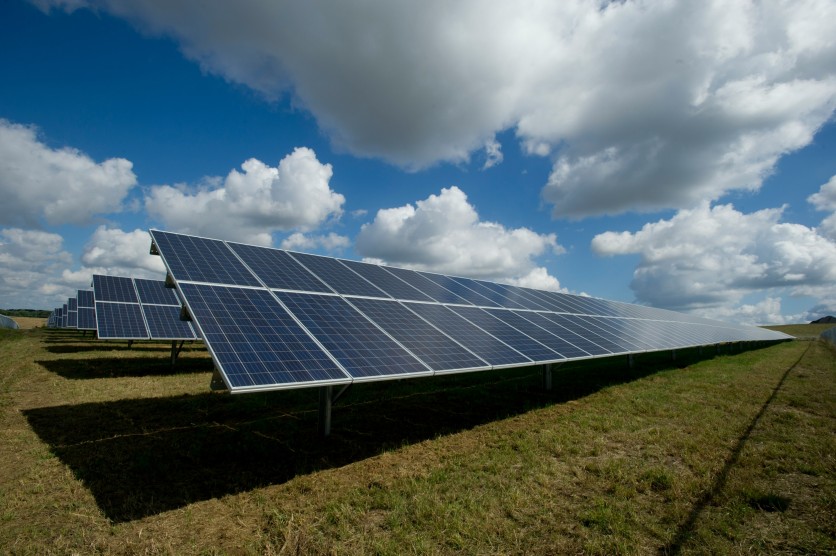
Space-based solar power represents a transformative shift in renewable energy, capturing sunlight in orbit and transmitting electricity to Earth continuously. Orbiting photovoltaic arrays receive unfiltered sunlight at 1,366 W/m², converting 40–50% through high-efficiency GaAs/InP cells, far exceeding terrestrial panels limited to 20–25%. Modular Starship-launched arrays and rectenna farms of 5–10 km² promise baseload power independent of weather or night cycles.
Recent advances in renewable energy space research demonstrate feasibility at commercial scale. Microwave and laser prototypes beam energy safely at densities well below FCC limits, while autonomous assembly robots handle kilometer-scale arrays. By reducing launch costs to $200/kg LEO, startups aim to deploy 100 MW stations at $1/Watt amortized over 30 years, opening the door to continuous clean energy and large-scale orbital infrastructure.
Space Solar Power Microwave vs Laser Transmission
External energy delivery from space can use microwaves or lasers, each with unique advantages for orbital-to-ground transmission. Microwave systems utilize 10,000 phased-array antennas to target 10 km² rectennas with diffraction-limited accuracy of 0.1°, achieving high efficiency across geostationary orbit distances. Laser systems concentrate energy into smaller footprints—roughly 100 m²—but are limited by atmospheric absorption and require LEO constellations of thousands of satellites for full coverage.
Experimental demonstrations validate technical performance and safety. NASA's SPS-ALPHA and Caltech's MAPLE transmitted milliwatts orbit-to-Earth, maintaining pointing stability below one microradian. Self-assembling inflatable modules and phased array steering scale toward 100 MW arrays, while safety testing confirms no thermal harm to wildlife. Space solar power beam technologies balance high efficiency with low environmental impact, creating a path for both baseload electricity and remote power applications.
Renewable Energy Space Launch Cost Reductions
The economics of space solar power depend on drastically lower launch costs and modular assembly techniques. Starship launches cut LEO payload costs to $100–200/kg, supporting 150-tonne payloads capable of delivering 10 MW of solar arrays per flight. This contrasts sharply with Shuttle-era costs of $50,000/kg, making gigawatt-scale orbital solar stations financially feasible for the first time.
In-orbit construction is supported by autonomous robots, capable of assembling kilometer-scale arrays without astronaut EVAs. Flexible thin-film gallium arsenide cells roll out across 10 km², while reflector designs from Blue Origin concentrate sunlight fivefold onto central PV islands, reducing mass and enhancing efficiency. With modular architectures, 10 GW stations can be built from multiple launches, amortizing costs to $0.5–1/Watt—competitive with offshore wind—making renewable energy space deployment increasingly viable.
- How does space solar power work technically? GEO arrays convert sunlight to microwaves or lasers, transmitted to rectennas or laser receivers on Earth with 85% end-to-end efficiency.
- When will space solar power become commercially viable? Orbital demos from 2026–2030 precede gigawatt-scale deployment by 2035, enabled by $100/kg Starship LEO pricing.
Orbital Energy Ground Infrastructure Requirements
Ground infrastructure is critical for receiving space-generated electricity efficiently. Microwave rectennas span 5–10 km² in deserts or offshore locations, rectifying 2.45 GHz energy into DC at 90% efficiency for grid integration. Laser receivers shrink to 100 m², suitable for remote bases or disaster zones, with mobile setups allowing flexible deployment.
Infrastructure placement and safety are essential. Automated interlocks prevent beam exposure to aircraft, while pilot sites like the ESA Solaris initiative leverage ocean cooling and concentrated mirrors. Hybrid systems incorporate lithium iron phosphate batteries to buffer orbital night cycles, ensuring reliable output and aligning space solar economics with terrestrial solar-plus-storage systems.
- What are the biggest challenges for space solar power deployment? Challenges include reducing launch costs, MW-scale wireless transmission, robotic assembly, and orbital debris mitigation.
- Could space solar power provide unlimited clean energy? A single 2 GW station can power 2 million homes continuously; 1,000 stations could supply 50% of global electricity without intermittency.
Assembly Robotics and Scaling Pathways
Advanced robotics and AI enable autonomous construction and maintenance of space solar stations. Electrodynamic tethers provide propellantless station-keeping, while origami-deployable panels and carbon nanotube struts minimize mass while maximizing strength. Machine learning optimizes beam steering to maintain 0.01° accuracy over 36,000 km GEO distances, ensuring precise energy delivery to Earth rectennas.
Pilot programs like Star Catcher demonstrate early scaling, transmitting enhanced solar flux to client satellites and LEO data centers. Regulatory frameworks allocate orbital slots, mitigate Kessler syndrome risks, and enforce 25-year deorbit requirements, ensuring sustainable deployment. By combining autonomous robotics, lightweight materials, and optimized orbital mechanics, space solar power becomes increasingly feasible for large-scale commercial and military applications.
Economic Projections and Market Entry
Levelized costs of space solar power are projected to converge with offshore wind by 2040, $30–50/MWh, while delivering near-constant capacity factors. Military and remote energy applications precede civilian grids, including USAF bases and Japan's 2035 Kyushu rectenna plan. Chinese CAST Omega 2.0 aims for MW-scale demonstrations by 2028.
Financing models leverage green bonds and long-term PPAs, projecting 8–10% IRR for 10 GW stations at $40/MWh. Lifespan assumptions of 40 years for PV panels, coupled with minimal O&M, make space solar competitive with hydro and terrestrial renewables, highlighting the scalability and economic viability of orbital energy infrastructure.
Next-Gen Space Solar Power Outlook
Space-based solar power combines microwave and laser transmission, orbital assembly robotics, and cost-efficient launches to deliver continuous clean energy. Modular GEO arrays and rectennas ensure scalable baseload power, while reduced launch costs and autonomous in-orbit construction make gigawatt deployments feasible. As technology matures, space solar is set to complement terrestrial renewables, provide energy independence for remote areas, and establish new global clean energy markets.
Frequently Asked Questions
1. How do microwave and laser space solar power systems differ?
Microwaves cover large rectenna areas, suitable for baseload supply, while lasers target smaller receivers but need LEO swarms due to atmospheric absorption. Both convert solar energy to electricity efficiently.
2. What is the typical size of a space solar power station?
Microwave stations span kilometers with rectennas 5–10 km², while laser stations are smaller at 100 m², ideal for mobile or remote installations.
3. Are space solar power systems safe for humans and wildlife?
Yes. Beams operate at densities below FCC limits, with automated shutdowns preventing exposure and safety margins exceeding wildlife thresholds by 10x.
4. When could space solar power provide grid-scale energy?
Initial 100 MW orbital stations are feasible in the late 2020s, scaling to multi-gigawatt deployments by 2035–2040 with $100/kg launch costs and modular construction.
ⓒ 2026 TECHTIMES.com All rights reserved. Do not reproduce without permission.


