
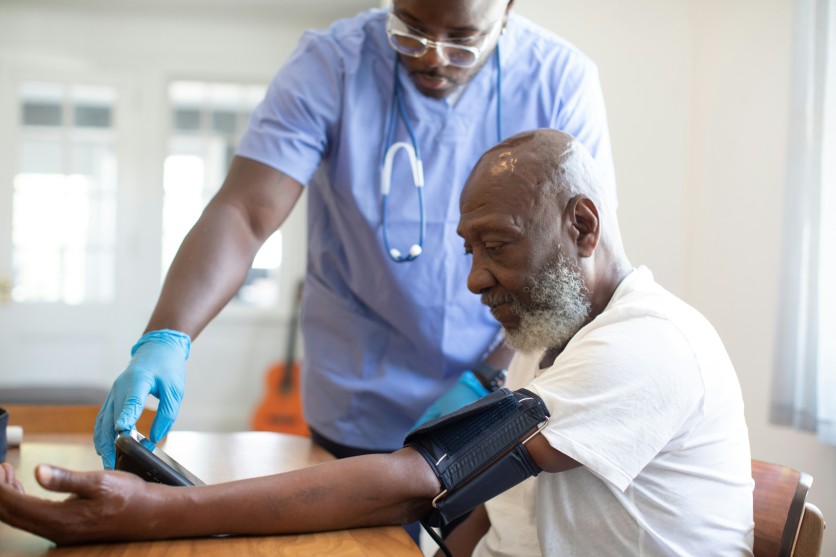
Post-discharge care is often a major stumbling block in managing patient outcomes. Inadequate post-discharge care is a common contributor to hospital readmissions, which can lead to additional physical health complications that result in high expenses for patients and healthcare systems alike.
While hospital readmission rates have hovered between 13% and 15% for several years, improvements to post-discharge care through technology may be able to change this trend.
As Lukas Klaiber, co-founder, CPO, and COO of KaigoHealth, an AI care management platform that has secured competitive backing from Y Combinator and other selective programs, explained during a recent conversation, AI is poised to dramatically reshape post-discharge care in a way that ensures better outcomes for patients and providers. In fact, the healthcare AI entrepreneur has led the build and rollout of AI care managers that are already making a difference.
Removing Communication Breakdowns
According to Klaiber, one of the biggest challenges in post-discharge care is the lack of communication and support that occurs after a patient leaves the hospital. As just one example, studies have found that over 40% of medication errors "are believed to result from inadequate reconciliation in handoffs during admission, transfer and discharge of patients." Even more troubling, 20% of those errors cause harm to the patients.
"AI is a powerful tool for filling the gaps between in-hospital and post-discharge care," Klaiber says. "With the right application, AI can help reconcile any issues and ensure that all necessary care instructions are properly communicated so that hospital and post-discharge teams stay on the same page. Automating the manual, time-consuming and error prone processes of manual reconciliation can go a long way in getting care on track."
Of course, it isn't just medical systems that are prone to communication issues. Studies have found that as many as 60% of patients forget or misunderstand doctor instructions regarding prescription medications and other forms of post-discharge care. Without consistent follow-up communication from their doctor, many patients aren't going to follow through with the necessary activities that will ensure their recovery.
With targeted AI applications focused on streamlining communications and keeping all parties up to date, patients can potentially enjoy better outcomes with improved post-care plan compliance.
Working with major U.S. health systems for Medicare and other high-risk populations, Kaigo Health is operationalizing an evidence-based care-transition model with AI, grounded in peer-reviewed findings that timely post-discharge follow-up calls result in over 20% lower 30-day readmission rates through improved patient management.
Enabling Outpatient Care Management at Scale
Another area where Klaiber sees major potential for AI in post-discharge care is its capability to enable outpatient care management at scale. For example, drawing on lessons from building enterprise architectures at one of Europe's largest radiology groups and from his work in process automation at a major software company, Klaiber identified ways to automate key nursing tasks more effectively and integrate with existing healthcare IT and EHR systems.
"The tasks that are so vital to post-discharge care, like followups and patient monitoring to ensure care plan adherence, are incredibly time-consuming. When health providers don't have sufficient head count, it becomes practically impossible to care for a large number of patients. With autonomous AI agents, however, we can achieve a continuous cycle of followup, monitoring and advocacy. By having AI take over these routine check-ins and then report back to human doctors, we're able to stay on top of outpatient health in between in-person visits."
Indeed, a limited headcount, especially in relation to the number of patients a facility or network needs to care for, is often a major contributor to the communication breakdowns that hinder post-discharge care in the first place. In many instances, the patients who remain the most connected are those who are the most vocal, while those who are less persistent may become overlooked.
With AI, all patients within a health network can be monitored more easily, while primary care doctors and other closely involved healthcare providers can receive automatic updates if a patient isn't following through with post-care plans. Updated and accurate information and recommendations from AI can help clinicians make better decisions in delivering personalized care and intervening early when needed to more fully support a patient's recovery.
Increasing Care Accessibility
Improving post-discharge care accessibility can have an outsized impact on a healthcare system's operations. A recent Kaufman Hall report noted that only nine percent of healthcare providers are able to see patients within a few days, with 40% saying their patients have to wait too long for appointments. One survey respondent noted that 41% of their emergency room visits were not for actual emergencies—instead, they were from people who couldn't get into primary care.
According to Klaiber, this reactionary approach to healthcare is the exact type of concern that AI is distinctly suited to address. Informed by his research experience at Stanford's Center for Design Research—where human-centered design is a core lens—he argues that proactive systems that communicate naturally with patients and surface clinician-ready insights can materially improve outcomes through earlier intervention and better compliance.
"When you have autonomous AI agents managing outpatient care through simple methods such as phone calls with a voice agent, healthcare providers can quickly get information that predicts readmissions or indicates a different approach to care may be needed," he explains.
"With AI supporting post-discharge care through continuous monitoring, providers can become more proactive in reaching out to schedule needed visits or changes to a care plan before the patient considers a trip to the emergency room."
By incorporating user-friendly elements such as voiced phone calls, which can be more accessible and less intimidating for seniors and other tech-adverse individuals, AI can become a powerful partner in keeping patients fully connected with post-discharge care. In fact, early results show an over 70% patient engagement rate, engaging elderly patients who are otherwise left out by technology.
The Future of Post-Discharge Care
As Klaiber's insights reveal, post-discharge care represents a significant area of opportunity for improving healthcare through AI. As AI applications enable better scaling and personalization of post-discharge care, healthcare providers can ensure that patients don't slip through the cracks. When this happens, each patient has the opportunity to get the level of care and support they need for better long-term health outcomes.
ⓒ 2026 TECHTIMES.com All rights reserved. Do not reproduce without permission.


