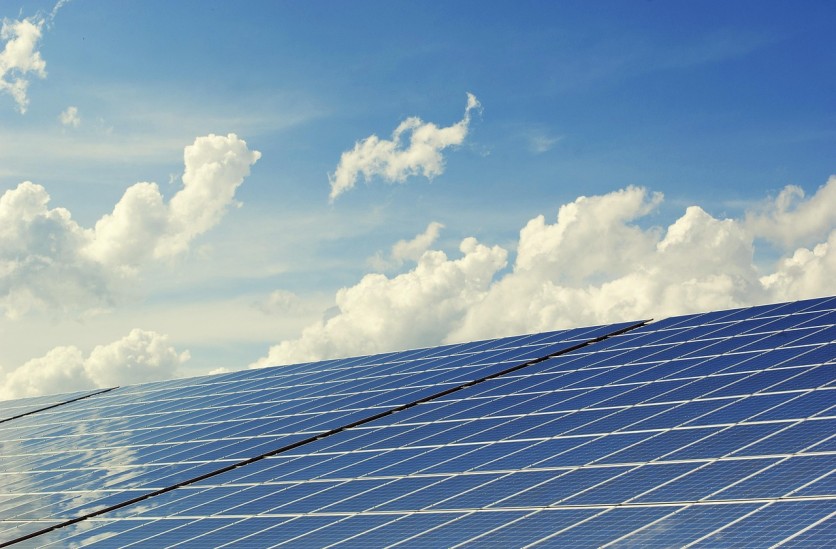
Perovskites have revolutionized the field of photovoltaics, offering a path toward lower‑cost and higher‑efficiency solar cells. Over the past decade, these materials have repeatedly surpassed laboratory performance expectations, setting new records for perovskite solar efficiency nearly every year.
Yet, despite their rapid progress under controlled conditions, perovskite‑based devices continue to struggle when exposed to the elements. Their tendency to degrade in real environments raises questions about how this promising technology can evolve from laboratory success to dependable, commercial energy solutions.
The Promise and Paradox of Perovskite Solar Cells
The excitement around perovskite solar cells stems from their unusual ability to convert sunlight into electricity with remarkable effectiveness.
Researchers discovered that by tweaking their chemical composition, these materials could achieve light absorption and charge transport comparable to, and in some cases better than, traditional silicon solar panels.
However, this technological triumph comes with a paradox. While perovskite devices shine in controlled test chambers, their real‑world stability remains unsettled.
Exposure to humidity, temperature fluctuation, and ultraviolet light often leads to degradation, limiting the lifespan of these cells far below what's expected from commercial solar panels.
What Are Perovskite Solar Cells?
Perovskites are a class of compounds defined by a specific crystal structure composed of a metal cation, an organic or inorganic component, and a halide atom. This arrangement, known as the ABX₃ structure, grants perovskites extraordinary optical and electronic properties ideal for photovoltaic use.
Compared to silicon, the long‑standing backbone of the solar industry, perovskites are lightweight, inexpensive to manufacture, and require significantly less energy to produce. They can be layered onto flexible or transparent substrates, making them suitable for emerging applications such as solar windows and portable electronics.
Since their first demonstration in 2009, the efficiency of perovskite solar cells has skyrocketed from below 4% to over 26%, approaching parity with commercial silicon modules. These milestones have positioned perovskites as one of the most studied materials in modern energy research.
Why Do Perovskites Keep Breaking Efficiency Records?
Why are perovskite solar cells so efficient? Several structural features set them apart from conventional materials.
The perovskite crystal lattice absorbs a broad spectrum of visible light while maintaining long charge carrier diffusion lengths, meaning the generated electrons can travel farther without dissipating energy. This boost in electron mobility maximizes current output and overall conversion efficiency.
Additionally, the chemical composition of perovskites can be finely tuned. By adjusting the halide or metallic components, scientists can control the energy bandgap, optimizing the material for different wavelengths of sunlight.
This tunability allows for customized perovskite solar efficiency in tandem architectures, where layers of different materials capture distinct parts of the solar spectrum.
The low‑temperature fabrication process also contributes to their record‑setting achievements.
Unlike silicon, which requires energy‑intensive melting and crystallization, perovskites can be deposited using cost‑effective techniques like spin‑coating or inkjet printing. The result is a fast, scalable route to high‑performance solar devices, at least under laboratory conditions.
Why Do Perovskite Solar Cells Degrade Over Time?
What causes degradation in perovskite solar cells? The biggest challenge lies in the material's sensitivity to environmental stress. Perovskite compounds react strongly to moisture, oxygen, and ultraviolet radiation, factors that are difficult to avoid in outdoor installations.
Over time, these interactions trigger chemical breakdown, leading to discoloration, reduced charge mobility, and ultimately a drop in power output.
Thermal instability is another issue. Heat can cause ion migration within the perovskite layer, creating defects that interrupt current flow. Once these defects form, they accelerate further degradation, forming a destructive feedback loop that shortens a cell's lifespan.
Even during encapsulation or device assembly, perovskites can degrade if they come into contact with solvents, metals, or adhesives that disrupt their delicate structure.
Although researchers have made significant progress in stabilizing the material through additives and surface treatments, these improvements are not yet sufficient to guarantee long‑term reliability.
What Is Limiting Their Real‑World Stability?
How stable are perovskite solar cells in real‑world conditions? In practice, perovskite modules rarely meet the environmental standards required for commercial deployment.
Most lab demonstrations last only hundreds or a few thousand hours, while silicon panels typically deliver stable performance for more than 25 years. Even small variations in humidity or temperature can lead to rapid performance declines in perovskite devices.
Part of the challenge is engineering encapsulation layers that protect the cells without interfering with light absorption or charge transfer. Advanced sealing techniques help, but they add cost and complexity, making it harder to scale production economically.
Furthermore, the transition from small test cells to full‑size modules introduces new mechanical stresses. Cracks, defects, and uneven material distribution weaken real‑world stability, reducing performance consistency across large surfaces.
These practical limitations highlight the difference between achieving record efficiencies in the lab and sustaining them outdoors under sunlight, heat, and moisture.
Can Perovskite Solar Cells Be Made More Durable?
How can we improve perovskite solar stability? Researchers are developing several strategies to extend the lifespan of perovskite devices. One approach involves modifying the chemical composition to create more robust inorganic variants that resist moisture and heat.
For example, replacing organic cations with inorganic alternatives like cesium can improve structural and thermal endurance.
Another promising avenue is the use of advanced encapsulation materials that block oxygen and water vapor without increasing production costs. Combining perovskites with flexible polymers or barrier films can delay degradation, allowing the cells to maintain efficiency longer in operational environments.
Hybrid perovskite–silicon tandem cells are also gaining attention. These architectures merge the high efficiency of perovskites with the proven real‑world stability of silicon.
The tandem approach not only boosts overall performance but also provides a transitional path for manufacturers seeking to integrate perovskite technology into existing silicon production lines.
The Road Ahead for Perovskite Photovoltaics
Will perovskites replace silicon solar cells? It's a question that continues to drive debate in the energy community. While silicon remains the dominant material in global installations, its efficiency potential is nearing its theoretical limit.
Perovskites, with their adjustable bandgaps and low manufacturing costs, offer exciting possibilities for the next generation of photovoltaics.
However, replacement doesn't necessarily mean elimination. Experts predict a gradual integration, where hybrid and tandem systems bridge the gap between laboratory innovation and market readiness.
Governments and private companies are now investing in pilot production lines to explore scalable manufacturing methods and durability testing under standardized conditions.
Once perovskite modules can demonstrate credible lifetimes exceeding 10 to 15 years, their commercial viability will dramatically improve, opening pathways toward lighter, cheaper, and more adaptable solar solutions.
Perovskites and the Future of Solar Efficiency
Despite their present limitations, perovskites remain one of the most promising materials in the evolution of photovoltaics. Their unmatched capacity for rapid efficiency gains continues to inspire optimism among researchers and investors alike.
Yet, improving real‑world stability and mitigating degradation remain the ultimate tests of whether perovskite solar efficiency can move beyond the laboratory and into long‑term, practical applications.
As engineers refine the chemistry and manufacturing processes, the focus is shifting from record‑setting experiments toward reliability and endurance. Each step forward brings the goal of sustainable, durable solar energy closer, one where perovskites not only break efficiency records but endure long enough to power real‑world change.
Frequently Asked Questions
1. What materials are used to make perovskite solar cells?
Perovskite solar cells typically use lead halide compounds like methylammonium lead iodide, combined with organic or inorganic components to form a light‑absorbing crystal structure.
2. Are there environmental concerns with using lead in perovskite solar cells?
Yes. Most perovskites contain lead, which poses toxicity risks if the material leaks. Ongoing research explores lead‑free alternatives using tin or germanium.
3. How long do perovskite solar cells currently last?
Under controlled conditions, some can maintain efficiency for about 3–5 years, but outdoor durability is still being improved to match silicon's 20‑plus‑year lifespan.
4. Can perovskite technology be used in flexible or portable devices?
Absolutely. Because perovskites can be printed on flexible substrates, they're being studied for wearables, building‑integrated photovoltaics, and lightweight power sources.
ⓒ 2026 TECHTIMES.com All rights reserved. Do not reproduce without permission.


