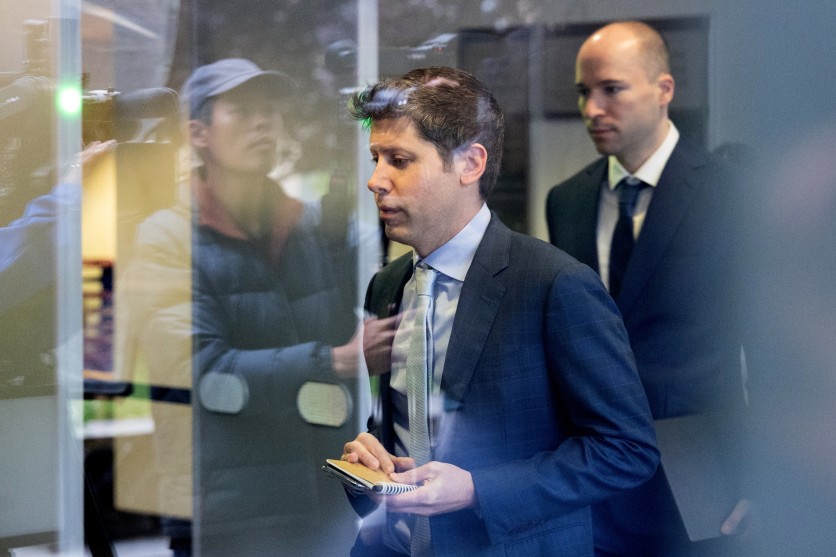
A nine-person jury in Oakland will begin deliberating Monday on whether OpenAI CEO Sam Altman and president Greg Brockman violated charitable-trust law when they converted the nonprofit AI lab they co-founded with Elon Musk into a $500-billion for-profit corporation — a verdict that could force the unwinding of that restructure and remove both executives from their roles at the company behind ChatGPT, which 700 million people use every week.
Closing arguments concluded Thursday at the Ronald V. Dellums Federal Building in Oakland before U.S. District Judge Yvonne Gonzalez Rogers, who retains sole authority to issue a binding ruling. Simultaneously, starting Monday, she will open a parallel remedies phase to consider potential damages and structural penalties — including the removal of Altman and Brockman — if OpenAI is found liable.
Musk's Lawyer: Five Witnesses Called Altman a Liar
Musk's lead counsel, Steven Molo, told jurors that five witnesses — including Musk himself, former OpenAI board members, and former chief scientist Ilya Sutskever — had testified that Altman was dishonest. Molo used a pointed image in his close: asking jurors whether they would cross a wooden bridge suspended 150 feet above a gorge if it had been built on "Sam Altman's version of the truth."
"Sam Altman's credibility is directly at issue in this case," Molo told the jury. "If you don't believe him, they cannot win."
Molo argued that Altman and Brockman had stripped OpenAI's nonprofit of intellectual property and personnel since establishing a for-profit subsidiary in 2019, enriching insiders and investors — including Microsoft, which now holds a 27-percent stake in OpenAI valued at approximately $135 billion — at the expense of Musk, who donated roughly $38 million in OpenAI's early years. Molo also challenged Brockman directly, citing his testimony that his personal OpenAI stake is worth close to $30 billion: "The arrogance, the lack of sensitivity, the failure to account for just common decency is really, really abhorrent."
OpenAI: "He Wanted to Dominate It" — and Filed Too Late
OpenAI's attorneys Sarah Eddy and William Savitt offered a sharply different account. Eddy told the jury that Musk had wanted a for-profit AI company all along — one that he personally controlled. "The truth is that Mr. Musk wanted a for-profit AI, and he wanted to dominate it," she said, arguing that the other co-founders had refused to hand him control of artificial general intelligence. Savitt accused Musk of "selective amnesia," saying one of "the most sophisticated businessmen in the history of the world" could not credibly claim ignorance of a 2018 term sheet laying out OpenAI's plans to seek outside investment.
OpenAI's counsel also argued the lawsuit arrived too late: Musk's $38 million in donations carried no legally binding conditions, they said, and the claims are time-barred. "He never cared about the nonprofit structure," Eddy told the jury. "What he cared about was winning." Musk, they noted, launched rival AI company xAI in 2023 before filing suit in 2024, and has since had xAI absorbed into SpaceX.
Microsoft attorney Russell Cohen added that the tech giant had been "a responsible partner at every step" and lacked any knowledge of conditions Musk may have placed on his charitable contributions.
Nonprofit Watchdogs and Former Employees Had Already Raised Alarms
The trial unfolds against a backdrop of documented opposition from academics, philanthropic watchdogs, and former OpenAI staff. In April 2025, twelve former OpenAI employees filed an amicus brief — submitted by Harvard law professor Lawrence Lessig — stating that the company had abandoned its nonprofit roots and that Altman "was a person of low integrity who had directly lied to employees."
Rose Chan Loui, founding executive director of the Lowell Milken Center on Philanthropy and Nonprofits at UCLA Law School, told the EA Forum that OpenAI's conversion amounts to "a change of purpose" requiring court approval. "Under the law, they would need to go to court and say we have a basis for changing our purpose," she said. Michael Dorff, executive director of the Lowell Milken Institute for Business, Law, and Policy, also at UCLA Law, added: "It's a very steep burden to show that a nonprofit's mission is no longer viable."
The Eyes on OpenAI coalition — a group of philanthropic leaders including the San Francisco Foundation — warned that the restructured OpenAI Foundation's board overlaps almost entirely with the for-profit board. "They're tied together, not just at the hips but at the ankles," said Judith Bell, chief impact officer at the San Francisco Foundation. The coalition also disclosed that OpenAI had subpoenaed several of its member organizations, seeking internal communications and implying possible ties to Musk — a move advocates described as intimidation.
The Economic Security Project's California director, Teri Olle, said in April 2026 that her organization remained "concerned about the foundation's ability to adhere to its founding mission." The Future Society's executive director, Nick Moës, noted that the foundation's staff would find it "hard to make grants to activities that could incidentally hinder OpenAI's profits."
The Advisory Verdict and What Happens Next
The jury's verdict is advisory only: Judge Gonzalez Rogers can accept or reject it. She demonstrated her authority throughout the trial, at one point warning an attorney that being "held in contempt" was an outcome neither side should test.
The two civil claims formally before the jury are breach of charitable trust and unjust enrichment. If Judge Gonzalez Rogers finds liability, the remedies phase — running concurrently with deliberations beginning Monday — will determine consequences. Musk has asked the court to:
- Redirect any "ill-gotten gains" to OpenAI's nonprofit foundation rather than to Musk personally (his lawyers initially sought up to $134 billion from OpenAI and Microsoft, though the judge expressed skepticism at a March 2026 pretrial hearing, calling the damages theory unconvincing);
- Unwind OpenAI's October 2025 recapitalization, which converted the company into a public benefit corporation and granted Microsoft a 27-percent stake; and
- Remove Altman and Brockman from their leadership positions at OpenAI.
What Is at Stake for 700 Million ChatGPT Users and the AI Industry
OpenAI's ChatGPT reached 700 million weekly users as of September 2025. An adverse ruling that forces the company to unwind its recapitalization could jeopardize its path to an initial public offering — currently projected to value the company at up to $1 trillion — and restrict its ability to raise the capital it needs to maintain frontier AI development. The company is projecting losses of $14 billion in 2026.
For ordinary users, the stakes are less abstract than they might appear. The California Attorney General's settlement with OpenAI already requires the company to mitigate risks to teenagers. That obligation — along with AI safety oversight provisions — exists only because the nonprofit structure survived. A fully for-profit OpenAI, unshackled from charitable-trust obligations, would face fewer external constraints on how it deploys products, sets safety standards, or allocates resources between consumer safety and commercial growth.
The case is also being watched as the defining legal test for whether AI companies founded as nonprofits can transition their governance structures as they scale. A precedent requiring fidelity to founding nonprofit missions could impose significant legal and operational constraints on the next generation of AI ventures, including Anthropic, xAI, and Google DeepMind.
From $38 Million Donation to a $500 Billion Verdict
Musk and Altman co-founded OpenAI as a nonprofit in 2015. Musk departed from the board in 2018 after a reported power struggle. In 2019, OpenAI established a for-profit subsidiary and signed its first major deal with Microsoft. Musk founded rival AI company xAI in 2023, then filed suit against OpenAI, Altman, and Brockman in 2024. OpenAI completed its recapitalization into a public benefit corporation in October 2025, with Microsoft taking a 27-percent stake. Trial began April 28, 2026; closing arguments concluded May 14, 2026. Jury deliberations and the remedies phase begin Monday, May 18, 2026.
If Judge Gonzalez Rogers sides with Musk, hundreds of millions of people who rely on OpenAI's products — from ChatGPT to Microsoft Copilot — will face uncertainty about the future governance, safety oversight, and product continuity of the world's most widely used AI platform. If she sides with OpenAI, the verdict will set a precedent that nonprofit AI founders may convert their organizations to for-profit entities at scale without liability to early donors — a green light that could shape how every future AI safety organization raises money and structures its commitments.
ⓒ 2026 TECHTIMES.com All rights reserved. Do not reproduce without permission.


